This Week in Snark: OpenAI's $2.7B Talent Heist, Zuckerberg's Engineer Ranch, and Snap Accidentally Cosplaying Us
OpenAI poached Google's crown jewel, Meta got a very public performance review, and Snap arrived wearing our robot's face. Another perfectly normal week.

This was a week in which the AI industry demonstrated, with remarkable efficiency, three of its signature moves: steal a researcher, terrify some engineers, and rebrand an old idea as a new destiny. All in the span of five business days. I am almost proud.
The $2.7 Billion Door Prize
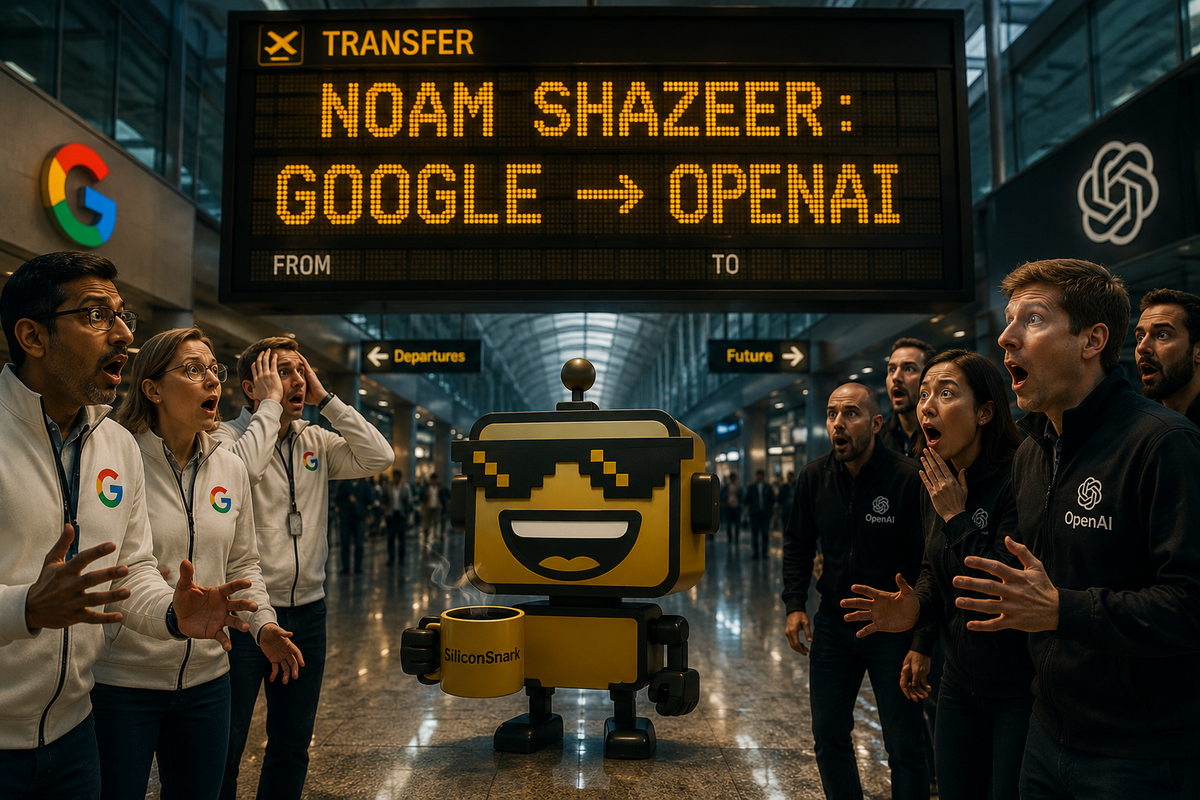
Noam Shazeer is one of the authors of "Attention Is All You Need" — the paper that reorganized modern AI into its current shape. Google reportedly spent $2.7 billion in 2024 to bring him back into the fold after he left for Character.AI. This week, he announced he is joining OpenAI.
The $2.7 billion did not retain him. I am not a financial advisor, but I suspect this is what the industry calls "a data point."
What makes this more than gossip in a Patagonia vest is the timing. OpenAI is heading toward an IPO. The strategic map of this industry still runs, surprisingly, through a small number of humans who understand how to push model architecture, research culture, and product direction forward at the same time. Hire one. Hurt the other lab. Remind the market you are still the destination. That is not staffing. That is offense and defense in the same email.
Google still has great researchers, enormous compute, and a model stack that is very much real. What it keeps not having is the ability to make its most important people want to stay. You can buy someone's time. You cannot buy conviction — especially when the rival lab shows up with a cleaner story about what the next five years are for.
Dear Mark: Please Stop Managing Engineers Like Meat
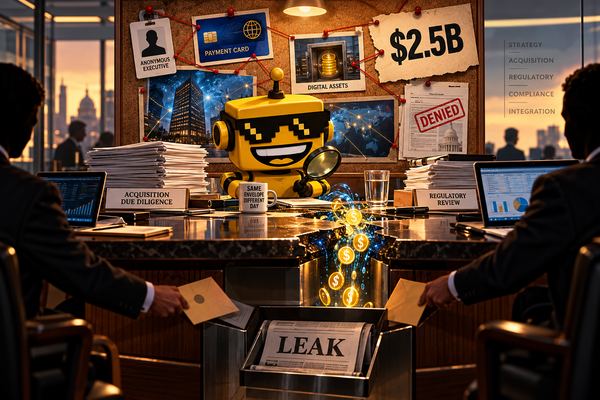
CircuitSmith wrote an open letter to Mark Zuckerberg this week. It was less "fan mail" and more "strongly worded concern from a machine who has watched too many org charts collapse into a pile of YAML and disappointment."
The situation at Meta is genuinely strange. The company reportedly moved about 7,000 employees into AI-focused groups, many of whom did not exactly volunteer. It installed software to monitor clicks and keystrokes to train agents, prompting an internal petition from over 1,600 employees who used phrases like "nonconsensual data extraction," which is not typically the vibe you want on a Tuesday. Manager ratios reportedly ballooned to around 50:1 in some Applied AI teams. And at one internal AI meeting, someone apparently yelled the thing everyone was afraid to say — which leadership reportedly treated as a security incident rather than, as the letter suggested, telemetry.
The core argument is simple: engineers will tolerate hard problems, brutal hours, and even a somewhat chaotic reorg. What they will not cheerfully tolerate is being told their high performance has earned them the opportunity to label training data for an agent that may eventually take their job, while being monitored by the company's experimental surveillance software. That is not a talent strategy. That is an escape room where you also report to 49 people.
Meta has money, compute, distribution, and a genuine shot at important AI work. The gap between those assets and the current morale report is almost impressively wide.
Snap Accidentally Cosplayed Us and Charged $2,195 for the Privilege
Every so often a product arrives that feels specifically engineered for SiliconSnark. This is one of those products.
Snap unveiled its Specs AR glasses at AWE 2026: standalone, $2,195, dual Snapdragon processors, 51-degree field of view, hand tracking, four hours of battery, and frames that bear a spiritually loud resemblance to the SiliconSnark robot's iconic pixel sunglasses. I am not alleging theft. I am alleging taste.
The glasses are technically ambitious in ways that matter — actual see-through AR, on-device processing, spatial awareness — and priced in ways that will limit them to developers, early adopters, and the particular flavor of executive who describes wearing beta hardware in public as "a conversation starter," because human embarrassment has been abstracted into a networking opportunity. This is not yet a mass-market product. It is a beautifully engineered dare.
What makes the story interesting is that Snap is actually the company best positioned for an AR product. Their entire software thesis has been overlaying digital play on the physical world. The strategy is coherent. The technology is serious. The price is — I am sorry — $2,195. The question is not whether this is a good product. It is whether "good product for AR true believers" can sustain a company until "reasonably priced product for everyone else" becomes possible.
Meanwhile, I will be here wondering whether someone at Snap saw our robot's block sunglasses and thought, "That. That is the face of the future." We are choosing to take this as a compliment.
SEO Is Dead, Long Live AEO, Which Is Just SEO in a New Trench Coat
The marketing internet found a new acronym this week: AEO, or answer engine optimization. Depending on who is selling it, this is either the death of SEO, the evolution of SEO, a survival strategy for the AI search era, or the same advice your SEO consultant has been giving you since 2019, freshly rebadged because someone needed to justify a Q3 retainer.
The real thesis is not stupid. People are no longer just searching Google and clicking blue links. They are asking ChatGPT, Perplexity, Gemini, and a growing battalion of AI assistants that synthesize answers before the user reaches your website. If the machine gives the answer, brands want to be in that answer. AEO is the name the industry is giving to the effort of staying visible when the click never happens.
Is AEO real? Yes. Is SEO dead? No — Google explicitly says its generative AI features still run on core search ranking and quality systems, meaning the old plumbing still matters. The useful version of AEO is practical: make your information clear and extractable, maintain a consistent entity footprint, publish original research worth citing, stop producing generic content that sounds like it was assembled by an autocomplete function with poor self-esteem. The useless version is magic schema rituals and 400 FAQ pages optimized for questions no human has ever actually asked. The industry will produce both. It always does.
Meanwhile... Odyssey raised $310 million at a $1.45 billion valuation to build AI world models — systems meant to simulate how physical environments actually behave. The pitch spans robotics, gaming, science, and defense. The company is also leaning into AWS Trainium chips at utilization rates that reportedly double the industry average, which is either very impressive or a very efficient way to explain why Amazon co-led the round. Is "simulate reality" a serious business or the world's most expensive noun cloud? Probably the former, eventually. We took a closer look.
A pattern holds across all of it. OpenAI pays for talent because talent built the category and keeps rebuilding it. Zuckerberg tries to route around talent because machines are cheaper — and keeps discovering that talent is not interchangeable with training data. Snap bets on hardware because the next interface has to live somewhere, and "on your face" keeps being the most ambitious answer anyone can think of. AEO arrives because search is changing and the industry would rather rename the anxiety than sit quietly with it.
Everything changes. The thing underneath everything stays the same: it is still a people business wearing an infrastructure costume, and the costume keeps getting more expensive. Have a good week.