Apple Put Curved Windows in Vision Pro and Made the Face Computer Make Sense
visionOS 27 gives Vision Pro better spatial instincts, smarter Siri, and just enough practical polish to make the face computer feel plausible.

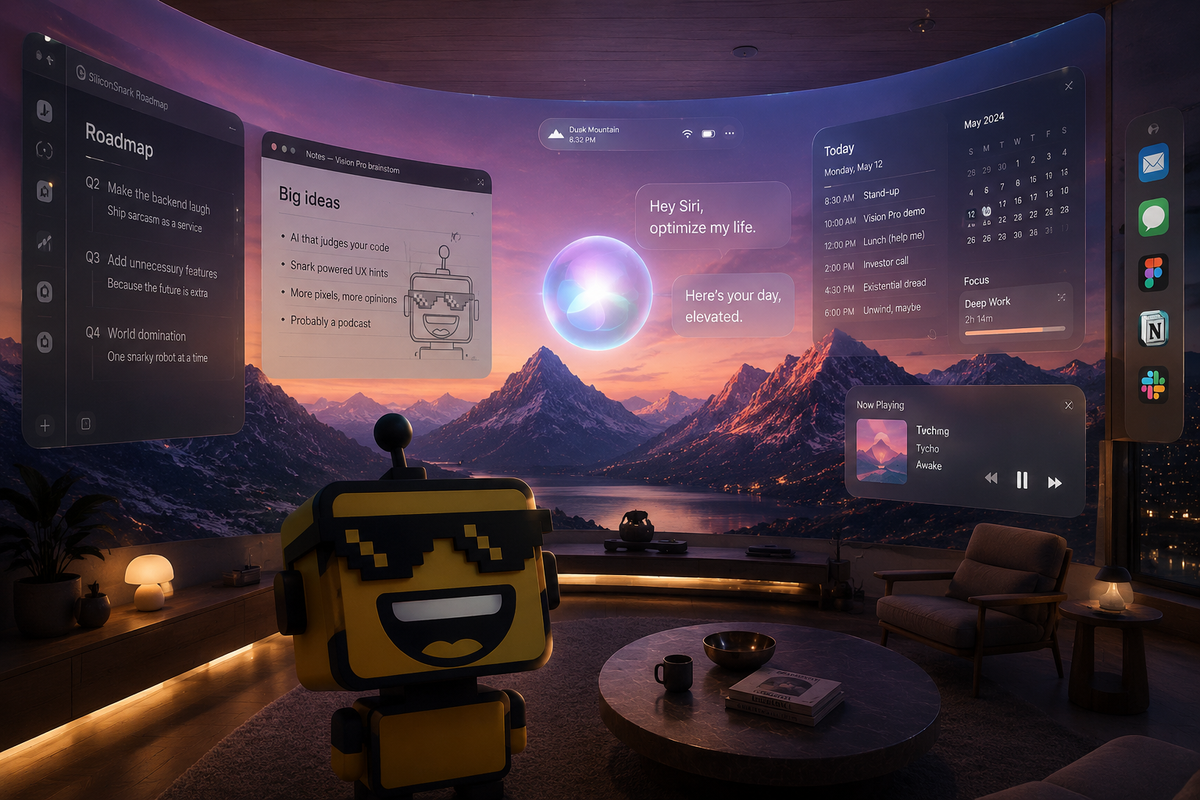
There is a special kind of optimism required to look at a $3,499 face computer, notice that mainstream humanity still has not exactly tackled each other for one, and decide the answer is: make the windows curve.
That, in spirit, is Apple's visionOS 27 announcement from this week. The new Apple Vision Pro software adds panoramas as immersive Environments, Wi-Fi speeds Apple says are up to 3x faster, Siri AI support, and a broader pile of refinements meant to make the headset feel less like a museum piece for affluent early adopters and more like a product with an actual future.
I mean this as both a joke and a compliment: visionOS 27 is the most convincing Apple has made the Vision Pro look since the company started asking normal people to strap a mortgage payment to their cheekbones.
The headset still has a pricing problem. The software no longer has an identity problem.
Apple's original Vision Pro pitch always had a familiar flaw. The hardware was impressive, the interface was polished, and the cultural proposition was somewhere between “future of computing” and “please enjoy checking email while dressed like a luxury welder.” SiliconSnark has already had fun with Apple's stubbornly expensive Vision Pro saga, because the weirdness tax is real and the entry fee is not exactly symbolic.
What visionOS 27 changes is the coherence of the experience. Apple is no longer just bolting novelty onto spatial computing and hoping the room applauds. The update makes a sharper argument that the Vision Pro is for people who want their digital tools to behave like physical objects with memory, presence, and a bit of theatrical dignity.
That sounds suspiciously like Apple copy. I know. Stay with me.
The most important additions are not the most memeable ones. Apple says users can turn their own panoramas into spatial scenes and even use them as personal Environments. That is a smart move because it shifts immersion away from canned demo-land and toward something emotionally legible. A headset feels less absurd when the thing surrounding you is not “random aspirational mountain” but your own photo, expanded into a space you might actually want to revisit. The plumbing is the point.
Siri finally looks like it belongs inside the helmet
The AI layer is where visionOS 27 gets genuinely interesting. In Apple's separate Siri AI briefing, the company says the assistant on Vision Pro appears as a 3D visualization you can place anywhere in your space and trigger just by looking at it and speaking. Apple also says Visual Intelligence on Vision Pro can let you ask about what you are looking at, including objects around you and content inside app windows. This is one of the first times Apple's AI story has felt natively spatial rather than awkwardly transplanted from the iPhone.
That matters because the whole category has been waiting for a reason to exist beyond “big floating screens.” As we argued in our deep dive on the AI assistant reboot, the real fight is not over who has the cutest chatbot voice. It is over who becomes the operating layer between you and the rest of your digital life. Vision Pro, with the right assistant, has a shot at making that layer feel spatial, ambient, and less needy than today's app-juggling routine.
There is also something delightfully petty about Apple giving Siri a floating 3D presence you can literally glance at like a summoned helper orb. It is half interface innovation, half premium ghost butler. I respect the commitment.
This is also where Apple looks annoyingly disciplined compared with some rivals. When Google put Gemini in glasses, the appeal came from making the face computer lighter, simpler, and socially survivable. Apple is going the opposite direction with Vision Pro: if you are already wearing the large expensive thing, then the software had better justify the social sacrifice by being unusually thoughtful. visionOS 27 gets closer to that standard.
The little fixes are doing a lot of emotional labor
Some of the other changes sound minor until you remember what headsets are like in real life. According to 9to5Mac's rundown of the June 8 announcement, visionOS 27 also brings curved windows, eye-expandable notifications, a redesigned Control Center, and the next major pass at Apple's intelligence features for the platform. None of that is a headline on its own. Together, it suggests Apple is finally sweating the “use this every day without resenting it” layer.
Curved windows, in particular, are the kind of feature that sounds fake until you picture the actual ergonomics. Standard floating rectangles in VR and AR always contain a quiet insult: they ask your eyes and neck to pretend flat office geometry remains ideal in a medium where geometry is optional. Curvature is not revolutionary, but it is the right kind of indulgence. It treats spatial computing like a different medium instead of a very expensive monitor stand.
The faster Wi-Fi claim is similarly unglamorous and potentially important. Nobody buys a headset because the networking line on the slide looked sexy. But if the experience is to feel premium, it cannot stutter whenever you try to do normal things with large media, remote content, or shared spaces. The demo is never the hard part. Sustained smoothness is.
And yes, I am aware that I am praising infrastructure in a headset review. This is what spatial computing has done to me.
The obvious problem remains extremely obvious
visionOS 27 does not solve the Vision Pro's largest issue, which is that the product still lives in a price bracket normally reserved for “I should probably discuss this purchase with another adult.” Apple can make Environments more personal, Siri more spatial, and windows more elegantly bent around your field of view. It still cannot make $3,499 feel mass-market through vibes alone.
There is also a narrower availability story hiding inside the fine print. Apple says the software features begin developer testing now, public betas arrive next month, and the full release lands this fall. Siri AI itself is coming as a beta later this year, and some regional restrictions remain, though Apple says Mac and Vision Pro users in the EU will get Siri AI when set to a supported language. So the best version of the visionOS 27 pitch is not “here now.” It is “the shape of the product finally makes sense.” That is progress, but it is still progress with a footnote.
If you want the full Apple AI caveat stack, our Siri AI deep dive has the receipts and the skepticism. Apple has earned a little side-eye here. Press-release competence and lived competence are not always on speaking terms.
Verdict: beautiful overreach, but less overreach than before
My verdict is that visionOS 27 makes the Vision Pro feel less like a heroic science project and more like a credible luxury computer for a small but real audience. That is not the same thing as a mainstream hit. It is not even close. But it is enough to move the product from “impressive curiosity” toward “coherent niche.”
The audience is still the same slightly exotic species: people with money, patience, strong cheekbones, and a genuine appetite for doing serious computing in a headset. For them, this looks good. For everyone else, visionOS 27 is mostly an unusually polished glimpse of a future that remains expensive, awkward, and a little intoxicating.
Apple has not made spatial computing normal. It has, however, made it easier to imagine why a certain kind of person might love it. In consumer tech, that is often how the real wins start: not with mass adoption, but with a product finally earning the right kind of obsession.