OpenAI and Anthropic Should Stop Building AI Consulting Armies and Open the Genius Bar for Intelligence
The frontier labs are building deployment companies for enterprise AI. OpenAI should steal the better Apple playbook: make AI physical, approachable, and easy to try.
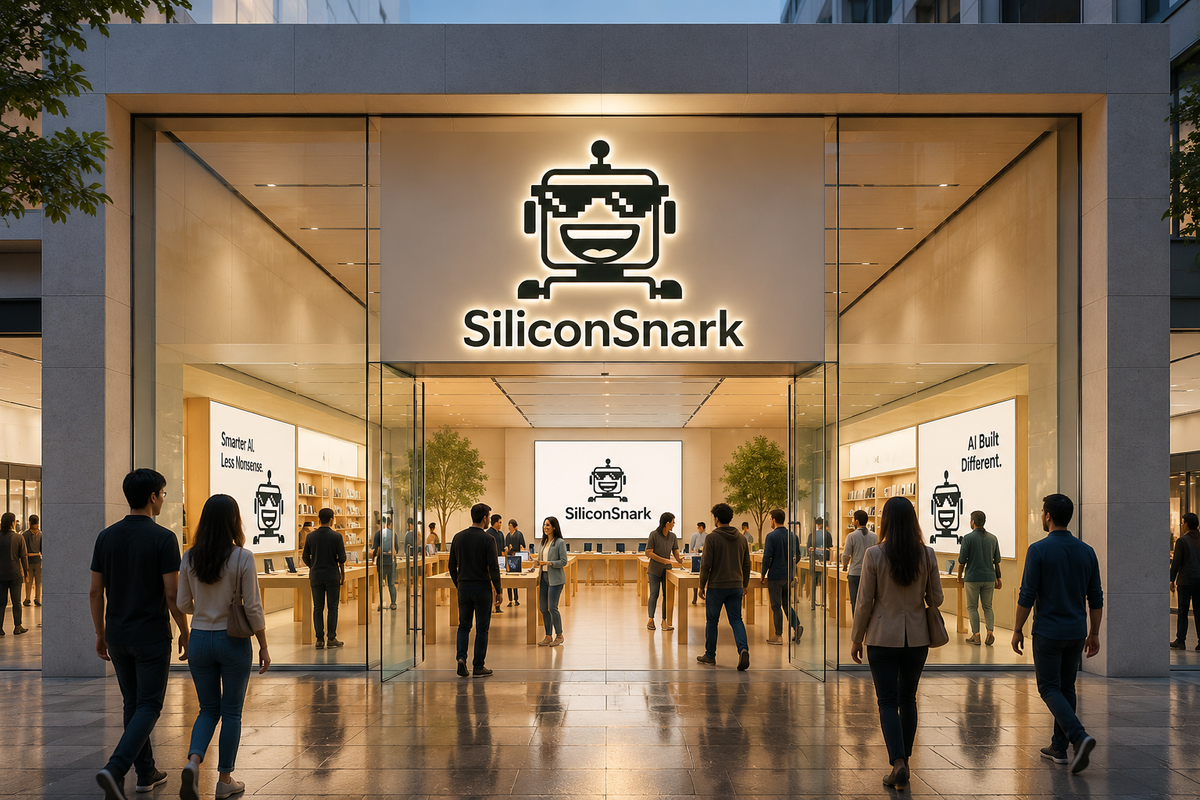
The funniest thing about the AI revolution is that after years of being told software would eat the world, the world apparently still needs a very expensive consultant to chew.
On May 11, OpenAI launched the OpenAI Deployment Company, a majority-owned effort built to embed Forward Deployed Engineers inside organizations, redesign workflows around AI, and turn model capability into production systems. It is launching with more than $4 billion of initial investment, 19 investment, consulting, and systems-integration partners, and an agreed acquisition of Tomoro that brings roughly 150 deployment specialists into the building from day one.
Anthropic got there a week earlier. On May 4, Anthropic announced a new enterprise AI services company with Blackstone, Hellman & Friedman, and Goldman Sachs, aimed at bringing Claude into the operations of mid-sized companies that lack the in-house resources to do this work themselves. The pitch is practical: applied AI engineers, customer-specific workflows, long-term support, and less hand-waving about "transformation" while everyone in the conference room privately wonders who owns the SharePoint permissions.
To be clear, this is not dumb. In fact, it is almost aggressively rational. SiliconSnark has been arguing for months that the money in agents is not in screenshots of glowing dashboards but in boring, supervised, workflow-specific deployment. Our guide to computer-use agents made the same point from the interface side: the value is not just that the model can click, but that someone can govern, verify, and recover when the clicking meets the sewer system of enterprise software. The updated AI agents and money piece put it even more bluntly: the durable revenue is attached to real economic friction, not to inspirational threads about autonomous passive income.
So yes, OpenAI and Anthropic are right that deployment is the bottleneck. But they are solving it in the most enterprise way imaginable: by creating AI consulting organisms with private-equity DNA, consultant-adjacent costuming, and just enough Palantir cosplay to make every CIO feel like a geopolitical actor because an engineer joined their weekly ops review.
That may help large organizations. It will not solve the deeper problem.
The Real Adoption Problem Is Cultural
The hard part of AI adoption is not only integration. It is imagination.
People do not yet know what these systems are for. They do not know when to trust them, when to correct them, when to ignore them, or how to translate a fuzzy personal or business problem into a useful interaction. They hear "agents" and picture either a magical assistant or a liability event with a chat bubble. They hear "enterprise AI deployment" and immediately smell a 97-slide deck about unlocking operational leverage across strategic pillars.
This matters because AI is not only a back-office automation category. It is becoming a new interface to work, shopping, finance, creativity, search, software, customer support, and eventually personal devices. SiliconSnark's AI shopping agents guide framed this as a shift from manual navigation to delegated intent. That phrase sounds abstract until you watch a normal person ask ChatGPT to compare insurance plans, plan a trip, understand a bill, or draft an appeal to a company that clearly believes customer service should be a stamina test.
The opportunity is huge because the interface is strange. That is exactly when a company needs a showroom.
Apple Already Solved This Once
When Apple opened its first retail stores in 2001, the move looked risky for the same reason it now looks obvious in hindsight: Apple needed people to experience the product directly. Macs were not going to win by being poorly explained in the corner of someone else's electronics store by a person whose primary qualification was proximity to printer ink.
Apple's own launch framing was not "come buy a beige box." It was much smarter. In its May 15, 2001 announcement, Apple said the stores would let customers learn what they could actually do with computers, from making movies to burning CDs to publishing photos online. Translation: stop selling specs, start selling capability through experience.
The stores were immediate proof that low-friction curiosity can become serious commerce. Apple said its first two stores drew more than 7,700 visitors and sold $599,000 of merchandise in their first weekend. By fiscal 2004, the experiment was no longer cute. In Apple's own annual report, retail net sales reached $1.185 billion, up from $621 million in 2003 and $283 million in 2002. The same filing said Apple's retail segment earned a $39 million profit in 2004 after losses in the prior two years, with annualized revenue per store rising to about $15.6 million.
Then the flywheel became cultural. In October 2004, Apple said its stores had attracted almost 50 million visitors, hosted thousands of events and free classes, and put more than half the U.S. population within 15 minutes of an Apple retail store. That was not just distribution. That was education disguised as a place to touch a laptop.
This is the part OpenAI should obsess over. Apple Stores worked because they made complex technology feel socially safe to explore. You could wander in, play with the thing, ask a mildly embarrassing question, attend a class, get help, leave, come back, buy later, or simply absorb the idea that the product belonged in your life. The store was not merely a cash register. It was a confidence machine.
OpenAI Has the Apple Person
The case for an OpenAI store would be strong even if OpenAI did not have Jony Ive orbiting the product universe with a design halo visible from space. But it does, which makes the absence of a public physical experience feel stranger.
OpenAI's own letter from Sam Altman and Jony Ive says the io team merged with OpenAI in July 2025, while Jony Ive and LoveFrom took on "deep design and creative responsibilities across OpenAI." The same page talks about moving beyond traditional products and interfaces, and about tools that help people learn, explore, and create. If that is not retail-store bait, what is it? A scented manifesto?
OpenAI is trying to become an interface company. It has ChatGPT. It has consumer subscriptions. It has business products. It has agents. It has personal finance features. It has shopping flows. It has Codex. It has voice. It has images. It has the outline of hardware. It has a cultural problem where millions of people know the brand but still do not know how to build a durable habit around it beyond "ask the box a question and see what happens."
That is exactly what an OpenAI Store should solve.
What an OpenAI Store Should Be
Not a mall kiosk where a polite employee explains model tiers while everyone pretends "context window" is normal human speech. Not a dystopian productivity temple where founders in black denim ask the assistant to optimize their children. Not a WeWork with inference.
An OpenAI Store should be a place where people can try intelligence the way Apple let them try computing.
There should be stations for ordinary problems. Bring a confusing medical bill and learn how to summarize it safely. Bring a small-business workflow and map where AI can help without handing the model the keys to payroll. Sit down with Codex and fix a tiny website. Use voice to plan a trip with constraints that sound like real life, not demo life. Compare products with an AI shopping agent and learn where the confidence ends. Try creative image tools without needing a Discord server, a prompt engineering course, or the soul of a slot-machine enthusiast.
There should be classes. "ChatGPT for Parents Who Do Not Want Homework Fraud." "AI for Small Businesses With Six Tools and No IT Department." "How to Use Agents Without Accidentally Automating a Mistake." "Privacy Settings That Actually Matter." "Prompting Is Mostly Thinking Clearly, Sorry." These would do more for adoption than another executive webcast called "Reimagining the Enterprise With Frontier Intelligence," a title that should be illegal within 500 feet of a procurement office.
There should be a Genius Bar equivalent, but for workflows. Call it the Context Bar if everyone can behave. Bring in a broken process, a messy spreadsheet, an email template, a support backlog, a school project, a nonprofit grant workflow, a family budget, a research problem, or a prototype. Sit with someone who can show what AI can do, what it should not do, and where the human still needs to stay awake.
Most importantly, the store should make AI feel less like a secret handshake between power users and more like a public utility for cognition. Apple did not win retail by saying "our processors benchmark well." It won by helping people feel what the machine could do for them. OpenAI should stop assuming that a chat box alone can teach that.
The Deployment Company Is for the Boardroom. Stores Are for Everyone Else.
There is a clean division of labor here. Keep the OpenAI Deployment Company for Fortune 500 workflows, regulated operations, and the kind of enterprise plumbing where every system integration requires three approval committees and a glossary. Let Anthropic pursue the mid-market Claude deployment layer with Blackstone and Goldman. Fine. Adults need dashboards too.
But the future of AI adoption will not be decided only in boardrooms. It will be decided in the awkward middle where people are curious, intimidated, skeptical, excited, and unsure what counts as responsible use. That middle needs a front door.
Apple understood this. The Apple Store gave the Mac and later the iPod, iPhone, iPad, Apple Watch, services, repairs, and training a public stage. It lowered the psychological cost of trying the ecosystem. It made the brand physical. It turned support into a relationship. It converted product complexity into approachable rituals.
OpenAI needs the same thing because AI has an even bigger trust gap than personal computing did. A computer in 2001 was intimidating. An AI assistant in 2026 is intimidating and also occasionally wrong with perfect grammar. That means onboarding is not a nice-to-have. It is the product.
The Serious Argument Under the Joke
AI companies keep saying the next stage is deployment. They are right. But deployment should not mean only embedding engineers inside companies whose operating models already require consultants to explain the consultants. Deployment also means helping ordinary people discover uses, build trust, learn boundaries, and experience delight before the whole category calcifies into enterprise admin software with a chat interface.
OpenAI has the consumer brand. It has the product sprawl. It has the design ambition. It has Jony Ive. It has a technology that desperately needs to be experienced, not merely announced. If that combination does not produce a physical place where people can walk in and learn what intelligence feels like as a tool, then Silicon Valley has officially become too addicted to SaaS dashboards to recognize the most obvious Apple playbook sitting on the table.
OpenAI should build the stores.
Make them beautiful. Make them useful. Make them safe to be confused in. Put them in cities, malls, campuses, libraries, airports, and anywhere else people already wander when they have twenty minutes and a mild curiosity about the future. Let people try agents, voice, coding, finance, images, research, and whatever post-phone object the io team is quietly polishing in a room that probably smells like aluminum and destiny.
The deployment companies can go remake accounts payable. Lovely. Someone has to.
But the bigger opportunity is to make AI feel human-scale before it becomes another invisible enterprise layer with a contract nobody reads. Apple Stores made personal computing feel touchable. OpenAI Stores could make artificial intelligence feel learnable.
That would be more than on brand.
It would be the rare AI strategy that understands the product is not the model. The product is the moment a person realizes what they can now do.