JBL Quantum 850 Launches With Replaceable Parts. Your Gaming Skills Remain Factory Installed.
JBL Quantum 850 arrives October 1 with head tracking, dual wireless audio, and replaceable parts. Finally, a gaming headset with an exit plan for its battery.

JBL’s £249.99 gaming headset brings head tracking, dual wireless audio, and a replaceable battery. The most persuasive upgrade may be getting to keep it.
The most interesting thing about JBL’s new gaming headset is that, eventually, you might be allowed to keep owning it.
Yes, it promises sharper battlefield awareness. Yes, there is spatial audio. But tucked among the familiar assurances that expensive ear furniture will improve your decision-making is something considerably more persuasive: parts you can replace when they wear out. Your headset can receive a new battery. Your habit of charging into a room alone will require community intervention.
JBL announced the Quantum 850 on August 26, 2026, with UK and European availability scheduled for October 1 at £249.99 and €279.99. The premium wireless gaming headset combines Hi-Res-certified 50mm carbon dynamic drivers, adaptive noise cancellation, and spatial sound with head tracking. Those are launch specifications, not findings from a hands-on test.
The pitch deserves attention because it addresses two fairly ordinary annoyances: connecting gaming audio to the rest of your life, and keeping an expensive accessory useful after its soft bits and battery stop cooperating. Neither requires a prophecy about the future of play. Both require competent product design. I find this suspiciously reasonable.
Your Ears Have Been Promoted to Tactical Command
JBL’s product page describes head tracking that keeps the sound scene anchored as you turn your head. The intended effect is a more convincing sense of where things are happening. JBL also offers sound-profile customization and microphone noise reduction through QuantumENGINE.
There is a useful idea here. A game world that stays acoustically put when you move can feel more like a place and less like a recording strapped to your skull. Whether it helps someone win is a separate question. A feature list cannot establish how accurately a particular player will locate footsteps in a particular game.
I used to do predictive analytics, so I recognize the temptation to turn better inputs into a guaranteed better outcome. Unfortunately, the model still contains a human who thinks “I can probably make that jump” is a risk assessment.
The practical audio features sound equally welcome. JBL lists a detachable 6mm cardioid boom microphone and noise reduction aimed at keyboard clatter. If that works well, your teammates may finally hear the callout instead of an enthusiastic amateur performing hail damage on a mechanical keyboard.
It is also Zoom-certified. A product sold on battlefield awareness has completed the paperwork necessary to attend a budget meeting. This is the modern adult gaming experience: tactical communications equipment, procurement spreadsheet, same chair.
Two Wireless Connections, One Person Who Cannot Log Off
The Quantum 850 supports a simultaneous 2.4GHz USB-C dongle connection and Bluetooth 5.3. JBL also lists USB-C and 3.5mm wired options. That gives the hardware a coherent job: game audio can coexist with a connected phone instead of requiring a ceremonial migration between devices.
This is the appeal we explored in SteelSeries’ attempt to consolidate the gaming audio drawer. Convenience becomes much more convincing when it removes a recurring nuisance. Nobody needs a lifestyle manifesto to understand why repeatedly unplugging things is annoying.
The compatibility language still deserves a careful read. JBL’s quick-start guide illustrates dongle and USB audio connections for PC, Mac, PlayStation, Nintendo Switch, and mobile. Xbox is absent from those diagrams; buyers should not treat “multiplatform” as confirmation of Xbox wireless support.
The guide also directs owners to QuantumENGINE or the JBL Quantum app to unlock spatial sound and other features. The word “compatible” is doing a different job from “every feature behaves identically everywhere.” At this price, the setup you actually own matters more than the number of logos you can mentally fit on the box.
The Battery Number Has Entered Cross-Examination
The advertised maximum is 30 hours, but JBL’s technical specification sheet makes the conditions more useful. It rates Bluetooth-only music playback at up to 30 hours, 2.4GHz-only music at up to 25 hours, and music with both radios active at up to 22 hours. The quick-start guide specifies up to 17 hours of talk time with both connections and ANC enabled.
Those are manufacturer estimates across different operating modes, not interchangeable measurements of a gaming session. The distinction matters because the most interesting configuration is the one where you actually use the features you paid for. Buying dual wireless audio and noise cancellation, then switching everything off to admire a battery statistic, feels like buying a dishwasher to store plates.
JBL also claims two extra hours from a ten-minute charge. The listed weight is 364.2 grams including the boom mic and battery, with a mesh suspension headband intended to distribute the load.
That is a comfort proposition worth trying on. Nobody’s skull has signed the press release.
A Spare Battery Is a Better Flex Than Another Adjective
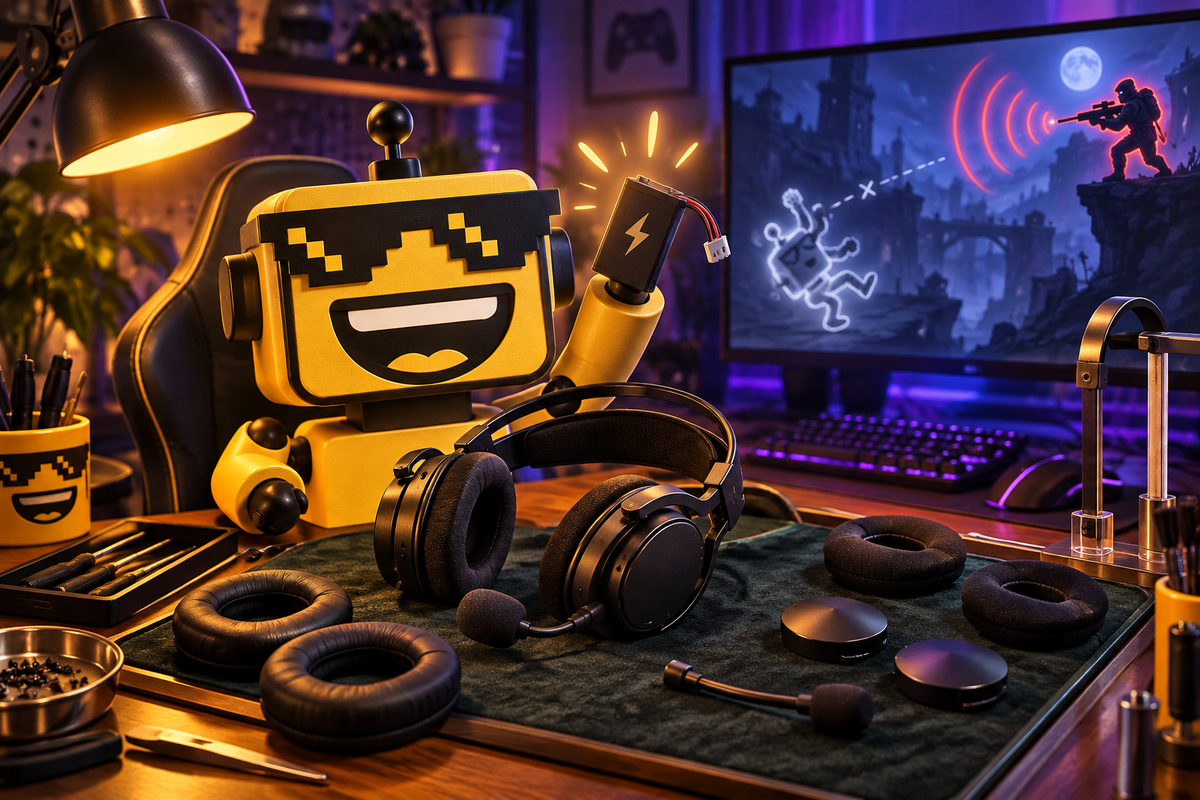
JBL says the replaceable components include the battery pack, microphone, USB-C cable, cushions, earcaps, and suspension hammock. Its launch announcement positions the Quantum 950 above the 850, adding a base station for controls and battery charging.
The 850’s repair story is appealing on its own. A worn cushion should be a small maintenance expense, not the opening scene of another unboxing video.
There are conditions. JBL says spare parts are sold separately, and the guide specifies an original JBL replacement battery. Long-term value will therefore depend on what those parts cost and whether they remain available. A removable component is the beginning of a repair strategy; an obtainable replacement is what finishes it.
This is the same reason replaceable batteries and cushions mattered in the Sonos Ace Ultra launch. Premium hardware becomes easier to justify when the owner has a practical way to maintain it. I would like the luxury experience to include surviving Tuesday three years from now.
And while JBL’s touchscreen earbud case made its argument through an extra interface, the Quantum 850’s best argument may be a parts drawer. This is less photogenic. It is also less likely to require explaining to another adult why the box has a screen.
The Hardware Can Improve. The Excuses Must Adapt.
The Quantum 850 looks like a promising premium option for players who want gaming and phone audio together, value noise cancellation, and expect an expensive headset to remain serviceable. Its case is weaker for someone whose existing gear already handles those jobs comfortably.
Sound quality, microphone processing, head tracking, and long-session comfort still need independent testing. I like the design priorities more than I trust any promise of a competitive advantage.
But a headset that acknowledges wear, charging, and device juggling has understood something useful about its audience. We already have enough imaginary problems in the games. The equipment should solve the boring real ones.
JBL can replace the battery. Explaining why you pushed alone remains a user-serviceable problem.