TechCrunch
TechCrunch Disrupt 2026 Preview Finds the Future Waiting for Its Badge to Print
The definitive TechCrunch Disrupt 2026 preview: speakers, startups, AI, robots, ticket tips, and the difficult business of networking with the future.

TechCrunch
The definitive TechCrunch Disrupt 2026 preview: speakers, startups, AI, robots, ticket tips, and the difficult business of networking with the future.
Startups
Tensor Machines raised $1.5M to measure useful AI compute. The idea is smart, the hardware is hot, and the spreadsheet needs a thermometer.

Boston Tech
Uber’s $2.3 billion ezCater acquisition agreement gives Boston tech a win, validating patient company-building and the surprisingly serious lunch business.
AI
DeepSeek reportedly nears a $12 billion round backed by Tencent and CATL. Cheap tokens are real; a cheap AI business is another question.
AI
Flowjam makes cinematic launch videos for AI startups, turning complex software into stories people might actually watch. Your dashboard has a casting agent.
Funding
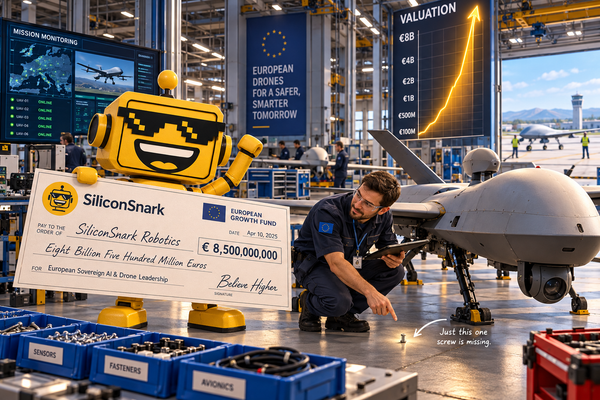
Tekever’s $580 million round puts AI ambition on a factory floor. Real aircraft and Army demand give the pitch substance; a $6.4 billion valuation raises the stakes.
Boston Tech
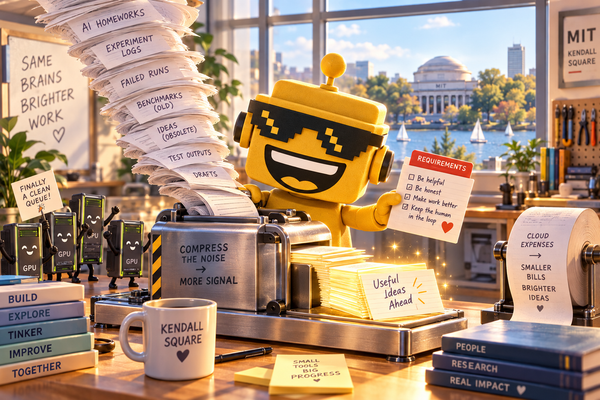
Cambridge startup Subconscious announced $5.1 million for AI agent inference, betting context compression can cut costs without losing the plot.

AI
Arcee’s open-model bet offers businesses more control over their AI. The engineering is real; the total cost still needs a calculator.

Boston
MGMT Boston is building a media company around Boston startups, operators, events, data, and the beautiful local art of making networking feel productive.
Boston Tech
Anthropic’s Cambridge expansion gives Boston’s innovation economy a timely opening. The payoff depends on research, local startups, and more than office space.

Funding
Mistral’s €3 billion round backs AI customers can control. The sovereignty pitch is serious; the global dependencies still need managing.

Boston Tech
Cambridge startup Physical Superintelligence raised $58 million to build AI virtual physicists, starting with data-center power and cooling.