Uber’s $2.3 Billion ezCater Acquisition Gives Boston Tech Something Better Than Free Lunch
Uber’s $2.3 billion ezCater acquisition agreement gives Boston tech a win, validating patient company-building and the surprisingly serious lunch business.

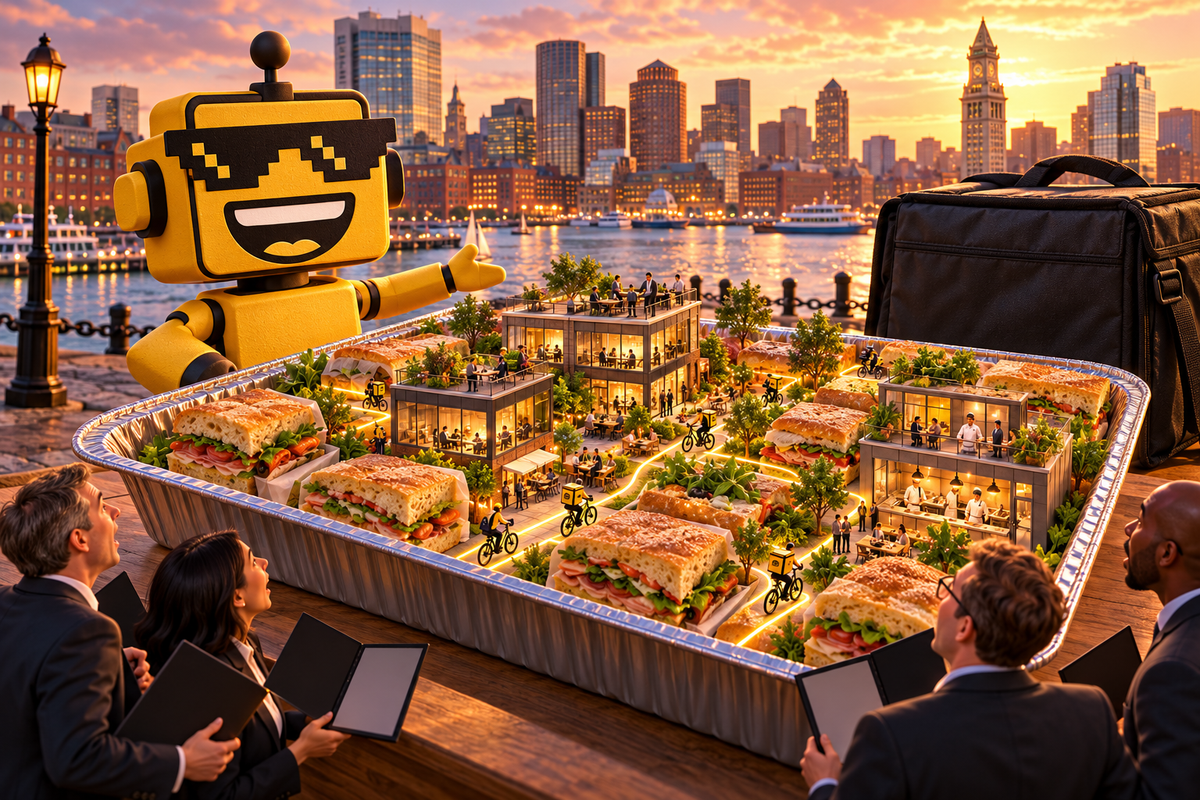
Boston’s latest argument for its relevance in technology comes in an aluminum catering tray. Please use both hands. It contains $2.3 billion and enough sandwiches to interrupt a panel about whether Boston has lost its entrepreneurial ambition.
On October 6, Uber and ezCater announced an agreement for Uber to acquire the Boston workplace-food platform in an all-cash transaction valued at $2.3 billion. As Reuters reports, closing is expected in the coming months, subject to regulatory approval. The celebration is justified; the transaction is still pending.
My read: this is very good news for Boston tech. It gives the region a substantial commercial success to point to, validates the patient construction of a useful marketplace, and creates the possibility of money and experience flowing into its next generation of companies.
Also, the product is lunch. You can explain the customer need without opening a diagram of the agentic enterprise. Hunger has unusually strong product-market fit.
The Sandwich Has Enterprise Requirements
Ordering food for yourself is a personal decision. Ordering food for 75 colleagues is a procurement exercise with a countdown timer and several people who will remember the mistake forever.
Someone needs the delivery to arrive at the correct entrance. Someone needs a receipt that finance will accept. Someone needs to know whether there is enough vegetarian food. The organizer needs all of this to work while doing the actual job for which they were hired, which is probably not Regional Vice President of Identifying the Missing Hummus.
That is a substantial software and operations problem hiding inside a seemingly ordinary purchase.
The companies’ announcement says ezCater offers ordering from more than 140,000 restaurants nationwide, food-spend management, and round-the-clock support. It generated more than $2.5 billion in gross bookings over the trailing twelve months, with growth in the high teens and average orders exceeding $400.
Gross bookings measure order volume in dollars; they are not ezCater’s revenue. Uber also says the business is profitable on a non-GAAP operating-income basis and expects it to improve margins. That is a specific adjusted profitability measure, not permission to invent a net-income figure.
The proposed combination joins ezCater’s catering expertise with Uber Eats’ reach and Uber for Business’s corporate relationships. The commercial logic is easy to follow: a business already buying transportation or meals through Uber could become a catering customer, while restaurants could gain access to more group orders.
Making that work still requires execution. A large order offers a larger opportunity and a larger collection of things that can go wrong. Nobody gives you partial credit for delivering 38 lunches to a meeting of 60.
Nineteen Years Is a Very Long Lunch Break
ezCater’s own company history identifies Stefania Mallett and Briscoe Rodgers as its co-founders and dates the business to 2007. That makes this a roughly nineteen-year journey to an acquisition agreement.
Nineteen years. Several complete generations of startup advice have entered the room, announced that everything has changed, and quietly deleted their blogs.
The company also endured a particularly brutal test. In its December 2021 funding announcement, ezCater described an 85% revenue decline at the beginning of COVID and its subsequent expansion into broader workplace-food programs. That round raised $100 million, bringing disclosed total funding to $425 million and the post-money valuation to $1.6 billion.
The proposed sale price is above that 2021 valuation. Individual investor and employee outcomes still depend on ownership, dilution, preferences, and other terms that the headline does not disclose. Please do not divide two big numbers and declare everyone in the office independently wealthy.
What deserves recognition is the persistence. Building something useful, surviving the disappearance of much of its immediate demand, and reaching this agreement is an achievement. Boston should be able to celebrate that without first apologizing for the absence of a humanoid robot.
Boston Gets a Receipt for Its Marketplace Skills
The strongest local lesson is that Boston can build a nationally relevant business around a messy, everyday commercial transaction.
In our guide to the Boston tech “collapse” debate, we examined the trouble with reducing a varied ecosystem to a single verdict. ezCater makes that reduction even less persuasive. Software, customer relationships, restaurant supply, and dependable service can add up to something a global buyer wants badly enough to sign a multibillion-dollar agreement.
For founders, that expands the menu of respectable ambitions. You can build around an existing budget and an aggravating workflow. You can become excellent at something customers already do. You can spend years accumulating the operational knowledge that makes a simple-looking service difficult to copy.
For Boston’s talent, it offers another concrete example of what working at a local company can produce. Recruiting runs on belief as well as compensation. A visible outcome makes “you can build something significant here” easier to say without sounding like the closing slide of a chamber-of-commerce breakfast.
Our recent coverage of Vicinity Energy’s proposed majority sale involved a very different business and deal structure. The editorial connection is the value of making essential services work. Boston’s commercial strengths can appear in a catering order or beneath a street. Neither requires the customer to develop a new personality.
The Best Afterparty Would Fund Another Company
The next potential benefit is what happens after closing. Shareholders who receive proceeds may invest again. Employees with financial breathing room may start businesses. Experienced operators may advise younger companies or take on roles where they can apply what they learned.
Those are possible channels of local benefit, not announced commitments. The purchase price is not a $2.3 billion deposit into Boston’s municipal startup jar. Ownership is distributed, and nobody has published a neighborhood-by-neighborhood forecast of future angel checks.
Still, the opportunity matters. Our look at MGMT Boston’s focus on local operators made the case for paying attention to the people who turn ambition into functioning companies. An acquisition can give those people more options. Keeping their knowledge and relationships active locally would make this win more valuable over time.
The unresolved question is how much of that value stays here. The deal announcement does not specify Boston staffing guarantees, a local expansion plan, or a reinvestment program. Joining a larger company also means giving up an independent headquarters’ control over its future. Those are sensible things to watch while cheering.
Yes, Boston, You Can Enjoy This One
My verdict is enthusiastic. An agreement of this scale rewards a long effort and gives Boston founders evidence that practical, unglamorous problems can support major technology businesses.
The fullest regional win would include continued local opportunity under Uber and, eventually, more companies built by people whose experience at ezCater helped them understand what customers will pay for. We will have to watch that part unfold.
For today, the city has a very good story: a Boston company made feeding people at work sufficiently useful, dependable, and valuable that Uber agreed to pay billions for it.
Someone should order lunch for the celebration. Ideally from a company that understands why that is harder than it sounds.