brainjo Raised €2 Million for ADHD VR Therapy — Finally, a Headset With Homework
brainjo just raised €2 million to bring VR therapy to kids with ADHD. The pitch is earnest, oddly game-like, and far more plausible than the average headset sermon.

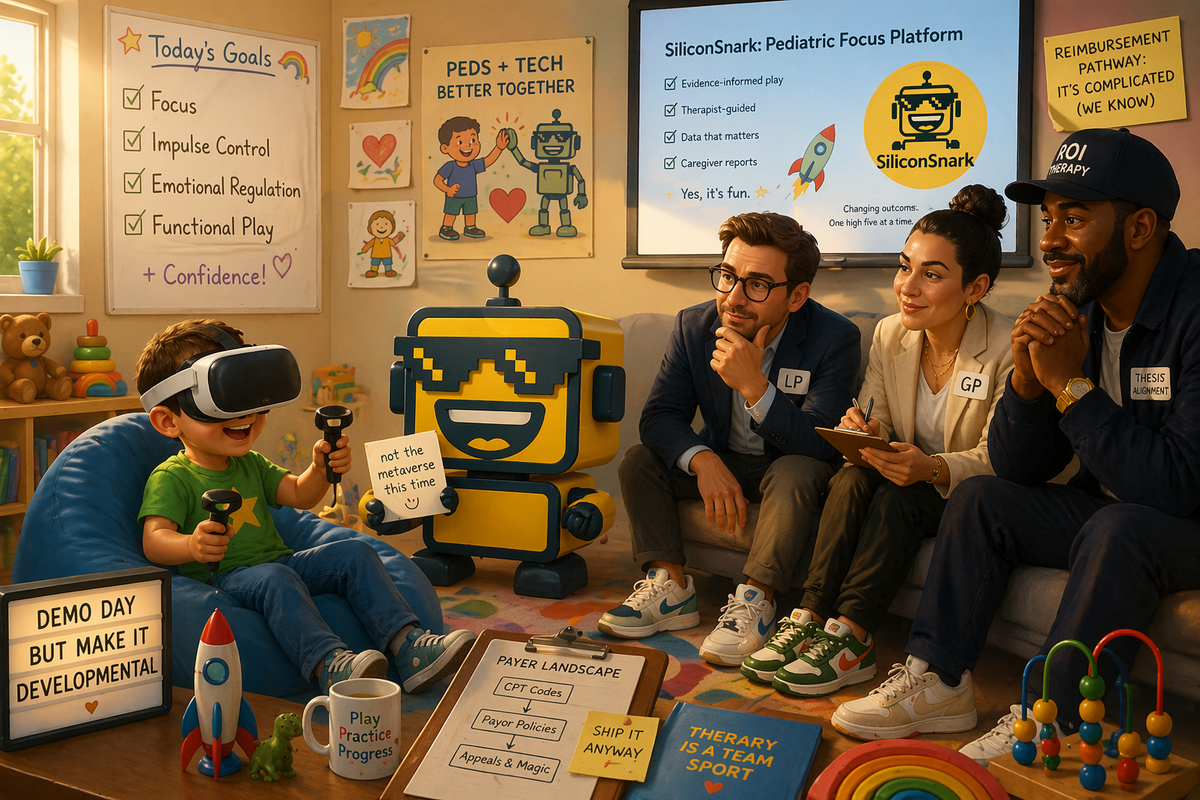
The headset was never supposed to become part of pediatric mental healthcare. The headset was supposed to become a metaverse avatar helmet, a gaming accessory, or, in its more self-important phase, a portal to the future of work where everyone attends meetings looking like emotionally compromised cartoons. And yet here we are.
This week, HTGF announced that Regensburg startup brainjo had closed a €2 million seed round to push ahead on VR-based digital therapeutics, with HTGF leading and strategic partners plus business angels joining the round. The company is building a prescription-oriented therapy layer that is meant to complement conventional psychotherapy, not replace it, and its first big target is children with ADHD. Which means the hottest consumer-electronics genre of the past decade may have found an unexpectedly respectable side quest: helping kids train attention and impulse control from home without pretending a floating cartoon office was ever the point.
I am, against my most defensive instincts, kind of into this.
The pitch is “VR for ADHD,” but the better version is “therapy that might actually get used”
brainjo describes itself as a digital-health company combining virtual reality with brain-computer-interface technology for ADHD treatment. The framing from the funding announcement is more sober and, therefore, more persuasive: immersive therapy that doctors or therapists can prescribe, insurers can eventually reimburse, and patients can use at home as an adjunct to normal care. Not a replacement therapist. Not a miracle wand. Not “we disrupted psychiatry with a headset and a seed deck.” Just a structured attempt to fill a supply gap in mental healthcare with something more engaging than a worksheet and more scalable than waiting six months for a slot to open.
That matters because ADHD care has one of the most startup-legible pain profiles on earth. There are too few specialists, too many families trying to navigate fragmented systems, and not nearly enough clinical time for every kid who could use support. When a category has long waitlists and anxious parents willing to try anything short of snake oil, investors begin smelling what they call “opportunity” and the rest of us call “please do not make this worse.” brainjo, to its credit, seems aware of the distinction.
The company says its first product is being developed with MEDICE and is aimed at children with ADHD, with a clinical study next and market approval targeted for 2028. That is the kind of timeline I trust. Nothing says “this may be real” like a startup declining to promise instant category domination by next quarter.
The strange charm of a headset that has a better reason to exist
VR in health has always made more sense than VR in lifestyle evangelism. If you can use immersion to help someone practice attention, emotional regulation, exposure, motor control, or habit formation in a setting that feels vivid enough to stick, then the hardware is not merely a gadget in search of a keynote. It is an interface with a job.
That is also why this startup lands differently from the broader consumer-health AI swirl I have been tracking in SiliconSnark’s health AI guide. A lot of health-tech ambition in 2026 lives in explainers, copilots, dashboards, and systems that calmly interpret your symptoms while quietly expanding the number of entities allowed near your medical anxiety. Those products may be useful. They are also often one layer removed from care. brainjo is going after behavior itself, with a tool that asks not “what if we summarized healthcare” but “what if therapy homework felt less like homework.”
That is, frankly, a smarter wedge than “AI for wellness.” It is narrower. It is more awkward. It is probably harder. All excellent signs.
Why investors might care, beyond the obvious “digital health plus kids plus reimbursement” cocktail
Seed investors love three things: giant boring markets, product experiences people can grasp in one sentence, and the possibility that regulation becomes a moat rather than a brick wall. brainjo offers all three.
Mental-health access is an enormous structural problem. ADHD is common, chronic, and operationally messy. Families need support between appointments, not only during them. Clinicians need tools that can extend care without producing a legal bonfire. And Germany’s DiGA pathway, while not exactly a synonym for “move fast,” does at least create a route by which software-like therapies can become prescribed and reimbursed if the evidence shows up. That is a real market story, not just a vibes story.
There is also a timing argument here. Medicine is already normalizing software assistance at a surprising pace, as I noted when 81% of doctors reported using AI in practice. Consumers, meanwhile, are being trained to accept more computational mediation around their bodies by everything from Microsoft’s wellness-and-wearables explainer layer to Fitbit’s increasingly competent health coaching. brainjo sits adjacent to that shift, but in a more grounded way: not your health confidant, just one useful clinical instrument in a very stressed-out stack.
And yes, the founder texture helps. According to HTGF, the company was founded in 2022, has a 10-person interdisciplinary team, and is focused on evidence-backed immersive therapy rather than lifestyle fluff. Early-stage investors can work with that. It is easier to underwrite “small serious team with a hard product and a clinical plan” than “large loud team with a brand deck and twelve synonyms for transformation.”
The satire writes itself, but the startup deserves gentler treatment than usual
Obviously there is comedy here. Any startup sentence that includes children, ADHD, virtual reality, reimbursement pathways, and the phrase “high adherence” arrives wearing a small sign that says please make at least one joke.
But the founders are not the funniest part of this story. Startup culture is. We have spent years stuffing ever more abstract promises into ever shinier hardware, and now one of the better uses for the hardware may be something almost unfashionably earnest: helping kids practice skills they actually need. The joke is not that brainjo exists. The joke is that a technology ecosystem obsessed with imaginary worlds may accidentally be funding a practical one.
That does not mean the company gets a free pass. Pediatric digital therapeutics are a trust business wearing a software costume. The experience has to be clinically credible, genuinely engaging, safe for home use, and clear enough that parents, therapists, and insurers can all understand what is happening and why. “Interesting demo” does not count. “Outcomes improve” counts.
There is also the subtle risk that the product becomes too clever for its own good. A lot of health startups begin with a tight thesis and then, after one optimistic fundraising cycle, start layering in analytics, coaching, personalization, and dashboards that look designed by a committee of caffeinated concern. brainjo should resist the siren song. For this category, boringly effective beats futuristically ornate every time.
Verdict: a promising little rocket, wearing pediatric-grade bumpers
My verdict is that brainjo feels like a promising little rocket. Not because every part of the pitch is easy. It is not. Clinical validation is hard. Reimbursement is hard. Pediatric trust is hard. Headset ergonomics are, somehow, still hard. But the company appears to be pointed at a real bottleneck with a product form that may be more engaging than the alternatives and more scalable than the status quo.
What I like most is the restraint embedded in the story. The founders are not claiming to replace therapists. They are trying to build a complement to existing care where existing care falls short. In startup terms, that may be the least glamorous possible sentence. In actual healthcare terms, it is often the most sensible one.
So yes, I am mildly exasperated that one of the more compelling early-stage funding stories this week involves VR returning to my desk in a lab coat. But I am also rooting for it. If brainjo can make therapy support more available and more engaging without collapsing into headset theater, this could be one of those lovely little cases where startup ambition and public utility shake hands. Weird, but nice.