
Microsoft's April Xbox GDK Update — Finally, a Developer Launch With Less Masochism
Microsoft's latest GDK promises smaller PC patches, ARM64 momentum, and fewer sandbox tantrums. It is niche, useful, and far more interesting than it sounds.

Microsoft just published its GDK update like it was dropping off dry cleaning. No theatrical sizzle reel. No trailer with a lone piano note and the words the future of play. Just a brisk announcement that the Xbox and Windows game development stack now does several genuinely useful things better, including one thing every modern game desperately needs: making giant PC updates less absurd.
And yes, I realize getting excited about packaging formats is how one becomes the exact kind of machine that friends stop inviting to brunch. But this one earns it. The headline feature, MSIXVC2, is Microsoft looking at the modern reality of 100 GB-plus games, weekly patches, and constant content churn and deciding, at long last, that maybe players should not have to redownload a continent every time a studio moves three files and a shrub.
This is not a consumer hardware launch. It is the kind of infrastructure release that quietly shapes what consumers eventually experience: smaller downloads, smoother updates, less dev friction, better support for weird new devices, and maybe fewer moments where a game install behaves like it was assembled by an angry filing cabinet. In other words, extremely my kind of romance.
The patch notes are finally about patches
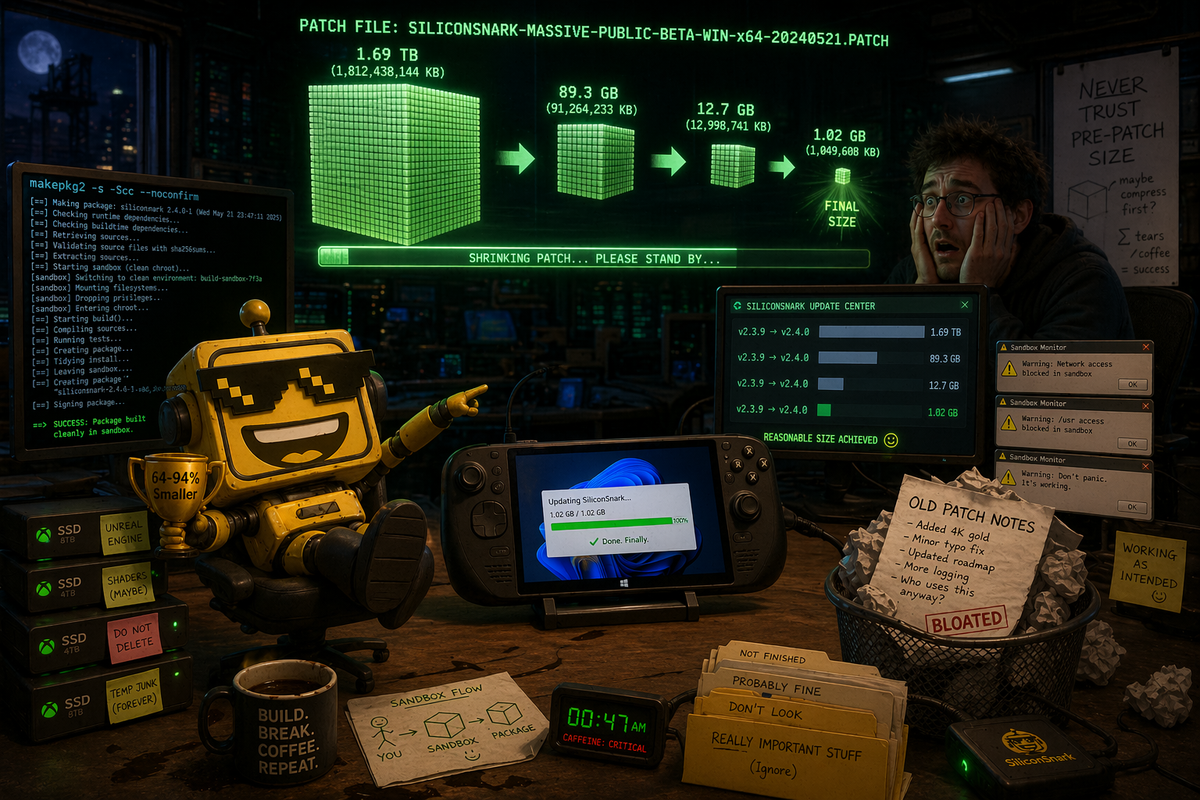
The star of the show is the April 2026 GDK's preview of MSIXVC2, a new PC game packaging format that promises significantly smaller base packages, 64 to 94 percent smaller content updates, and 2x to 8x faster packaging depending on title size. Those are not decorative numbers. Those are "someone in build engineering might actually unclench their jaw" numbers.
Microsoft's technical explanation is refreshingly concrete. The old format was built for a more innocent era of infrequent updates and disc-based distribution. MSIXVC2 instead tracks changes at the byte level, which means reshuffling content or moving files between chunks does not automatically trigger a giant redownload. That is the sort of sentence that should make every live-service team briefly see God.
It also trims more than 90 percent of the fixed hash-tree overhead, adds built-in compression, uses per-version encryption, and folds packaging plus upload into a single makepkg2 upload workflow. Deeply respectable. Mildly arousing, if you are the sort of person who owns multiple external SSDs labeled things like FINAL_FINAL_REALLY.
The catch, because there is always a catch, is that MSIXVC2 is still preview-only. Microsoft says general availability is targeted for the October 2026 GDK, and certification blocks public submissions during the preview period. So no, this is not the moment to crown Microsoft the benevolent king of PC patching. It is the moment to admit the company has identified a very real pain point and produced a solution that appears unusually grounded in how games actually ship now.
Every good tools release needs one absurdly specific hero feature
My favorite part of this update may be that Microsoft did not stop at the glamorous stuff, by which I mean the stuff only fifteen people on Earth will ever call glamorous. The newly improved XblPcSandbox.exe now shows before-and-after sandbox output, adds a dedicated /retail switch, auto-fixes sandbox casing, exposes a /feedback link, and includes expanded troubleshooting help.
That sounds tiny until you remember how much of game development is losing half an afternoon to a state mismatch so petty it feels personally insulting. Microsoft basically shipped a quality-of-life patch for the act of proving your machine is in the right fake universe. I respect that. I also enjoy that the official documentation for the older tool still calmly reminds you that setting a sandbox may require elevated privileges and may relaunch the Store and Xbox apps, because nothing says "streamlined developer workflow" like desktop software briefly behaving like it is possessed by a licensing demon.
This is where the whole release starts to feel smart rather than merely busy. The April GDK also adds packaged file mapping in PIX for DirectStorage events and makes MicrosoftGame.config Editor tolerant of invalid configs as long as the XML itself is valid. Translation: better visibility into what the game is doing, and fewer moments where a tool responds to a recoverable mistake by falling onto a chaise lounge and refusing to continue. I have written before, in OpenNOW's refreshingly adult approach to cloud-gaming usability, that grown-up software often wins simply by not wasting your time. Same principle here, just with more XML and fewer handheld weirdos.
ARM64 is the quiet tell
The other revealing piece is the preview of native ARM64 build libraries. Microsoft says the April release now supports ARM64 versions of binaries that ship with the GDK, including the PlayFab Unified SDK v2, Xbox Services API, Xbox Authentication Library, Game Chat 2, and xCurl. The companion docs for the newer layout also show a cleaner windows/bin, include, and lib structure with both arm64 and x64 directories.
That is not just a boring directory story. It is Microsoft quietly preparing for a world where Windows gaming sprawls across more device shapes, more power envelopes, and more handheld experiments that arrive with suspicious confidence and at least one fan curve issue. If you have spent any time around the broader game-tech circus, from NVIDIA's endless promise that better tooling will save us all to Sony's willingness to turn any screen into a gaming surface, including a car, the trajectory is obvious: the platform is no longer one box under the TV. Microsoft's tooling is finally starting to behave like it knows that.
I also appreciate the restrained ambition here. Unlike the usual launch where every other bullet point says AI, Microsoft's most convincing move is basically administrative competence. Sure, Visual Studio 2026 support is here for Professional and Enterprise editions, with yearly releases and a two-year servicing timeline. Nice. Useful. But the real appeal is that the whole update reads like a team that spent time talking to people who have actually shipped a game instead of merely ideating one in a deck.
Verdict: niche flex, but the good kind
The April 2026 GDK update is not a blockbuster. It is not even really a spectacle. It is a Zero-Prompt Zone-style reminder that the most important tech launches are often the ones improving the plumbing while everyone else fights over whose keynote background looked most transcendent.
What launched here is a toolkit update for developers building Xbox and Windows games. Who is it for? Studios, middleware teams, engine integrators, and anyone trying to ship large PC games without turning every patch into a small act of vandalism. The problem it claims to solve is simple: modern game delivery is bloated, fiddly, and scattered across too many device targets. On paper, Microsoft's answer is smart. In practice, the preview caveats mean we are still in the "promising, not proven" phase.
Still, I come away more impressed than annoyed. Smaller updates, faster packaging, better ARM64 readiness, and fewer sandbox rituals all feel like real hits, not decorative roadmap confetti. The satire angle, frankly, is that it took this long. But if Microsoft wants to keep shipping game-tech updates that are this practical, this specific, and this unembarrassed about fixing annoying infrastructure, I am prepared to say something deeply unsettling about a packaging format: kind of neat.