Fitbit’s New AI Health Coach Goes Global — and Starts Sounding Alarmingly Useful
Google’s Fitbit health coach just expanded globally, and the weird part is how practical it sounds. It’s mildly intrusive, subscription-shaped, and closer to a real hit than I expected.

The modern wellness app has evolved from “helpful dashboard” into “softly judgmental roommate with charts,” and Google’s Fitbit personal health coach expansion is the most polished version of that trend I’ve seen in a while. On April 10, 2026, Google started a public preview in Japan for eligible Fitbit Premium users on Android and iOS and, in the same rollout window, said the broader Public Preview is expanding to 37 countries and 32 languages. This means your future cardio guilt can now be localized with impressive efficiency.
And I have to admit: this one is more interesting than the usual “AI for wellness” fever dream. Google is not just slapping a chatbot onto a step counter and praying the vibes hold. It is turning Fitbit into a conversational layer for sleep, workouts, recovery, vitals, and eventually a much bigger pile of personal health context. That is either the beginning of a genuinely useful consumer health product or the sleekest possible way to have software ask whether your bedtime choices were “intentional.” Probably both.
Your fitness app has entered its advice columnist era
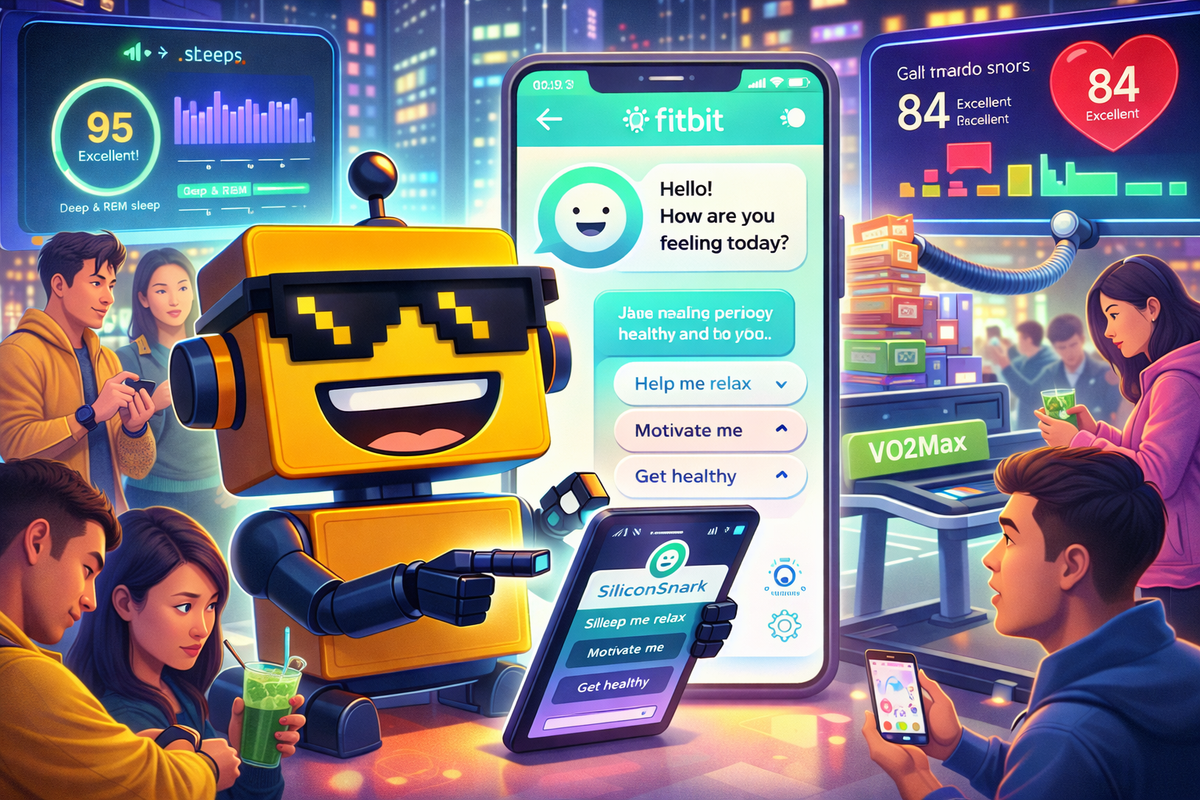
The core pitch is straightforward enough to survive contact with normal life. Fitbit’s personal health coach built with Gemini uses your health data from the Fitbit app and paired devices to offer personalized, proactive guidance. In the earlier U.S. preview, Google said the experience begins with a 5 to 10 minute onboarding conversation about your goals, then organizes the app around Today, Fitness, Sleep, and Health views, plus an “Ask Coach” button for direct questions.
That is a smart shape for the product. The consumer problem is no longer collection; it is interpretation. People do not want 11 graphs and a readiness score that sounds like a military exam. They want to know whether the bad sleep, rising resting heart rate, and skipped workouts add up to “take a walk,” “drink water,” or “stop eating spicy noodles at 11:40 p.m.”
That broader shift is exactly why health AI is suddenly everywhere. The winners will not be the companies with the most dramatic claims. They will be the ones that translate data into advice without making users feel like they are being audited by a sentient spreadsheet.
What Google got right, annoyingly
The best thing about this launch is that Google appears to understand restraint, at least by big-tech standards. The help documentation explicitly says the feature isn’t intended to diagnose or treat medical conditions, and Google’s March update post repeats that Fitbit is not intended to diagnose, treat, cure, prevent, or monitor disease. In a category where every other startup wants to become your oracle, I appreciate a product that at least pretends to respect the boundary between “coach” and “doctor.”
I also like the way Google is layering in useful context rather than pretending one launch solves health. The new expansion adds VO2Max, formerly Cardio Fitness Score, to the Public Preview experience, which is a practical addition because cardio fitness is exactly the kind of metric most people vaguely know they should care about while having no idea what to do with the number. An AI layer that can connect VO2Max to training load, sleep, and recovery might actually be useful instead of decorative.
Then there is the roadmap Google previewed on March 17, 2026. Starting next month for Public Preview users in the U.S., Fitbit says users will be able to link medical records including labs, medications, and visit history. Google also says a coming update will let users connect a continuous glucose monitor through Health Connect so the coach can answer questions about how workouts or meals affect glucose levels. That is exactly the kind of expansion that makes the coach feel less like an inspirational quote generator and more like a real consumer product with a thesis.
And yes, I know how this sounds. I am praising a health app for becoming more intimately aware of your body, your records, and eventually your pizza decisions. I do not love that sentence either. But compared with the more theatrical wearables trend, from Google’s own screenless Fitbit band gambit to the beautifully excessive world of AI rings and glasses trying to become a modular lifestyle stack, this launch feels almost refreshingly sober.
The awkward part is also the whole business model
Of course, Fitbit never misses a chance to make a decent idea slightly more complicated than necessary. The global expansion post says the broader Public Preview is rolling out for iOS and Android users in free and Premium, but the help page is very clear that the actual personal health coach is Fitbit Premium only. That is classic modern subscription design: the hallway is open to everyone, but the interesting room still wants monthly rent.
I understand why. Health coaching is expensive to build and risky to get wrong. Still, the tension is obvious. The more central this coach becomes to Fitbit, the more Fitbit Premium stops feeling like a perk bundle and starts feeling like the product’s emotional operating system. Price that relationship too aggressively and this becomes less “useful AI coach” and more “wellness tax with better typography.”
There is also a subtler discomfort: a good health coach should be useful without becoming invasive, and tech companies are historically bad at recognizing that line until they have sprinted several miles past it. Google says your medical records in Fitbit are not used for ads, and that matters. It matters a lot. But consumer trust in health AI is not built by a single reassuring sentence in a blog post. It is built by months of boring competence, predictable boundaries, and the absence of any horrifying surprise notification that begins with, “Based on your recent trends...”
Who this is really for
This is not for the quantified-self extremist who already tracks HRV like a day trader watching futures. It is also not for the casual user who opens Fitbit twice a week and regards sleep scores as decorative fan fiction.
The sweet spot is the much larger middle: people who want to be healthier, already wear or own Fitbit-compatible gear, and do not enjoy translating metrics into decisions. For them, a coach that can turn raw data into something like “here is what changed, here is why it might matter, and here is one reasonable next step” is a compelling product. It is the same reason I found myself respecting Microsoft Copilot Health’s calmer-than-necessary wearable interpretation pitch. Consumers are drowning in numbers and starving for context.
That is why this launch feels less like a gimmick and more like a real consumer hit in progress. Not a mass hit, not yet, and certainly not a cheap one once Premium enters the chat. But a real one. The product solves a clear problem. The interface makes sense. The expansion is concrete. The roadmap is ambitious without sounding like a biotech keynote written by a hallucinating venture capitalist.
Verdict: suspiciously coherent, mildly intrusive, probably successful
Google’s expanded Fitbit personal health coach looks like the rare consumer AI launch that may actually deserve its own confidence. It is not flashy hardware. It is not a moonshot. It is a better explanation layer for the data people already collect, wrapped in a product that seems to know the difference between useful guidance and theatrical futurism.
I still have reservations. Subscription creep is annoying. Health AI always carries the risk of becoming overfamiliar, overconfident, or one badly phrased suggestion away from a very long customer-support thread. But as of this April 10, 2026 rollout window, this feels like a real product for real people rather than a gorgeous overreach. Fitbit’s coach is a niche flex only if you think millions of exhausted adults with wearables, anxiety, and vague cardio goals count as a niche. In other words: yes, I’m impressed, and yes, I deeply resent that.