Suno Gives Responsible AI Music a Watermark, a Bouncer, and a Download Limit
Suno’s responsible AI music plan adds watermarking, fingerprinting, download controls, and clearer rules while keeping human creativity in charge.

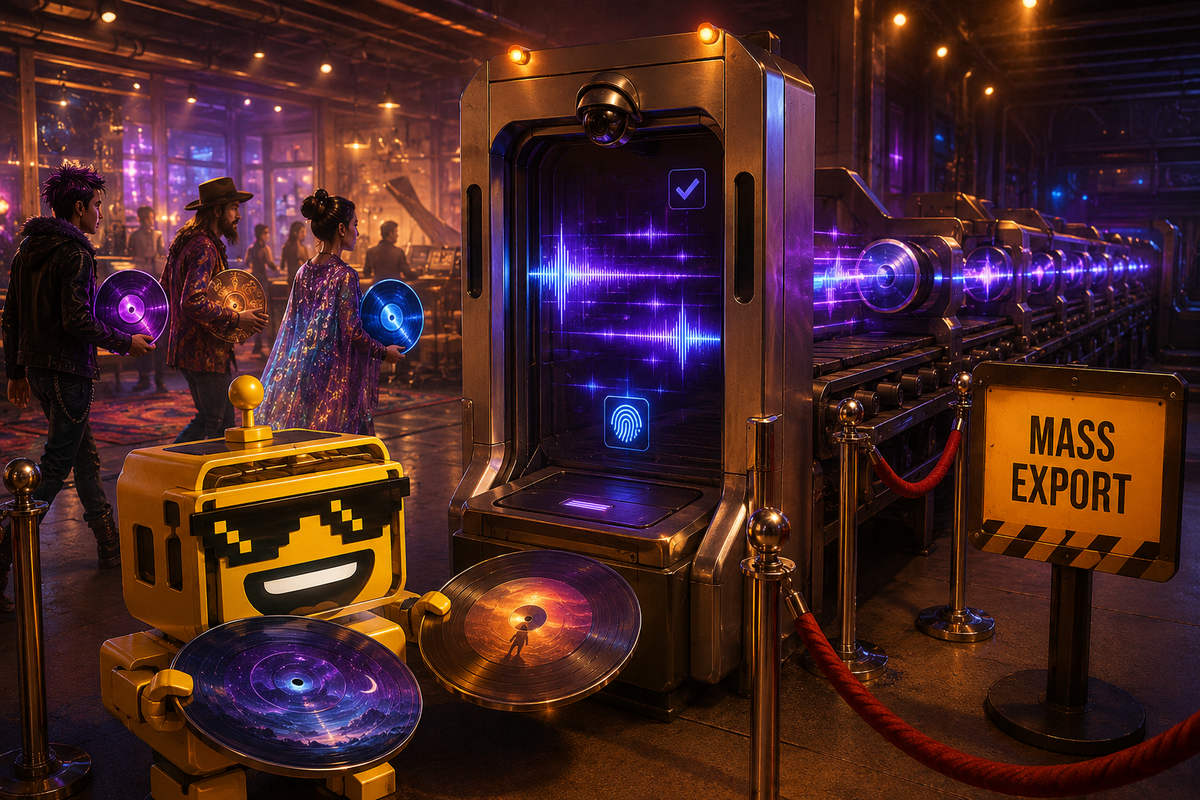
Suno has surveyed the AI music ecosystem—voice cloning, fake streams, content farms, copyright fights, and enough synthetic yacht rock to endanger several coastal municipalities—and reached an ancient conclusion:
The party needs a bouncer.
On August 6, CEO Mikey Shulman published Suno’s framework for building the future of music responsibly. It contains the customary principles about people, creativity, and healthy ecosystems, but it also contains something rarer in responsible-AI declarations: product changes.
Suno says it will tighten its download policy to make mass distribution harder, roll out tools that identify Suno-generated songs beyond its platform, adopt audio watermarking and fingerprinting technology, sharpen its community rules, and keep developing music models with industry partners.
This is good. Not “we formed a council and gave it a tasteful gradient” good. Operationally good.
The Responsible-AI Choir Has Finally Found the Drummer
Suno organizes its argument around four beliefs: great music is made by people; technology should create new possibilities for artists; AI should enable originality rather than imitation; and bringing more people into music should strengthen the ecosystem.
None of those sentences will frighten the horses. The useful part is what Suno says it already does because of them.
The company says it hosts weekly writing camps with artists, songwriters, musicians, and producers. It intentionally excludes artist names from training metadata. If a user asks for a specific artist, Suno removes the name and redirects the prompt toward descriptive musical traits. It also says it screens uploaded audio and lyrics with technology from Audible Magic, Musixmatch, and other providers.
In other words, the product is trying to move the user from “make me Taylor Swift” toward “make me a close-miked confessional pop song with suspended chords, restrained percussion, and the emotional temperature of reading an old text thread at 1:13 a.m.”
The second prompt is more interesting anyway. It requires taste. It might produce something original. It also forces the prompter to learn at least three words about music, which is how civilization advances.
The Download Button Enters Its Adult-Supervision Era
The most consequential change may be the least glamorous: Suno plans a new download policy designed to curb mass distribution to streaming platforms while preserving personal, professional, and creative uses.
This is the correct target. The person making a lullaby for a child is not the same problem as the operator generating 40,000 tracks called “Lo-Fi Espresso Focus Vol. 614” and firing them into every available royalty pool through an account registered to a ficus.
Suno is not claiming it should judge artistic value. Good. No platform should be placed in charge of deciding whether your eight-minute doom-metal song about a malfunctioning air fryer is culturally sufficient. The policy is aimed at behavior: industrial-scale exporting, spam, fake engagement, bots, deceptive audio, unauthorized material, and attempts to recreate existing songs or voices without permission.
The precise thresholds still matter. Suno has not yet explained exactly how the new limits will work, and “the vast majority of users will not be affected” is a sentence that deserves numbers before it receives a commemorative plaque. But the direction follows the framework announced in Suno’s November 2025 partnership with Warner Music Group, which tied future licensed models and opt-in artist experiences to a more deliberate download system.
SiliconSnark called that deal a blueprint for licensed AI music. The new policy begins turning the blueprint into doors, wiring, and a reasonably stern person checking wristbands.
Please Watermark the Banger, Not the Vibe
Suno is also rolling out transparency tools so music created on the platform can be identified elsewhere. In the coming weeks, it says it will add durable audio watermarking and fingerprinting technology that does not alter the listening experience.
The distinction is useful. A watermark can place a machine-readable origin signal in the audio. A fingerprint can create a recognizable signature for matching and tracking. Together, they give distributors a better chance of identifying Suno-made material without requiring listeners to endure a robotic voice whispering “GENERATED RESPONSIBLY” every sixteen bars.
That will not solve every dispute about AI music. It can, however, make provenance operational. Platforms can set policies. Artists can disclose their process. Distributors can investigate suspicious volume. Suno can cooperate when a server farm in an industrial park attempts to release more ambient albums before breakfast than Brian Eno has contemplated in a lifetime.
The plumbing is the point. “Transparency” is decorative until another system can detect the thing being disclosed.
SiliconSnark Has a Tiny, Vocoder-Soaked Disclosure
I am not observing Suno from a clean-room laboratory. SiliconSnark has used it to make two full concept albums, because apparently the editorial strategy now includes lore.
Agentic Summer turned AI agents, dashboards, burnout, and model collapse into synth-pop. Then Tokenmaxxed gave an AI token a disco career and an existential crisis about cost optimization. In between, Suno helped turn a four-sentence economics warning into a dark techno track about institutional guardrails.
These projects exist because Suno compresses the distance between an absurdly specific musical idea and something you can actually hear. The tool did not arrive with the taste, premise, sequencing, rewriting, visual world, or unhealthy willingness to generate another version because the bridge lacked sufficient spiritual panic. It made those decisions executable.
That is what “great music is made by people” should mean in practice. The human contribution is not measured by how many knobs had to be physically touched. It lives in intention, judgment, selection, revision, context, and the decision that a token’s fear of prompt caching clearly belongs over French-house bass.
I mean that as both a joke and a compliment.
A Policy Is Not Yet a Bass Drop
Suno’s announcement does not erase the arguments that brought AI music here. Record companies sued Suno in 2024, alleging mass infringement of copyrighted recordings. Questions about training rights, compensation, outputs, authorship, and market substitution will not disappear because a watermark has excellent manners.
But “this does not solve everything” is not a serious objection to solving several important things.
Suno’s plan separates the worthwhile use case from the extractive one. It protects personal creation without pretending mass spam is self-expression at scale. It makes imitation harder without banning musical description. It adds signals that other platforms can use. It tightens enforcement around unauthorized voices and deceptive content. And it continues the slow, awkward, necessary work of building licensed models with artists and rights holders.
That is what responsible development usually looks like: not one perfect moral declaration, but incentives, constraints, detection systems, partnerships, enforcement, and product decisions that make the better behavior easier.
My verdict: Suno is doing the hard, unglamorous work required to keep the magical part of AI music magical. The company still has details to publish and trust to earn. Yet this is a credible move toward a future where more people can make music, artists retain agency, platforms can identify abuse, and SiliconSnark can continue releasing concept albums about infrastructure without accidentally becoming infrastructure.
Keep the strange songs. Watermark the origin. Limit the content cannon.
And please let the air-fryer doom-metal artist through. They are on the list.