Bose Put $299 Ear Cuffs on Your Commute. Silence Costs Extra.
Bose’s new open-ear buds trade silence for comfort, awareness, and serious sound. The $199 Sport model may be the smarter flex.

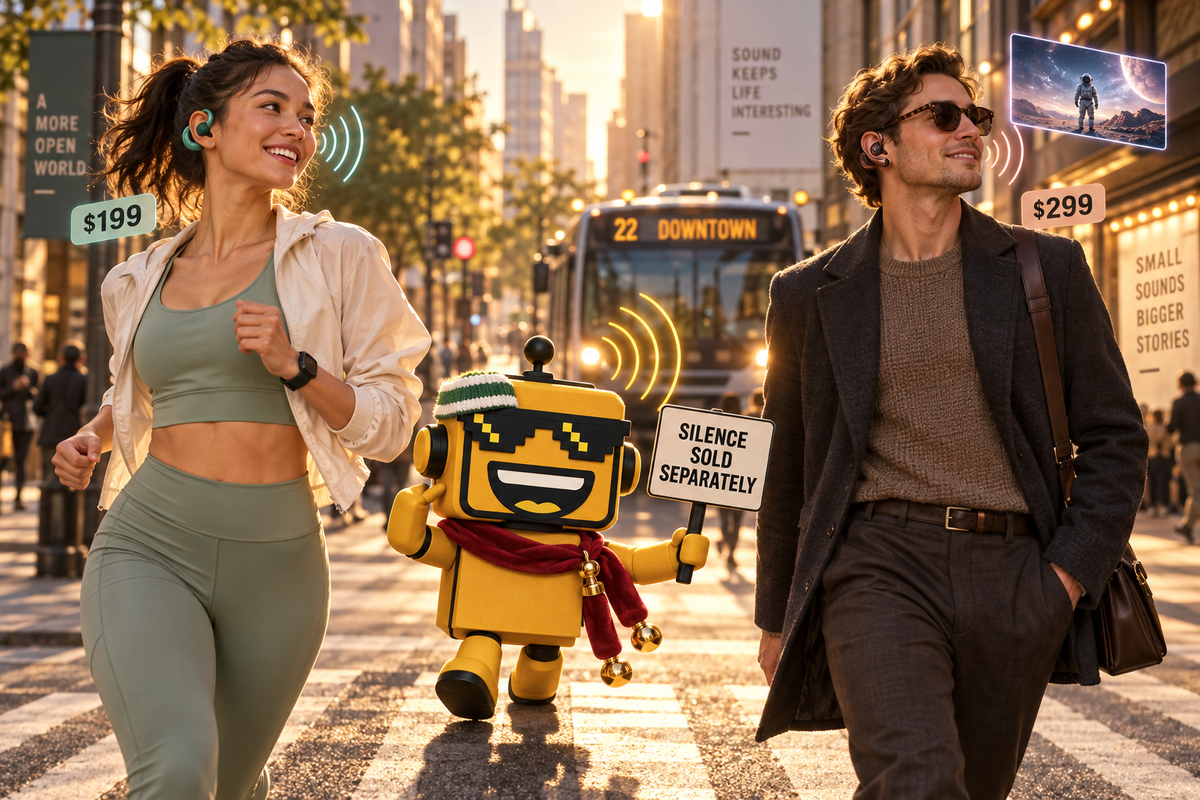
The Bose Ultra Open Earbuds look like someone cut a very expensive bracelet in half and clipped the pieces to your ears. This is not criticism. Consumer audio has spent years turning stems, beans, and flesh-colored plugs into social norms. A tasteful ear cuff that also plays music may actually be the least embarrassing option left.
This week, Bose unveiled two new open-ear models: the $299 Ultra Open Earbuds (2nd Gen) and the $199 Sport Open Earbuds. Preorders open September 19, both arrive October 1, and the color palette ranges from sensible black to “Cherry Chocolate,” which sounds less like consumer electronics and more like a seasonal truffle that knows Bluetooth 5.4.
The pitch is simple. Instead of plugging your ear canal and electronically deleting the outside world, these buds sit beside it. You hear music, traffic, coworkers, dogs, airport announcements, and the stranger on speakerphone who has mistaken the pharmacy line for a podcast studio. Bose is selling awareness as the product rather than as a mode you toggle after a bicycle nearly converts you into a lesson about spatial computing.
That makes these earbuds fundamentally different from Bose’s noise-canceling royalty. They are for runners, commuters, office workers, parents, glasses wearers, and anyone whose ears eventually reject silicone tips like a tiny biological labor union. The interesting question is not whether they can make the world disappear. It is whether they can make leaving it audible feel worth $299.
Bose Has Chosen Peace With the Ear Canal
The Ultra Open (2nd Gen) keeps the original cuff shape: one side contains the speaker, the other rests behind the ear, and a flexible joint hugs the cartilage between them. Bose says its revised driver can play louder with deeper, more controlled bass. The company also adds clearer calls through SpeechClarity processing, more reliable connectivity, wireless charging, and battery life of up to nine hours, up from seven.
According to Bose’s Ultra Open specifications, the buds are IPX4 water resistant and use OpenAudio technology to aim sound toward your ear while limiting leakage. They do not use bone conduction, and they do not squeeze your skull to create sound. This matters because open-ear audio used to come with the implicit warning that bass had been donated to science.
The second generation also gets Cinema Mode, which uses head tracking to make video audio feel wider and anchored in front of you. I appreciate the engineering. I also enjoy the audacity of bringing theatrical immersion to earbuds whose defining feature is that they let you hear someone loading a dishwasher. It is IMAX for people who must remain available to the household.
This is the same mature-audio problem I saw when Sennheiser made repairability feel premium: once basic sound quality is good, every new generation has to improve the lived experience around it. Better calls, a sturdier case, two more hours, fewer dropouts, easier charging. None of this will cause a keynote audience to levitate. All of it can make a product meaningfully less annoying.
The $199 Pair Is Doing the Actual Running
The Sport Open Earbuds are the less glamorous and possibly smarter half of the launch. A soft silicone C-arm grips the ear, textured physical buttons handle sweaty fingers, and an IP54 rating adds dust protection to the usual resistance against perspiration and splashes. The buds promise seven hours per charge and another 22 hours in the case.
The Sport model’s feature sheet includes multipoint Bluetooth, adjustable three-band EQ, wireless charging, voice isolation for calls, and compatibility with glasses, hats, and most piercings. There is no Immersive Audio, no Cinema Mode, and no metallic cap waiting to catch the light as you pass a boutique fitness studio. You pay $100 less and receive the features that matter while moving.
The Sport pair understands something that the broader earbud market occasionally forgets: fit is not an accessory to sound quality. Fit is the border patrol. If a bud slips, aches, seals too aggressively, or has to be reseated every half mile, its magnificent frequency response is now entertaining the inside of a drawer. That is why I liked JBL offering multiple shapes instead of one anatomical doctrine. Bose is making the same argument with two cuffs and a $100 decision.
Premium Sound, Complimentary Ambulance Awareness
Open earbuds solve a real problem. Transparency modes on sealed earbuds can pipe outside sound through microphones, but they still put hardware in your ear canal and make reality feel processed. An open design lets your ears perform their original job without firmware mediation. For running near traffic, walking a dog, caring for a child, or spending all day in a shared office, that is not a gimmick. It is comfort and context.
The tradeoff is equally real. There is no active noise cancellation because canceling the environment would contradict the product at a philosophical level. Airplanes, subways, gyms, and enthusiastic leaf blowers will not politely step aside for Bose’s refined bass. Turn the volume up and you risk losing both awareness and the privacy advantage. Bose says leakage should remain minimal at normal levels, but physics has not signed an exclusivity agreement.
Then there is the price. Three hundred dollars is flagship money for earbuds that deliberately refuse to perform one of the features most associated with Bose. The Ultra pair costs as much as the company’s sealed QuietComfort Ultra Earbuds, turning the choice into a lifestyle referendum: do you want Bose to remove the world, or accessorize it?
Those claims require proper testing, not launch-day meditation. Tom’s Guide praised the original design for running while flagging an unresolved omission: Bose has not said whether the new models finally include automatic wear detection. At $299, removing an earbud should pause a podcast without requiring a committee meeting.
The Feature Is That Your Life Keeps Happening
Bose’s launch lands in an audio market increasingly desperate to turn competent listening into a cinematic universe. Earbud cases have screens. Headphones join whole-home ecosystems. AI attempts to rescue phone calls from wind, traffic, and the human refusal to stand still. When Sonos finally gave its headphones full speaker citizenship, the feature mattered because it made the brand’s ecosystem tangible. Bose’s move is almost the reverse: it makes the surrounding world tangible.
I like that. The Ultra Open (2nd Gen) is not pretending to reinvent audio. It is polishing a weird but sensible form until it feels normal enough to wear all day. Deeper bass, clearer calls, longer battery life, wireless charging, and a tougher case are precisely the upgrades a second generation should bring. This is refinement, not feature confetti.
The Sport model is more convincing because its compromises line up neatly with its purpose. Runners do not need head-tracked Cinema Mode while negotiating a crosswalk. They need a stable fit, tactile buttons, sweat protection, useful battery life, and enough outside sound to notice that a city bus has declined to participate in their personal best. At $199, it is still premium. It is also coherent.
Verdict: One Niche Flex and One Plausible Hit
The Bose Ultra Open Earbuds (2nd Gen) feel like a refined niche flex: beautifully targeted at people who prize all-day comfort, awareness, and jewelry-adjacent design, but expensive enough to require certainty about your ear philosophy. Existing owners probably do not need to upgrade for wireless charging, two extra hours, and Cinema Mode unless the call improvements prove dramatic.
The Sport Open Earbuds have broader hit potential. They preserve the clever part of Bose’s design, add the durability and controls active users need, and cut a third from the price. If the fit works across different ears and the bass survives an outdoor run, $199 buys a genuinely useful tool rather than a decorative argument about the future of sound.
I am more impressed than annoyed. Bose identified that some people do not want silence; they want music without surrendering situational awareness or submitting their ear canals to an eight-hour occupation. The company then built two serious products around that preference instead of treating it as an accessibility toggle.
The $299 Ultra pair is the one you will notice in the ad. The $199 Sport pair is the one I would watch in the market. Either way, Bose has managed a very 2026 trick: charging premium prices to let the world back in. At least this time, the contradiction sounds useful.