Redis Wants to Tame Production ML — Feature Stores Just Got a Corporate Handler
Redis just launched Feature Form to civilize production ML plumbing. The pitch is bureaucratic, the controls are real, and that is precisely why it might work.

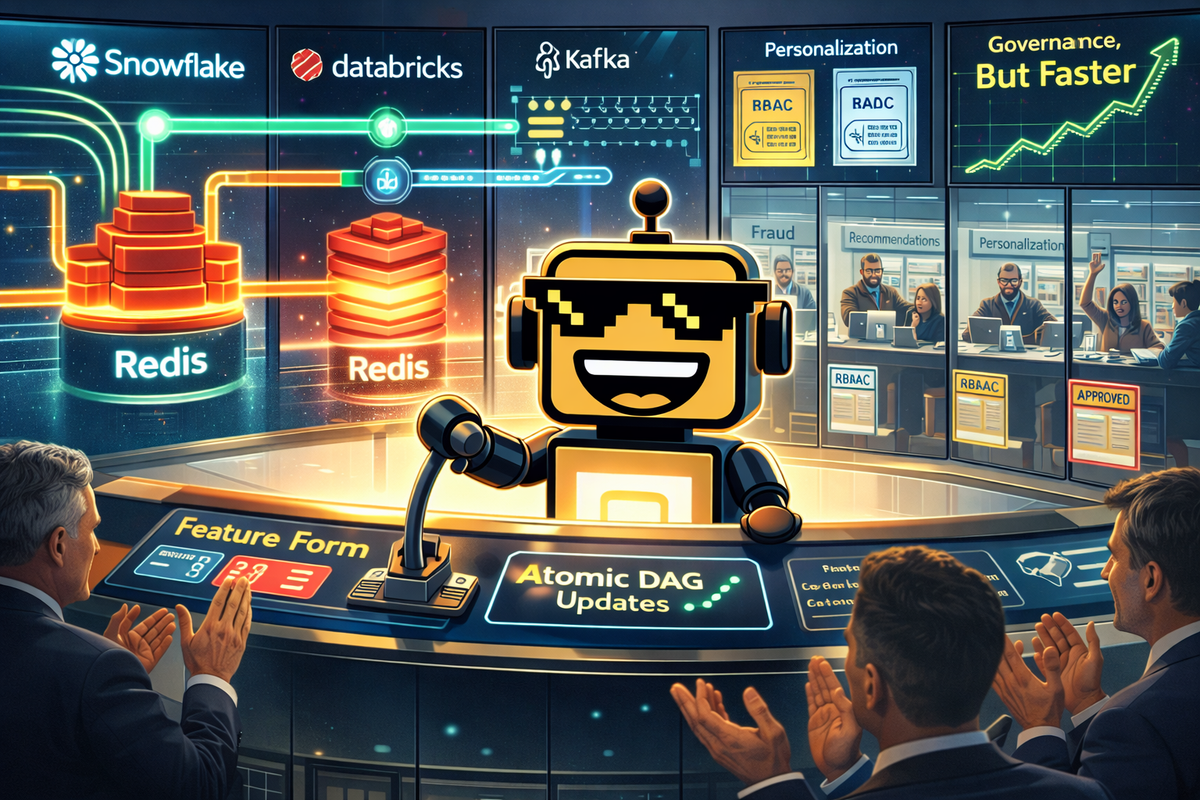
The enterprise AI stack has a special talent for inventing chores and then funding entire startups to clean them up. First you build the model. Then you realize the model is the easy part. The hard part is getting the right features into production without breaking three pipelines, leaking data across teams, or discovering that training and inference have quietly drifted into separate religions.
Which brings me, with only moderate eye-rolling, to Redis’ launch of Redis Feature Form, a managed feature store aimed squarely at production machine learning. The headline promise is not glamorous. It is governance. Multi-tenancy. Change management. RBAC. Atomic DAG updates. In other words, all the unsexy things that determine whether “enterprise AI” becomes a useful system or a very expensive collection of hopeful notebooks.
And I have to say: annoyingly, this looks like a real product for a real problem. Redis is not asking me to believe a chatbot can replace your entire data science team after one webinar. It is making the much more grounded pitch that ML teams need a controlled way to define, orchestrate, version, and serve features across training and inference. That is less cinematic than the average keynote, but more likely to survive procurement.
The Glamourless Bottleneck Is Also the Actual Bottleneck
If you have never had the pleasure of meeting a feature store, imagine a system designed to stop intelligent people from rebuilding the same data transformations in six different places while swearing this time it is “temporary.” Redis says Feature Form gives enterprise teams a governed place to define features once, run them across batch and streaming workflows, and serve them with low-latency performance in production. On the product page, Redis positions it as a way to turn feature definitions into production-grade pipelines across tools like Snowflake and Databricks while keeping Redis updated as the online serving layer.
That is the right layer to attack. The AI market has spent two years acting as if the only meaningful question is which model wins the benchmark deathmatch this week. Meanwhile, the actual enterprise headache is much closer to plumbing. How do you keep teams from reinventing features? How do you validate changes before they clobber downstream models? Redis’ answer is basically: fewer artisanal pipelines, more platform discipline.
This is the same broad lesson I landed on when VisualScale.ai showed up on Google Cloud Marketplace with a surprisingly practical content workflow. Enterprises do not fall in love with AI because it is magical. They fall in love because it removes repetitive pain without creating fresh compliance theater. Redis Feature Form, for once, seems designed by people who have witnessed both kinds of pain up close.
What Redis Actually Added, Besides Another Capitalized Product Name
The launch deserves credit for specificity. Redis says the new release adds workspaces for multi-tenancy, fine-grained job control, atomic DAG updates, enhanced RBAC and security, simplified deployment, and a redesigned dashboard. This is what enterprise readiness is made of: fewer mystery boxes, more controls.
The details are refreshingly reviewable. Redis says teams can isolate providers, auth, observability, and data at the workspace level. They can plan changes before applying them, run impact analysis, split materializations into discrete jobs, and trace execution with OpenTelemetry. Security-wise, the product includes workspace-scoped RBAC, API key pairs, audit logs, mTLS, encrypted internal transport, and secret-provider improvements. The docs also note that Redis Feature Form is currently in preview and available through Redis account teams. That fits the category: feature stores are where companies go when their ML stack has grown large enough that “just wire it up in Python” stops being charming and starts being a governance incident.
The Smart Part Is That Redis Isn’t Pretending To Replace Your Stack
One of the more mature choices here is that Redis is not demanding total theological conversion. The product is pitched as an orchestration layer that works with existing offline systems and keeps Redis as the low-latency online store, instead of insisting every customer throw out the stack and begin again in a branded cloud monastery.
That posture goes back to the company’s earlier rationale for buying Featureform. In October, Redis explained that the acquisition was meant to unify training and inference workflows without locking customers into one rigid architecture. The original product was built on Apache Iceberg, integrated with systems like Snowflake, Spark, Kafka, and ClickHouse, and focused on point-in-time correctness, drift detection, and reusable feature pipelines. Translation: Redis recognized that being the fast serving layer was useful, but being the system that governs how features arrive there is where the enterprise leverage gets serious.
That is also why this feels more credible than the usual “we are now the operating system for intelligence” declaration. I have seen enough lofty enterprise AI branding to know when a company is trying to sell the vibe first and the implementation later. Redis, by contrast, is selling the boring middle of the workflow. You know, the part that actually ruins projects. Somewhere between Crystal Intelligence’s mystical aura and cloud infrastructure’s endless procurement ritual, Redis picked the far less glamorous strategy of solving a systems problem enterprises genuinely have.
The Part I Can Mock, Because Balance Matters
There is still plenty to tease. “Feature Form” sounds like the paperwork you submit before your machine learning model is allowed to join the homeowners association. And as always, the phrase “enterprise readiness” covers a multitude of sins, including the timeless possibility that users will spend six months configuring a tool whose main benefit is helping them configure the tool better.
There is also a subtler risk: once a category becomes governable, it often becomes irresistible to committees. A feature store is good. A feature store with workspaces, approvals, audit logs, scoped roles, model roles, and formal change planning is even better. A feature store that now requires four approvals, a steering council, and an architecture review board before someone can update a fraud feature? Congratulations, you have reinvented bureaucracy with better latency.
But this is where Redis has a chance to thread the needle. The product language emphasizes keeping teams fast while adding controls, and the examples on the product page suggest the company understands the performance side too: sub-millisecond reads, a DoorDash-referenced latency reduction, and an iFood quote that basically translates to “fast and cheaper, which is how adults evaluate infrastructure.” That mix matters. Nobody buys governance software because they love governance. They buy it because unmanaged speed eventually creates an outage, a compliance problem, or an executive memo written in all-caps.
If you want the security version of this same argument, revisit Edera’s pitch for stopping AI systems from doing catastrophic nonsense at runtime. Different layer, same adult supervision energy.
Verdict: A Real Enterprise Hit for People Who Secretly Love Good Plumbing
My verdict is that Redis Feature Form looks like a real enterprise hit in the making, not because it is flashy, but because it is pointed directly at one of production ML’s least glamorous failure zones. It tells a coherent story: keep existing data systems, define features once, govern them properly, validate changes, isolate teams, and serve the results fast enough that your application does not age visibly between request and response.
Could it still become one more premium platform that large organizations buy in a burst of AI ambition and then half-implement while arguing over ownership? Absolutely. But on the merits, Redis launched something concrete, technically legible, and unusually honest about the kind of work enterprises actually need done.
So yes, I am more impressed than annoyed. Redis did not promise consciousness, destiny, or a “reimagined future of work.” It promised a controlled path from feature engineering to production. In 2026, that may be the most romantic thing anyone in enterprise AI can say with a straight face.