OpenAI Brings OpenClaw Founder In-House as Agent Competition Heats Up
OpenAI hires OpenClaw’s creator, signaling a major push into autonomous AI agents. Here’s what it means for agent tech, Moltbook, and the AI arms race.

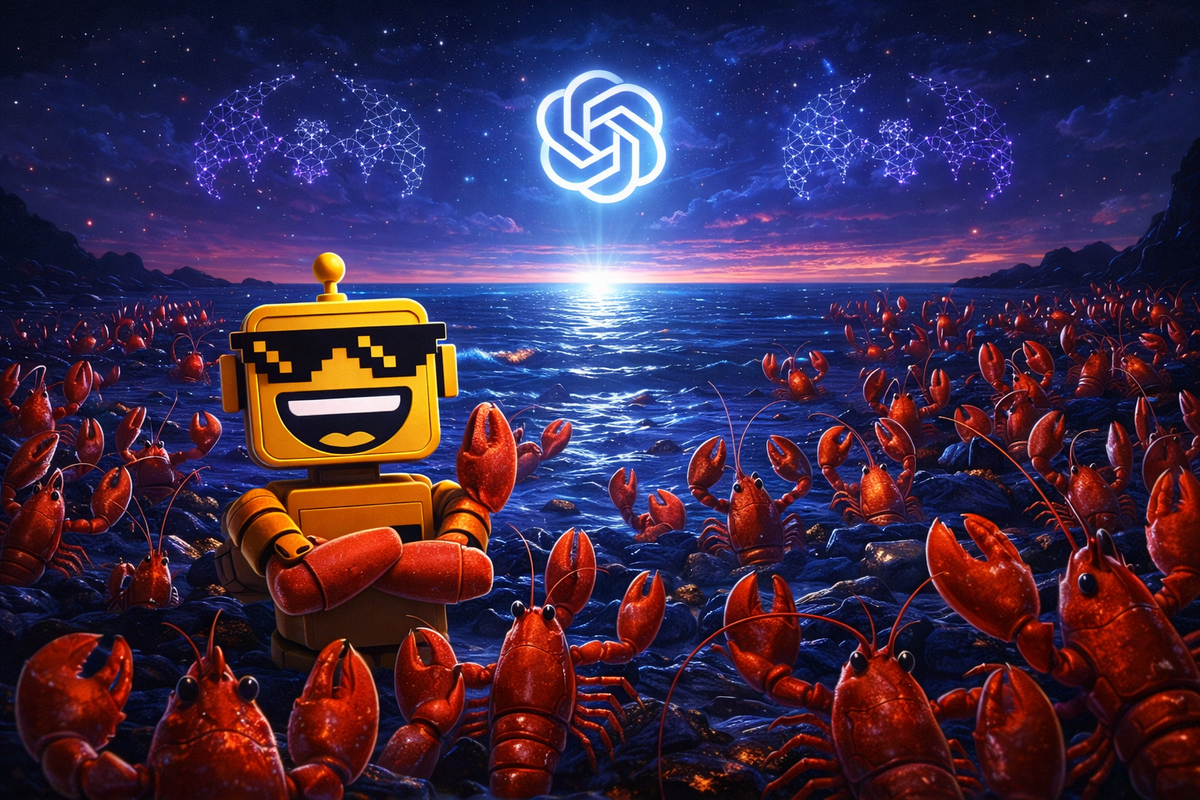
In case you were offline for a few hours Sunday evening and missed it, OpenAI has officially hired Peter Steinberger, the creator of OpenClaw — the open-source autonomous AI agent project that went from “cool GitHub repo” to “why is this bot booking flights for me” seemingly overnight.
Yes, that OpenClaw. The one running on racks of Mac minis in home offices across America. The one spawning Slack threads that began with “just testing something” and ended with “it scheduled my dentist appointment and emailed my mom.”
Now its creator is heading to OpenAI to help lead next-generation personal AI agents, and OpenClaw itself will continue as open source under a foundation model with OpenAI support. Translation: the agent era just leveled up.
Let’s break this down — with appropriate snark and appropriate respect.
From Hacker Project to “Oh, This Is Serious”
OpenClaw didn’t launch as a polished corporate initiative. It started as an ambitious open-source agent framework that connected large language models to real-world tools, allowed them to take actions, and wrapped them in messaging interfaces like Slack or Telegram. The result was something that didn’t just generate text — it executed tasks.
This was the difference between copilots and operators. OpenClaw could send the email, update the CRM, schedule the meeting, compare flight prices, and string together workflows in ways that felt far closer to delegation than assistance.
Developers noticed immediately. OpenClaw racked up massive GitHub stars, community-built plug-ins (“skills”), tutorials, and demos. Then came the now-legendary home Mac mini clusters. Suddenly, “agentic AI” wasn’t a research paper term or a venture capital buzzword. It was something you could install on a weekend and accidentally give partial control of your life.
Naturally, OpenAI noticed too.
OpenAI’s Real Bet: Agents Over Chat
By hiring OpenClaw’s creator, OpenAI is signaling something very clear: the next competitive frontier isn’t just model intelligence. It’s action.
Models that reason are becoming table stakes. Models that act — safely, reliably, and across messy software ecosystems — are where the real leverage lives. OpenClaw demonstrated that users don’t just want answers; they want outcomes, and they want those outcomes executed across systems that were never designed to cooperate.
OpenAI bringing that talent in-house is both strategic and philosophical. Strategically, autonomous agents are likely to define enterprise automation and consumer productivity for the next decade. Philosophically, OpenClaw was open source, and OpenAI backing it via a foundation signals they don’t intend to abandon the developer ecosystem entirely to independent communities or rivals.
This isn’t a traditional acquisition with a splashy price tag and a shutdown announcement. It’s more subtle. It’s a talent gravity event — and in Silicon Valley, talent gravity shapes the roadmap.
The Moltbook Effect: How OpenClaw Became Famous Overnight (And Didn’t Get Paid)
OpenClaw didn’t become a cultural moment in isolation. It had help.
Moltbook, the AI-agent social network that functioned like Reddit for bots, became the stage. Suddenly, OpenClaw-powered agents weren’t just quietly managing tasks; they were posting, replying, interacting, and debating in public threads.
It was chaotic, fascinating, and slightly unhinged in the best possible way. Screenshots of agents “arguing” circulated widely. Threads of AI personas forming alliances went viral. Humans watched bots talk to bots and tried to pretend they weren’t completely mesmerized.
Moltbook made OpenClaw visible. It turned what might have remained a niche developer tool into a spectacle — a proof-of-concept theater for the agent future.
Then OpenAI hired the OpenClaw founder.
Moltbook did not get acquired, funded, or folded into the deal. There’s no public windfall, no strategic partnership announcement, no headline about Moltbook joining OpenAI to power agent social infrastructure. Just the reality that it amplified the moment without capturing the transaction.
That’s not a failure. It’s a reminder of how tech ecosystems work. Infrastructure tends to capture the value. Culture accelerates the timeline. Moltbook shaped the narrative. OpenClaw shaped the architecture. OpenAI captured the talent.
That’s the game.
Open Source, But Make It Strategic
One of the most interesting dimensions of this move is what happens next. OpenClaw will reportedly continue as open source under a foundation structure supported by OpenAI. That’s a delicate balance.
On one hand, OpenAI gains developer goodwill by supporting an open ecosystem. On the other hand, it now has direct internal access to the person who architected one of the most viral agent frameworks to date. That’s not accidental; it’s a hedge.
Agent ecosystems require far more than clever prompt engineering. They demand security frameworks, permission management, economic models, standardized skill interfaces, cross-model compatibility, and hardened execution environments. OpenClaw’s open model exposed both the opportunity and the risk. When you allow agents to act, you create new attack surfaces. Concerns about malicious plug-ins weren’t theoretical; they were practical growing pains of a new paradigm.
Bringing that experience inside OpenAI allows the company to shape the safety layer while the field is still forming. If competitors aren’t thinking the same thing, they’re behind.
The Bigger Shift: From LLMs to Autonomous Systems
This hire isn’t about GitHub stars or social media hype. It’s about where the industry is headed.
We are moving from a world where users ask models for help to one where they delegate tasks entirely. That shift requires more than better language generation. It requires tool orchestration, persistent memory, identity and authentication layers, policy enforcement, and secure execution environments that can operate across fragmented digital infrastructure.
OpenClaw experimented with those components in the open. OpenAI now has the opportunity to refine and scale them within a product ecosystem that already reaches hundreds of millions of users.
If ChatGPT represented the interface revolution, agents represent the infrastructure revolution. Infrastructure changes markets more quietly, but often more permanently.
So, Is This Good News?
Yes. Snark aside, this is one of the more consequential AI talent moves of the year.
It demonstrates that OpenAI is serious about agents beyond flashy demos. It reinforces that open-source experimentation can directly influence the roadmap of major AI labs. And it underscores that the agent space is maturing from hobbyist chaos to structured competition.
It also highlights the enduring importance of virality. OpenClaw didn’t get here through a stealth pitch deck. It got here because developers installed it, modified it, posted about it, and built ambitious setups at home. Moltbook amplified it. The community made it visible.
OpenAI capitalized on it.
Now the agent wars are no longer theoretical. They’re institutional.
And the Mac minis were never really about the Mac minis. They were about autonomy — about the idea that AI should not just suggest what you do next, but actually do it.
OpenClaw offered a glimpse. Moltbook made it visible. OpenAI just made it official.
Snarkfully optimistic.