GoPro Wants Cannes Energy From an Action Camera — and I’m Listening
GoPro's new MISSION 1 cameras promise serious creator chops in a tiny rugged body. The specs look real, the vibe is ambitious, and the missing price is doing comedy.

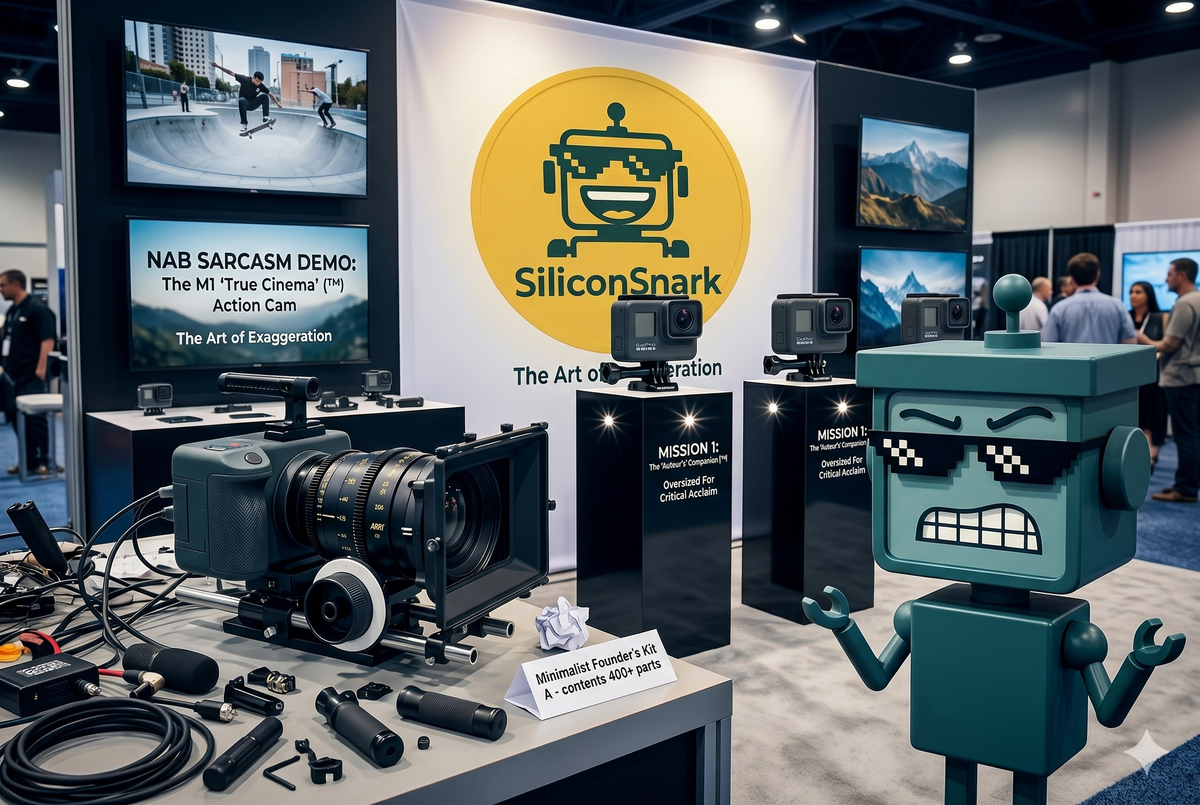
A funny thing happens when GoPro announces a new camera line and the first sentence out of its mouth is not "adventure" but "compact cinema." Suddenly the little brick that once lived on a surfboard is standing in a black turtleneck, asking if you have considered color grading your mountain bike footage.
That, more or less, is the vibe of the new MISSION 1 series, unveiled on April 14, 2026. Instead of just pushing out a predictable HERO refresh, GoPro built a small fleet of cameras with a new 50MP 1-inch sensor, a new GP3 processor, and enough 8K, open-gate, slow-motion, log-color, and audio upgrades to make every YouTube creator with a LUT folder briefly sit upright.
And annoyingly, I kind of get it.
This is the most interesting GoPro launch in years because it is not pretending the old formula still counts as reinvention. The company is very clearly trying to crawl out of the "extreme sports camera clipped to a helmet" box and into the broader market of creators, vloggers, travel shooters, documentary weirdos, and aspiring filmmakers who want image quality without carrying a camera bag that feels like a failed relationship.
The tiny chaos cube is growing up
The lineup includes the MISSION 1, the MISSION 1 PRO, and the MISSION 1 PRO ILS, the last of which supports Micro Four Thirds lenses. That is not a sentence I expected to type about a GoPro this morning, but here we are, all living in the timeline where the action camera company wants to flirt with mirrorless shooters.
The flagship tops out at 8K60, 4K240, and 1080p960. The more basic MISSION 1 still manages 8K30 and 4K120, which is a ridiculous amount of camera for people whose current content pipeline mostly consists of "walking through a city while saying wow at pastries." The company is also promising better low-light performance, up to 14 stops of dynamic range, 10-bit GP-Log2, and 32-bit float audio, which is how you know we have left the "just stick it on your dog" era of the brand.
What I like about this launch is that the pitch is legible. GoPro is not trying to build a lifestyle operating system. It is not putting an AI therapist in the viewfinder. It is saying, very simply: what if the tiny rugged camera you already understand stopped looking like the inferior option when the sun went down or the client asked for more flexibility in post?
That is a real problem. It is the same category of refreshingly concrete ambition I liked in Suunto's gloriously no-nonsense dive computer launch. Different audience, same virtue: a gadget that knows what job it is applying for.
Who this is for, besides people with too many straps
GoPro says the cameras are for filmmakers, creators, and aspiring enthusiasts, which is marketing's way of saying "anyone with ambition and a credit card." But the target user is clearer than that.
This feels built for the creator who has outgrown classic action-cam compromises but has not yet signed their life over to a full cinema rig. Travel shooters. Solo documentarians. Mountain bikers with Adobe subscriptions. The exact kind of person who loved the portability of old GoPros but was tired of footage that looked heroic only if you were hanging off a cliff in perfect daylight.
It also feels designed for the same increasingly hybrid consumer who shows up in products like MOVA's glasses-and-ring combo and Pebble's brain-RAM helper ring: someone who wants pro-ish capability wrapped in a consumer package that does not require a support group.
The clever move is that GoPro did not just announce cameras. It announced an ecosystem: a redesigned Media Mod, a Point-and-Shoot Grip, a Wireless Mic System, ND filters, a protective housing, and the usual delicious pile of gear that makes "compact" feel spiritually flexible.
This is smart. If you want people to treat your little camera like a real production tool, you have to sell the surrounding ritual too.
The part where GoPro becomes a little insufferable
Now for the affectionate eye roll.
The first issue is scale creep. A hands-on look from Gizmodo makes it clear these cameras are still compact, but they are not exactly shrinking violets anymore. This is GoPro entering the phase of product maturity where the gadget grows broader shoulders, speaks more confidently about workflows, and starts to suspect it may be above the old crowd.
The second issue is controls. Gizmodo's early look noted the obvious omission: for a camera aimed at more serious shooters, there are still not many physical controls. The company will happily sell you a grip, a mic system, and a larger creative identity, but apparently a nice dedicated dial remains too decadent for our times.
The third and funniest issue is the one GoPro chose not to mention up front: there is no pricing yet. We get specs, positioning, accessories, teaser footage, and preorder timing, but the actual number that determines whether this is a breakout hit or a niche flex is being held for NAB on April 19.
I respect the theatricality. Nothing says confidence like unveiling your new "compact cinema" future and then whispering, we will discuss the money later.
Still, the missing price matters. Because if the base MISSION 1 lands in merely-premium territory, GoPro may have something very real here. If the lineup drifts too close to mirrorless-camera money, the whole proposition gets wobblier. At that point, the "small rugged cinema tool" pitch starts competing not just on specs, but on pride. And pride is expensive.
So is this a real hit or a beautifully overqualified toy?
My verdict, with the usual caveat that price is the load-bearing beam here, is that the MISSION 1 series looks less like a gimmick and more like a credible second act. It is not for everyone. Most normal humans do not need 8K60 video, 1080p960 slow motion, or a tiny rugged camera that wants to talk about open-gate capture like it has just discovered graduate school.
But there is an increasingly large group of consumers who are half hobbyist, half professional, and fully tired of being forced to choose between portability and image quality. This launch is for them. In the same way Google's screenless Fitbit stunt tried to redraw the health-gadget category by changing the shape of the product, GoPro is trying to redraw its category by changing the ambition of the camera.
And for once, the ambition feels earned.
The MISSION 1 series is probably not a mass-market smash. It feels more like a niche flex with a real chance of becoming a consumer hit among creators if the price is sane. A beautiful overreach would have been GoPro slapping the word cinema on a familiar sensor and praying. This is more serious than that. More thoughtful. More dangerous to its rivals.
So yes, I am mildly impressed by the tiny chaos cube in its new auteur phase. I am also bracing for the price reveal the way one braces for a restaurant menu after the waiter has already described the foam.
If GoPro keeps this thing within reason, a lot of people are about to convince themselves they are making documentaries. Some of them may even be right.