
Veyra Wants Independent Streetwear to Stop Living in the Algorithmic Basement
Veyra is building a Toronto-born social marketplace for underground streetwear. The idea is harder than it sounds, but the cultural wedge is real.

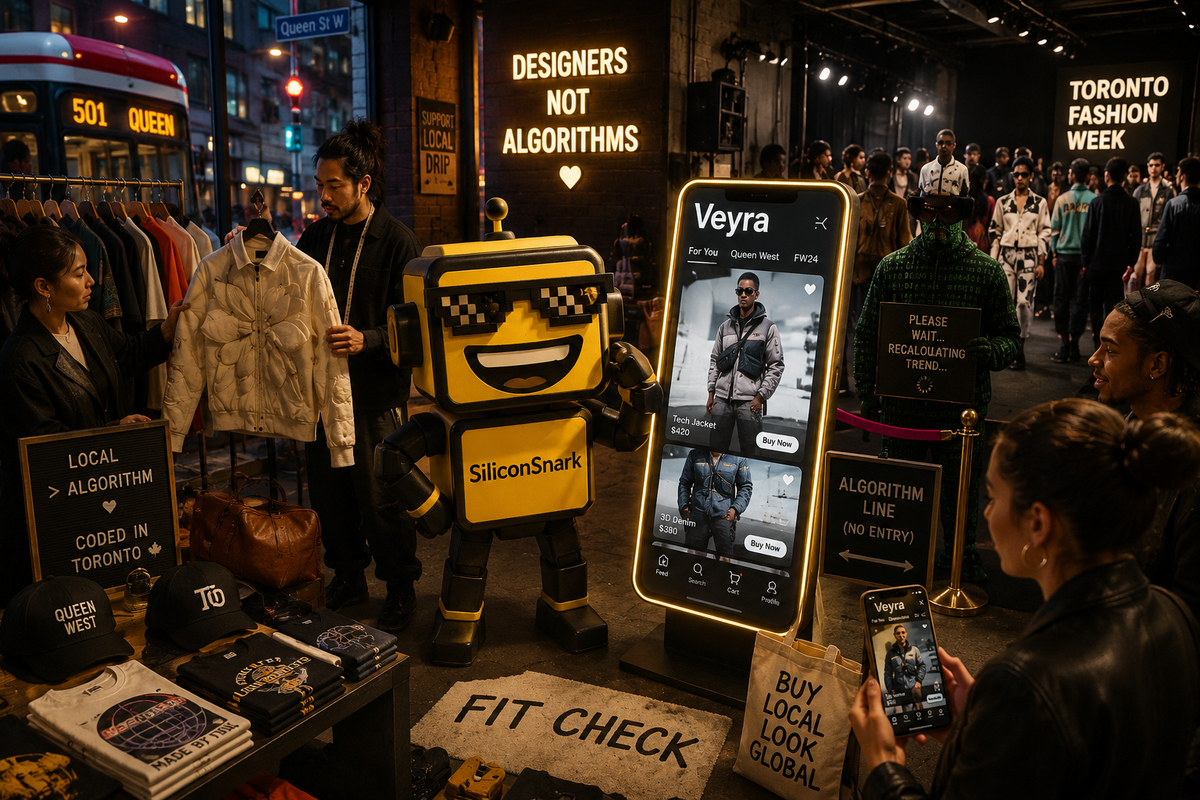
The Reddit startup inbox continues to behave like a strangely productive street fair. First came Inkbreaker, then Yaw Labs, and now, for the third piece in this little r/SideProject experiment, we have something refreshingly tactile: clothes. Actual garments. Fabric. Leather. Silhouettes. The rare startup category where the product does not immediately ask me to connect Slack.
The pitch came from a founder working on Veyra, described in the Reddit thread as an independent fashion marketplace plus social media for local brands, based in Toronto, with local designers connected to Toronto Fashion Week. That is a neat little sentence because it contains both the opportunity and the trap. Fashion discovery is very real. Social commerce is very real. Local scenes are very real. Turning all of that into an app that people open more than twice is where the sidewalk gets icy.
Still, after looking through Veyra's site, App Store listing, and blog, I get the appeal. This is not a generic "marketplace for creators" wearing a bucket hat. Veyra is aiming at underground streetwear, independent labels, fit posting, shoppable feeds, brand stories, and the specific emotional frequency of someone who wants to wear something with a pulse instead of whatever the algorithm coughed into a carousel.
Fashion discovery is broken in a very 2026 way
Veyra's homepage leads with "Wear What Nobody Else Does," which is good because it says the quiet part of streetwear culture out loud. A lot of fashion discovery is not really about finding clothes. It is about finding identity before the mall, the mega-platform, and the sponsored haul economy sand the edges off it.
The problem Veyra is poking at is obvious to anyone who has tried to discover independent fashion online without gradually becoming an unpaid forensic researcher. Instagram is where brands build taste, but it is terrible at being a catalog. TikTok is excellent at making a garment briefly feel like destiny, then burying it under twelve other micro-trends and a video of someone organizing fridge bins. Shopify gives brands storefronts, but not necessarily discovery. Etsy has scale, but its fashion signal can disappear into the broader handmade-commerce fog. Depop has culture, but mostly around resale and personal closets. Pinterest has inspiration, but buying from it can feel like following breadcrumbs through a haunted affiliate forest.
So Veyra's core idea makes sense: put the social layer and the shopping layer in the same place, specifically for independent streetwear and underground fashion. On its site, the company describes a visually driven feed where users can post fits, tag brands, follow people, and shop pieces directly from posts. The App Store listing adds curated independent labels, designer profiles, likes, shares, alerts for drops, and a community feed. In plain English: Instagram for fit discovery, but with the checkout path moved closer to the culture.
The brand side is the more interesting half
The shopper pitch is easy to understand. Find cool clothes. Follow cool people. Buy things before they become too visible and spiritually compromised. Fine. But the brand side is where Veyra starts to look less like a novelty app and more like a real wedge.
For independent labels, Veyra says brands can connect an existing Shopify store and Stripe account, sync products automatically, receive payments directly, and use Veyra for discovery, audience, and analytics. That is a smarter architecture than trying to become every designer's entire commerce backend. Nobody making sculptural leather pants in a studio wants to migrate their whole operational life into a young marketplace just because the landing page has attitude. Let Shopify keep being the plumbing. Let Stripe handle money. Let Veyra try to own taste, attention, and context.
That matters because small fashion brands do not just need "a place to sell." They need repeated, culturally credible exposure to people who understand why a handbuilt bag, an anatomical leather cut, or a weird outerwear silhouette costs what it costs. Discovery without context turns independent fashion into a price comparison problem, which is exactly how you murder the interesting part.
Veyra seems unusually aware of that. Its own blog is not just startup filler. The weekly posts spotlight specific brands and pieces with actual fashion language: Undisclosed's sheepskin anatomical pants, Shaw Zip's veiled jacket, Saddermander's double cone bag, Exuvial's engraved belt. There are notes about construction, silhouette, materials, local production, made-to-order sizing, and why a piece works. That kind of editorial muscle is important. A marketplace for niche fashion cannot survive on thumbnails alone. It has to teach taste without sounding like it swallowed a showroom press release.
The Toronto angle gives it texture, which apps desperately need
I like that Veyra is not pretending to launch from an abstract cloud of "global culture." The company is based in Toronto, its blog moves through Toronto places, and the founder's Reddit comment frames the work around local designers. That is a better starting point than trying to be the universal fashion graph on day one, a phrase that probably already exists in a pitch deck somewhere and should be handled carefully.
Local scenes are powerful because they create density. People see each other. Designers know stylists. Stylists know photographers. Photographers know venues. Everyone has a friend who can explain why one tiny shop has the best rack in the city and why another brand's drop sold out before lunch. That texture is hard for a marketplace to fake, and it is exactly what gives a young fashion platform a chance to feel alive rather than stocked.
The risk, of course, is that local credibility does not automatically scale. What feels sharp in Toronto can become mushy if the product expands too quickly into "all independent fashion everywhere" and loses the curatorial spine. The best version of Veyra probably grows scene by scene, not category by category. Toronto first. Then maybe Montreal, New York, London, Seoul, wherever the community and supply actually justify the map. Fashion is not just inventory. It is adjacency, memory, reputation, and the small social terror of being seen wearing something that says exactly as much about you as you hoped.
Social commerce is a great idea until it becomes social media
Here is the delicate part. Veyra's homepage says "No algorithms. Just culture." Spiritually, I support this. Practically, I have questions, because every feed is a set of choices. Chronology is a choice. Following graphs are choices. Curation is a choice. Featuring some brands and not others is a choice. The moment a product has posts, likes, follows, alerts, and discovery, it is in the social media weather system whether it wants to be or not.
That is not a criticism so much as a warning label. The same mechanics that make a fashion feed fun can also flatten it. If the reward system starts favoring the loudest fits, the most obvious styling, or the most engagement-bait aesthetics, Veyra could accidentally recreate the same attention economy it is trying to escape, only with better pants. If it stays careful, the app could become a high-signal place where people discover brands through real outfits and editorial taste. If it gets sloppy, it becomes another scrolling slot machine for people who call themselves community managers.
The App Store privacy labels also remind us that this is still a modern shopping-social app. Apple lists data linked to users including purchases, coarse location, contact info, user content, identifiers, and usage data, and the app contains messaging, advertising, and user-generated content. None of that is shocking for this category. It is basically the cost of admission. But if Veyra's whole pitch is authenticity, it should be especially careful about trust, moderation, and transparency as the community grows. The fashion internet can be gorgeous, petty, generous, scammy, brilliant, and exhausting before breakfast.
The app appears early, but not imaginary
This is still clearly young. The site says open beta and asks for early access, while the iOS App Store listing is live under Veyra ALSQ Inc., rated 4.7 from seven ratings when I checked, with version 1.0.6 dated April 12, 2026. Recent updates mention sign-in options, two-factor authentication, an order screen, feed ordering fixes, guest experience fixes, notification improvements, and discovery algorithm tweaks. That is not glamorous, but it is the kind of unsexy app work that usually separates an actual product from a Figma seance.
The early reviews are also almost comically on-message: people like the balance of marketplace and community, the shoppable feed, independent fashion discovery, and brand stories. Seven ratings is not proof of anything except that seven people had enough motivation to tap stars. Still, the consistency suggests the core concept is landing with the tiny first circle that matters.
What I cannot evaluate from the outside is the real marketplace health. How many brands are active? How often do drops happen? Are purchases flowing? Are users posting fits because they want to, or because the founders are still politely willing the room into existence? Marketplaces are cruel this way. A good app can still feel empty if supply, demand, and habit do not arrive together. Consumer social marketplaces are even crueler because they need inventory, identity, and repeat behavior all dancing on beat. One missed step and suddenly everyone is checking Instagram again.
Verdict: a culturally specific marketplace with a real shot
My verdict is that Veyra is one of those startups where the idea sounds simple until you understand how many little things have to go right. "Social marketplace for independent fashion" is easy to say. The hard part is earning enough taste authority that shoppers trust the feed, enough brand trust that designers bring meaningful inventory, and enough community behavior that the app feels like a scene rather than a catalog with comments.
But the ingredients are better than I expected. The Shopify and Stripe integration strategy is sensible. The Toronto/local designer focus gives the company a real cultural starting point. The blog shows actual curatorial effort instead of generic SEO confetti. And the product thesis addresses a real pain: independent fashion lives across too many disconnected surfaces, while discovery increasingly happens on platforms built to reward attention before artistry.