Razer Wrapped a $350 PS5 Controller in Magnesium and Scarcity
Razer’s $350 magnesium PS5 controller is fast, rare, and beautifully overbuilt. The normal $219 Raiju still makes more sense.

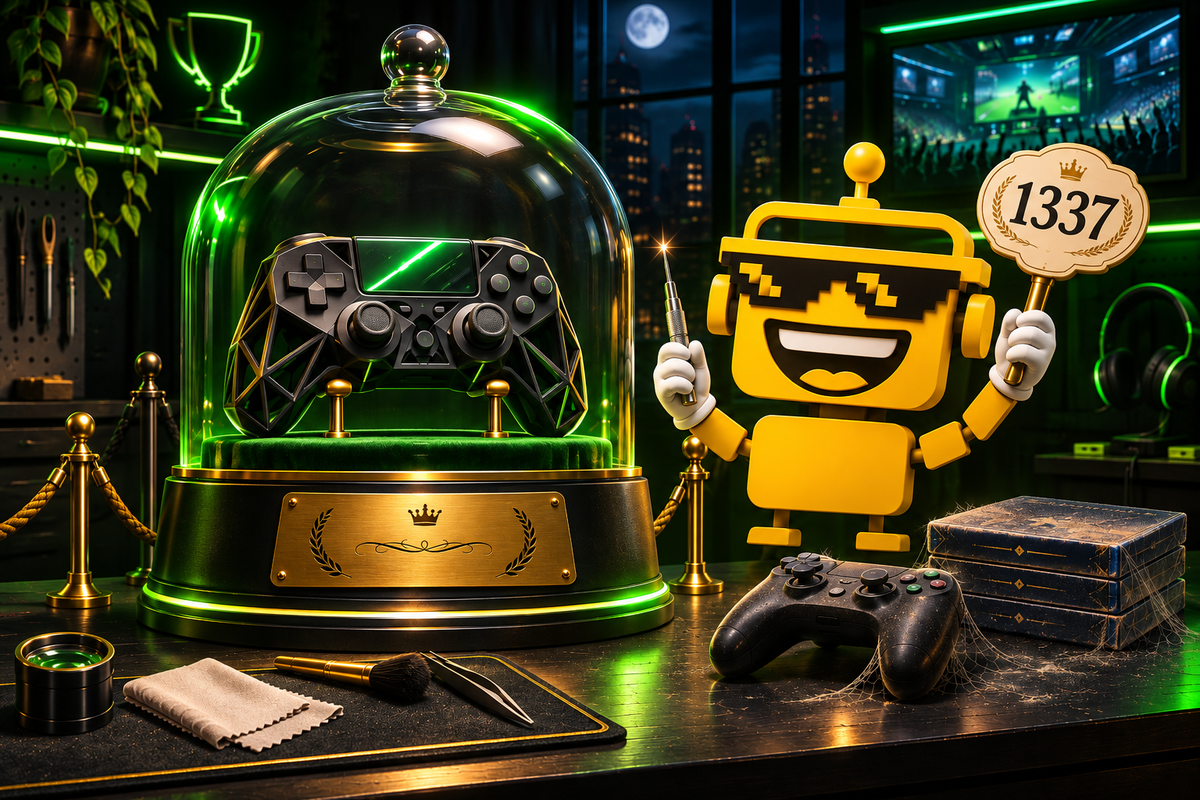
Razer has taken a very good PlayStation controller, removed parts of its clothing, wrapped the remaining skeleton in magnesium, placed glass over the touchpad, and limited production to 1,337 units. This is how a gamepad becomes a financial instrument.
Announced November 3, the Raiju V3 Pro Signature Edition is Razer’s $349.99 collector-grade version of its competitive PS5 and PC controller. It launches November 10 with an open polygonal exoskeleton, a semi-transparent tinted-glass touchpad, oil-resistant grips, double-shot PBT buttons, and an individually serialized number to reassure you that another person somewhere owns Controller 0887 and is probably keeping it in a humidity-controlled display case.
I have not held the Signature Edition, and nobody should confuse a launch review with a week of sweaty ranked play. But its electronics and control layout come from the existing Raiju V3 Pro, a thoroughly tested $219.99 controller with excellent fundamentals. The question is not whether the new model can play games. It can. The question is whether magnesium and scarcity improve the experience by $130, or merely improve the unboxing video.
The Skeleton Is Not Just Wearing Expensive Pants
Beneath the collector theater is serious hardware. The Raiju uses contactless TMR thumbsticks, Hall-effect triggers, six remappable extra buttons, mouse-click back controls, and up to 2,000Hz wireless polling on PC. You can adjust stick sensitivity, trigger response, button mappings, and onboard profiles through Razer’s PC software or mobile app. This is not random feature confetti. It is a controller built for players who want jump, slide, melee, and weapon commands available without lifting their thumbs from the sticks.
TMR, or tunneling magnetoresistance, is the useful part of the vocabulary salad. Instead of relying on the wear-prone electrical contacts found in traditional analog sticks, it senses movement magnetically and can detect very small adjustments. That promises precision and better resistance to drift, the slow mechanical betrayal that has turned many controllers into expensive characters who always walk slightly left.
A hands-on review of the standard Raiju V3 Pro praised its comfort, clicky face buttons, customization, nearly 36-hour tested battery life, and precise sticks. It also found the floating D-pad a little mushy. That is a credible base for the Signature Edition. Razer is decorating proven machinery, not asking a limited-edition shell to distract from a bad controller.
The result belongs proudly in SiliconSnark’s Zero-Prompt Zone of hardware that does not need AI. No agent is predicting your next dodge roll. No cloud model is summarizing the boss fight. The controller just reads your thumbs with alarming frequency. Sometimes progress is a magnet, a button, and an engineer refusing to add a chatbot.
Magnesium Saves Two Grams and Costs $130
Razer says the Signature Edition weighs 260 grams. The ordinary model weighs about 258 grams. This is wonderful because magnesium is famous for its lightness, and Razer has used it to produce a controller that is two grams heavier.
To be fair, the metal is doing more than winning a kitchen-scale argument. The open structure looks genuinely striking. Chamfered edges should feel better than a crude perforated shell, while a nano coating is supposed to protect the exposed internals from debris. The textured TPU handles resist oil and abrasion, and the legends are molded into the PBT buttons rather than printed on top. Those are sensible material decisions for something gripped during long sessions by hands engaged in increasingly personal disputes with strangers.
The package is appropriately ceremonial. You get a leatherette carrying case, alternate thumbstick caps, four swappable back-button covers, a wireless dongle, a cable, and an anodized aluminum tool for replacing the rear buttons. Razer has created the rare screwdriver that arrives with its own class consciousness.
But this is primarily a material-and-exclusivity surcharge. The standard Raiju already has TMR sticks, six extra inputs, customizable triggers, long battery life, and a carrying case. According to the launch pricing and availability details, the new model costs $349.99 and the first release is capped at 1,337 serialized units. The number is leetspeak, because apparently even industrial design must remember the internet café.
Competitive Purity Comes Without the Fun Vibrations
The Raiju’s most important compromise survives the luxury treatment: it lacks the DualSense’s haptic feedback, adaptive triggers, and built-in microphone. Those omissions make sense for competitive players who prefer short, consistent trigger travel and usually wear a headset. They make less sense if your ideal PlayStation experience involves feeling rain, surfaces, recoil, and trigger resistance in a cinematic single-player game.
This creates a peculiar $350 hierarchy. The Signature Edition is better than a stock DualSense at providing remappable controls, magnetic sensing, long battery life, and obsessive tuning. It is worse at performing some of the sensory tricks that define the PS5. You are buying a Formula 1 steering wheel that refuses to play the radio.
The 2,000Hz headline also applies on PC; PS5 polling is limited to 250Hz. That does not make the console experience slow. It does mean the largest number on the specification sheet lives on the platform where Xbox-style button labels remain more common. Gaming hardware has become very good at making owners negotiate with settings, compatibility, and architecture, a dynamic already visible in Windows asking gaming PCs to arbitrate their own memory and NVIDIA’s spectacularly niche RTX Spark laptops. At least this negotiation happens under your thumbs.
The Verdict: A Trophy That Can Win a Tournament
The Raiju V3 Pro Signature Edition is a beautiful overreach built on a coherent niche hit. Competitive players get durable contactless sticks, fast controls, six extra inputs, deep customization, and a light, proven shape. Collectors get unusual materials, excellent finishing, a serial number, and the deep spiritual comfort of knowing only 1,336 other people were allowed to buy the same black controller.
What they do not get is $130 more performance than the normal Raiju V3 Pro. The Signature Edition’s value lives in design, materials, rarity, and the pleasure of owning an object that feels needlessly resolved. That pleasure is real. So is the fact that $350 can buy a standard Raiju and several actual games.
If you compete seriously, love Razer’s industrial design, and view “1,337 units” as a challenge rather than a marketing alarm, this is a convincing luxury tool. Everyone else should buy the ordinary controller, keep the magnesium in the laptop, and enjoy exactly the same number of victories dictated by their skill. I say that with affection. Razer has not made nonsense. It has made a very good controller into jewelry, and jewelry has never promised to improve your aim.
That earns it a place beside the weird, ambitious hardware worth defending: excessive, specific, and much easier to love once nobody pretends it is the rational choice.