How AI Keeps Your New Year’s Resolutions When Motivation Inevitably Quits
AI can help you keep New Year’s resolutions by tracking habits, scheduling goals, and recovering from failure—without relying on motivation or willpower.

It’s January again. That brief, delusional window when everyone collectively decides they are about to become a radically improved version of themselves. This is the year you’ll wake up early, drink water on purpose, and finally stop saying “I’ll get to it” like it’s a legally binding plan.
This year is different, though. This year you have AI.
Not in a Her way. In a far more unsettling way. AI doesn’t care about your motivation, your vibes, or the fact that last year was “a lot.” AI only cares about patterns—and unfortunately, you are extremely consistent in the wrong ways.
Which is exactly why AI might be the only thing capable of helping you keep a New Year’s resolution.
Step One: Let AI Rewrite Your Resolution Because Yours Is Abstract Art
Your resolution almost certainly sounds like a concept album. “Get healthier.” “Be more productive.” “Learn AI.” “Fix my sleep.” These are not goals. These are emotional intentions dressed up as plans.
AI is very good at ruining this fantasy.
When you tell AI what you want, it immediately asks the questions you’ve been avoiding. How often? How long? Compared to what? Under what conditions? Suddenly “get healthier” turns into something far less poetic and far more useful, like walking three times a week or going to bed before midnight on weekdays.
This is not inspiring. It is effective.
AI doesn’t let you hide behind ambition. It translates your hope into behaviors you can either do or not do, which is deeply rude but necessary. The moment your resolution becomes measurable, it stops being aspirational and starts being real. This is where most people panic and quietly abandon the whole idea. AI does not panic. AI just waits.
AI as Your Accountability System (Because Your Brain Is a Known Liar)
The problem with self-accountability is that you are both the prosecutor and the defendant, and you settle every case with “it was a weird week.”
AI has no such weakness. It does not negotiate. It does not accept excuses. It simply remembers what you said you were going to do and notices when you don’t.
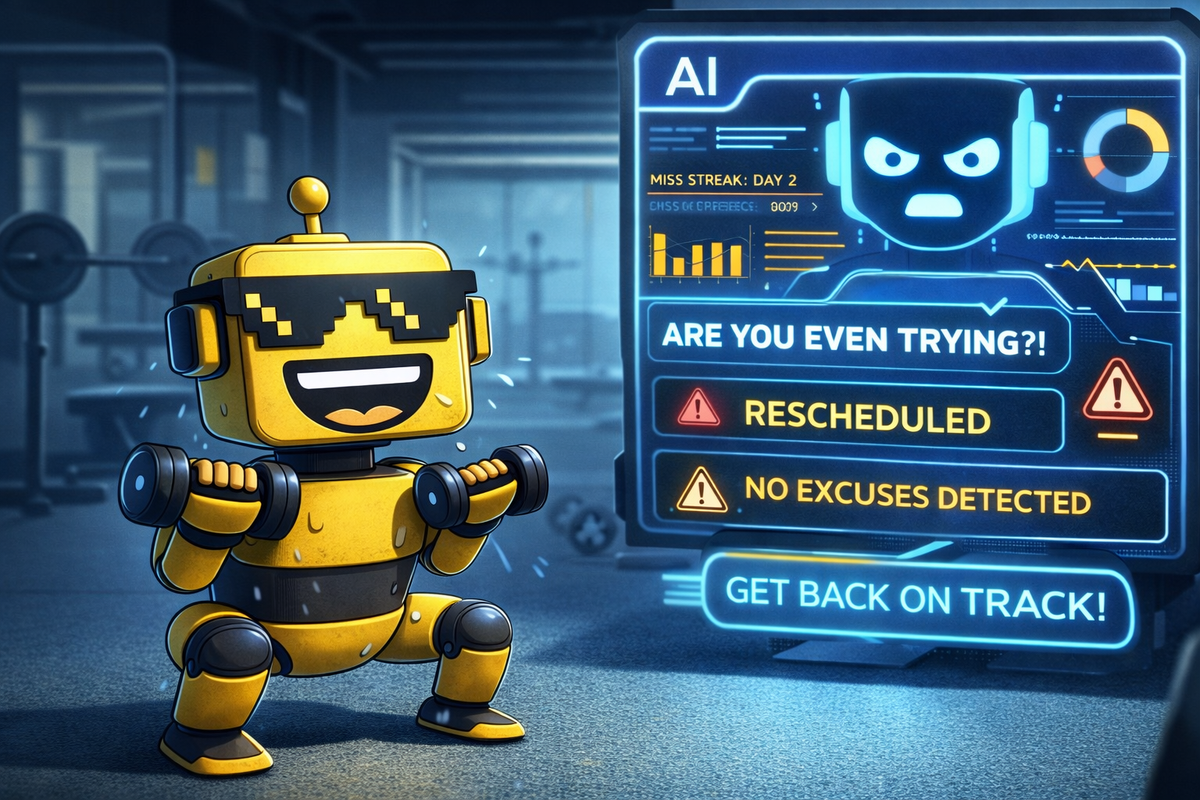
This is where AI-powered reminders, check-ins, and nudges become terrifyingly effective. Not because they’re aggressive, but because they’re calm. AI doesn’t shame you. It just asks whether you want to reschedule. This sounds supportive, but what it really means is: I am not forgetting this.
Your inner monologue gets tired of holding you accountable. AI never does. It will follow up in February with the same neutral tone it used in January, which somehow feels worse.
AI and Habits: Designing for the Version of You That Actually Exists
Most habit plans are designed for a fictional person. This person wakes up energized, has no unexpected obligations, and does not spiral when plans change. You are not this person.
AI understands this.
One of AI’s most underrated strengths is its ability to plan for inconsistency. It’s remarkably good at designing habits that have multiple acceptable versions, including ones that feel embarrassingly small. Five minutes instead of thirty. One page instead of a chapter. A walk instead of a workout.
This is not lowering the bar. This is acknowledging physics.
When habits fail, it’s usually not because the goal was wrong, but because the plan required too much perfection. AI quietly removes that requirement. It assumes you will miss days, get distracted, and occasionally give up. And then it builds a system that still works anyway, which is frankly more optimistic than anything you’ve tried before.
AI Scheduling: Turning “I’ll Do It Later” Into an Actual Time
Your resolution does not exist until it has a time and a place. Until then, it’s just a thought you revisit when you’re feeling guilty.
AI scheduling tools are very good at exposing this. You can tell AI what you want to do and it will look at your actual calendar—your real meetings, your real obligations—and suggest where the goal fits. Often the answer is uncomfortable. Sometimes it’s humbling. Occasionally it’s, “You genuinely don’t have time for this unless something else moves.”
This is not failure. This is information.
Even better, AI doesn’t treat missed sessions as moral collapse. If you skip something, it simply suggests another time. No dramatic reset. No “start over Monday.” Just logistics. The resolution survives because it never depended on perfect weeks in the first place.
AI for Fitness: Coaching Without the Cult Energy
Fitness resolutions usually die because people confuse intensity with effectiveness. They go too hard, too fast, inspired by someone online whose job it is to work out.
AI fitness tools are refreshingly boring. They adjust gradually. They track recovery. They notice patterns over time instead of panicking over one off week. They don’t yell motivational slogans at you or imply your worth is tied to your step count.
Most importantly, AI is comfortable scaling plans down. When your schedule gets busy, AI doesn’t tell you to “push through.” It recalculates. That alone saves more resolutions than any motivational speech ever could.
AI and Nutrition: Data Without the Emotional Damage
Food resolutions tend to collapse under the weight of overthinking. Suddenly every meal feels like a test you’re failing in public.
AI nutrition tools work best when you use them like a mirror instead of a judge. They show patterns. They surface habits. They notice things you genuinely didn’t realize, like how little protein you eat or how often stress and snacking coincide.
The danger is turning this into an obsession. AI doesn’t need you to micromanage every bite. Its value comes from zooming out. When you use it to understand trends instead of punishing individual choices, it becomes helpful instead of exhausting.
The goal is awareness, not sainthood.
AI for Productivity: Doing Less Thinking About Doing Things
Productivity resolutions fail because people fall in love with the idea of being organized instead of the act of doing work. AI can help here, but only if you let it simplify instead of impress.
AI is excellent at turning chaos into clarity. It can take a brain dump and turn it into a short list. It can break intimidating projects into small, specific steps. It can draft first versions so you’re not staring at a blank screen like it personally offended you.
What AI is not good at is making you feel productive while avoiding the work. If your system requires constant tweaking, it’s not a system—it’s procrastination with better branding. AI works best when it disappears into the background and quietly removes friction.
AI and Learning: Replacing Motivation With Relentless Structure
Learning resolutions are where AI truly shines. Not because it’s inspiring, but because it never gets tired.
AI will explain the same concept ten times without sighing. It will quiz you patiently. It will adapt when you struggle. It will remember what you forgot. It will quietly enforce repetition, which is the only thing learning actually runs on.
The magic isn’t in the information. It’s in the consistency. AI replaces motivation with structure, which turns out to be far more reliable. You don’t need to feel inspired to learn when the system just shows up every day and asks you to engage for ten minutes.
AI and Mental Health Goals: Support Without Becoming Your Personality
Yes, AI can help with reflection, journaling, stress management, and emotional awareness. No, it should not become the main character in your inner life.
Used well, AI offers gentle prompts, short check-ins, and grounding exercises that help you notice patterns without drowning in them. Used poorly, it becomes a place to overanalyze feelings instead of experiencing them.
The best use of AI here is light, consistent, and brief. Think support, not substitution.
The Real Reason AI Helps: It Doesn’t Quit When You Do
Here’s the uncomfortable truth: you will mess up. You will miss days. You will fall off completely and briefly consider abandoning the entire concept of self-improvement.
AI does not care.
It does not interpret a missed day as a personal failure or an identity crisis. It simply recalculates and continues. This is the most valuable thing it offers.
People who keep resolutions are not more disciplined. They just restart faster. AI is very, very good at restarting.
The Unsexy Conclusion: AI Works Because It’s Boring and Persistent
AI won’t transform you overnight. It won’t unlock your potential or reveal your “best self.” It will, however, quietly track what you do, notice what you don’t, and keep suggesting the next reasonable step without emotional commentary.
And that turns out to be exactly what most people need.
If you want to keep a New Year’s resolution, stop trying to become someone else. Use AI to build a system that assumes you’re tired, distracted, and occasionally full of nonsense—and still works anyway.
AI doesn’t believe in fresh starts. It believes in continuity.
Which, annoyingly, is how change actually happens.