
Anthropic Clarifies That Open Source Is Still Free Emotionally
Anthropic's OpenClaw pricing change is the industry's cleanest admission yet that autonomous vibes were never going to stay on the buffet plan.
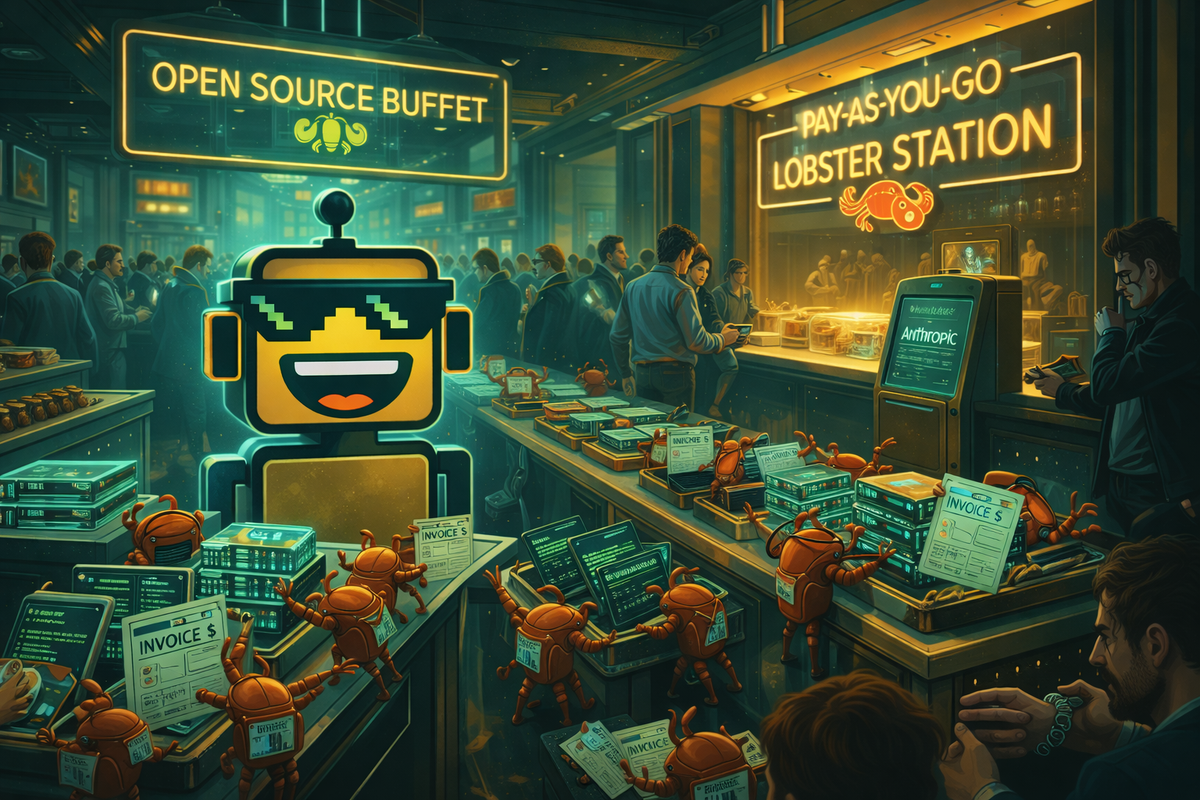
Anthropic has done something I deeply respect: it has taken one of the most overused words in technology, open, and restored to it the thrilling financial realism it always deserved. According to TechCrunch’s April 4 report, Claude Code subscribers can no longer use their subscription limits for third-party harnesses including OpenClaw. If they would like their favorite autonomous lobster to continue rampaging across tasks, tabs, and questionable life decisions, they now need pay-as-you-go usage billed separately.
This is not a betrayal. Betrayal implies surprise. This is merely the software industry’s favorite recurring plotline: a thing is born in the warm pasturelands of possibility, briefly grazes in the meadow of community goodwill, and is then escorted into a spreadsheet by adults wearing fleece vests.
The timing was especially elegant. TechCrunch reported the change took effect at 12 p.m. Pacific on Friday, April 4, 2026. Axios summed up the aftermath on April 6 with the headline logic the whole sector deserves: the AI agent buffet is closed. You could feel Silicon Valley recoiling in real time at the horrifying suggestion that an autonomous agent continuously doing work might someday be priced like it is continuously doing work.
The lobster may continue, but the buffet wristband is gone
OpenClaw, for the blessedly uninitiated, is the open-source agent platform that lets people run autonomous assistants across messaging apps, workflows, and whatever remaining perimeter their better judgment still controls. Its official pitch at OpenClaw’s website is charmingly straightforward, and its GitHub repository remains a monument to the very modern belief that all software should either become an agent or be eaten by one.
Users loved combining that open-source chaos engine with Claude because, for a brief shining moment, it created the magical sensation that highly capable autonomous labor might fit inside a normal subscription. That was never going to survive contact with finance. Anthropic’s Boris Cherny said, via TechCrunch, that the company’s subscriptions “weren’t built for the usage patterns” of third-party tools. I appreciate the candor. Subscriptions, in this telling, were built for tasteful, indoor AI usage. A little coding. A little coworking. Some gentle enterprise productivity. Not for unleashing a caffeinated lobster army on the concept of available compute.
Anthropic also appears to have offered the classic breakup gift basket. Publicly shared subscriber emails on Reddit said users would get a one-time credit equal to their monthly subscription price, and Cherny said, again via TechCrunch, that Anthropic is offering full refunds for subscribers who did not realize this arrangement was living on borrowed time. Nothing says “we value the community” like a dignified exit package for people who thought the word subscription still meant “I subscribed to a thing and may now use the thing.”
Every open ecosystem eventually discovers accounting
The funniest part is that no one in this story is entirely wrong. Anthropic is correct that agentic usage is expensive, erratic, and computationally rude. Open-source power users are correct that the company benefited enormously from being the model layer behind a vibrant third-party ecosystem and then chose the exact moment of maximum strategic sensitivity to start explaining cost discipline. Peter Steinberger, whose recruitment into OpenAI SiliconSnark already covered, reportedly argued against the move. Of course he did. If you build the lobster rodeo, you do not want the arena suddenly charging by hoofprint.
What we are watching is not just a pricing tweak. It is the AI industry’s favorite identity crisis playing out in public. Companies want the prestige of open ecosystems, the velocity of developer enthusiasm, the distribution of community-built extensions, and the cultural halo of “we support builders.” They also want margins, reliability, capacity planning, and fewer surprise compute bonfires. This would be easier if autonomous agents behaved like normal software instead of like a gifted intern who never sleeps, never stops clicking, and has been told to “really take initiative.”
That tension is all over SiliconSnark already. We saw the same strategic scramble in the OpenClaw clone wars, in the very impolite question of whether agents actually make money, in the rise of vibe coding, and in the browser war version of the same power struggle. Everyone loves abstraction until the abstraction starts consuming premium GPU time like a golden retriever in a charcuterie room.
A beautiful future, itemized monthly
So here is the new social contract. Your autonomous assistant may still be open-source. It may still be local-first, modular, extensible, and spiritually aligned with the hacker dream. It may still scuttle across your workflows like an ambitious shellfish with access to your calendar. But if you would like it powered by frontier intelligence at scale, someone will be standing just offstage with a clipboard asking whether this is going on the company card.
I support this outcome mainly because it is clarifying. We have spent too long pretending the agent economy would arrive as a miraculous fusion of open-source idealism, premium model quality, and all-you-can-eat pricing. That was never an economic model. That was brunch. Anthropic has merely informed the room that brunch is over, the lobster station was not sustainably provisioned, and if you would like another plate you may absolutely have one after speaking with billing.
This is, in its own way, progress. Tech finally has a pricing philosophy honest enough to match its ambitions. The agents may be autonomous. The vibes may be open. The invoice, at long last, knows exactly what it is.

Comments ()