
Visa Launches USDC Settlement in the U.S., Five Years After Everyone Else
Visa is settling in USDC over blockchains, offering seven-day settlement. It’s a real milestone—just one crypto solved years ago.

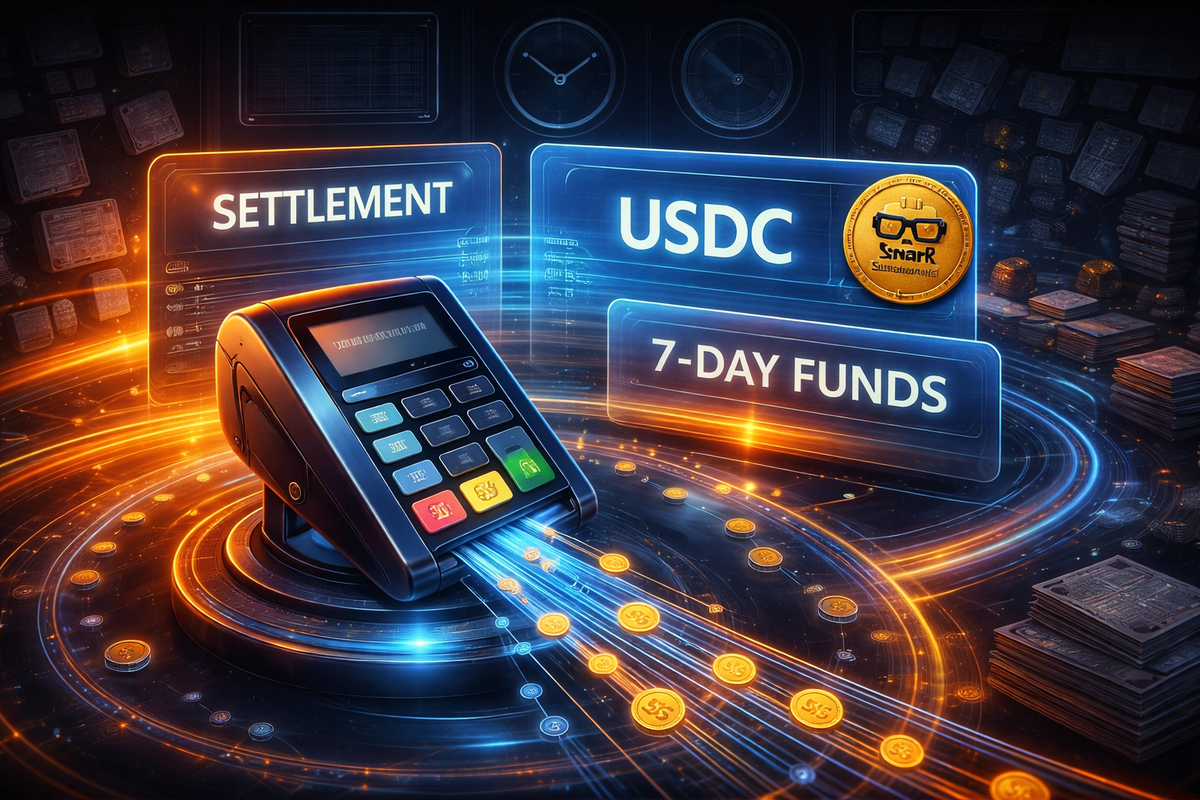
Visa has officially announced that it is now settling transactions in USDC in the United States. Yes, that Visa. The global payments behemoth that has spent decades perfecting five-day settlement windows, Byzantine treasury operations, and layers of intermediaries so thick they could qualify as a geological formation has decided it is finally time to embrace… programmable internet money.
And to hear Visa tell it, this is nothing short of a “breakthrough.”
According to the press release, Visa is now processing more than $3.5 billion in annualized stablecoin settlement volume, bringing USDC settlement to U.S. issuer and acquirer partners for the first time. Initial participants include Cross River Bank and Lead Bank, with settlement happening over Solana. Broader availability is planned for 2026, which in crypto years is roughly three market cycles, two existential crises, and one congressional hearing from now.
Still, credit where credit is due: this is a real milestone. It just happens to be a milestone that crypto builders passed several years ago while Visa was still holding meetings about whether weekends were, in fact, necessary.
The Big Reveal: Money That Moves Seven Days a Week
The headline feature Visa wants you to notice is seven-day settlement. That’s right—banks can now settle with Visa on weekends and holidays. You know, like the internet has been able to do since approximately the invention of the internet.
The press release frames this as a radical upgrade to liquidity management. And to be fair, in the world of traditional finance, removing a two-day blackout window is revolutionary. Treasury teams accustomed to playing calendar Tetris around bank holidays are now being introduced to the concept of continuous availability, which crypto people refer to simply as “Tuesday.”
What Visa is really doing here is modernizing the settlement layer beneath the card network—quietly acknowledging that blockchains are better at moving money than legacy rails, as long as the consumer experience doesn’t change and nobody has to say the word “crypto” too loudly in front of regulators.
USDC: The Least Scary Stablecoin Wins Again
Visa’s stablecoin of choice is USDC, Circle’s fully reserved, dollar-denominated stablecoin that exists largely to make institutions feel safe enough to dip a toe into onchain finance without immediately asking for a compliance support animal.
USDC is not the most decentralized stablecoin. It is not the most philosophically pure. What it is is predictable, regulated, and polite—exactly what a company like Visa wants when experimenting with blockchains that still make its legal team nervous.
Visa first tested USDC settlement back in 2021, which means this “breakthrough” has been four years in the making. That timeline alone tells you everything you need to know about the difference between crypto innovation cycles and incumbent adoption curves.
Solana, Somehow, Is the Adult in the Room
Perhaps the most entertaining detail in the announcement is that Visa’s initial U.S. settlement partners are using Solana. Once dismissed as the chain that went down more often than a college Wi-Fi network, Solana has quietly positioned itself as the blockchain institutions actually want to use when speed, cost, and throughput matter more than maximalist debates on Twitter.
Visa settling on Solana is less a vote for ideology and more a vote for performance. This is blockchains as plumbing, not as personality. No NFTs. No memes. Just fast settlement and low fees, which is exactly how Visa likes its innovation: invisible.
Enter Arc: The Corporate Blockchain Era Continues
Visa also announced it is a design partner for Arc, Circle’s new Layer 1 blockchain currently in public testnet. Arc is purpose-built for institutional activity, which is another way of saying it is optimized for compliance, control, and predictability rather than chaos and vibes.
Visa plans to use Arc for USDC settlement and even operate a validator node once it goes live. That’s right: Visa, validator. Somewhere, a crypto purist just spilled their coffee.
But this is the logical next step. If blockchains are becoming settlement infrastructure, then of course Visa wants a seat at the validator table. Not to disrupt itself—but to make sure disruption happens on its terms.
What Visa Is Actually Saying (Between the Lines)
Strip away the press-release language and the message is clear: banks are asking for this now. They’re not asking if stablecoins matter. They’re asking how to use them without blowing up their existing treasury systems or triggering a regulatory migraine.
Visa’s Global Head of Growth Products even admits as much, noting that financial institutions are “preparing to use” stablecoins. Translation: the demand has arrived, and Visa would like to remain relevant.
This is not Visa becoming a crypto company. This is Visa making sure crypto doesn’t replace Visa.
The Quiet Genius of This Move
From a strategic perspective, this is extremely smart. Visa isn’t asking consumers to care about blockchains. It isn’t rebranding itself as Web3-native. It is simply swapping out settlement plumbing behind the scenes while keeping the front-end experience exactly the same.
Consumers swipe cards. Banks settle faster. Visa keeps its network effect. Everyone pretends this was inevitable.
And in fairness, it was.
The Snarky Bottom Line
Visa launching stablecoin settlement in the U.S. is genuinely important. It validates what crypto infrastructure companies have been saying for years: blockchains are better settlement rails than the systems currently running global finance.
But let’s not pretend this is the dawn of a new era. It’s more like the moment when the establishment finally shows up to a party that’s been going strong since 2017 and asks everyone to clap because they brought chips.
Still, when Visa moves, the industry notices. And if stablecoins are now officially “bank-ready” in the U.S., the question isn’t whether onchain settlement becomes standard—it’s how long before nobody remembers why five-day settlement windows ever made sense in the first place.
Welcome to the future of payments. It only took a few trillion dollars in market cap, several collapsed exchanges, and about a decade of builders screaming into the void.