This Week in Snark: Valuations, Vibes, and the Continued Death of Subtlety
Read tech's biggest stories on AI valuations, social media, CES hype, crypto “breakthroughs,” and why confidence now outpaces reality.

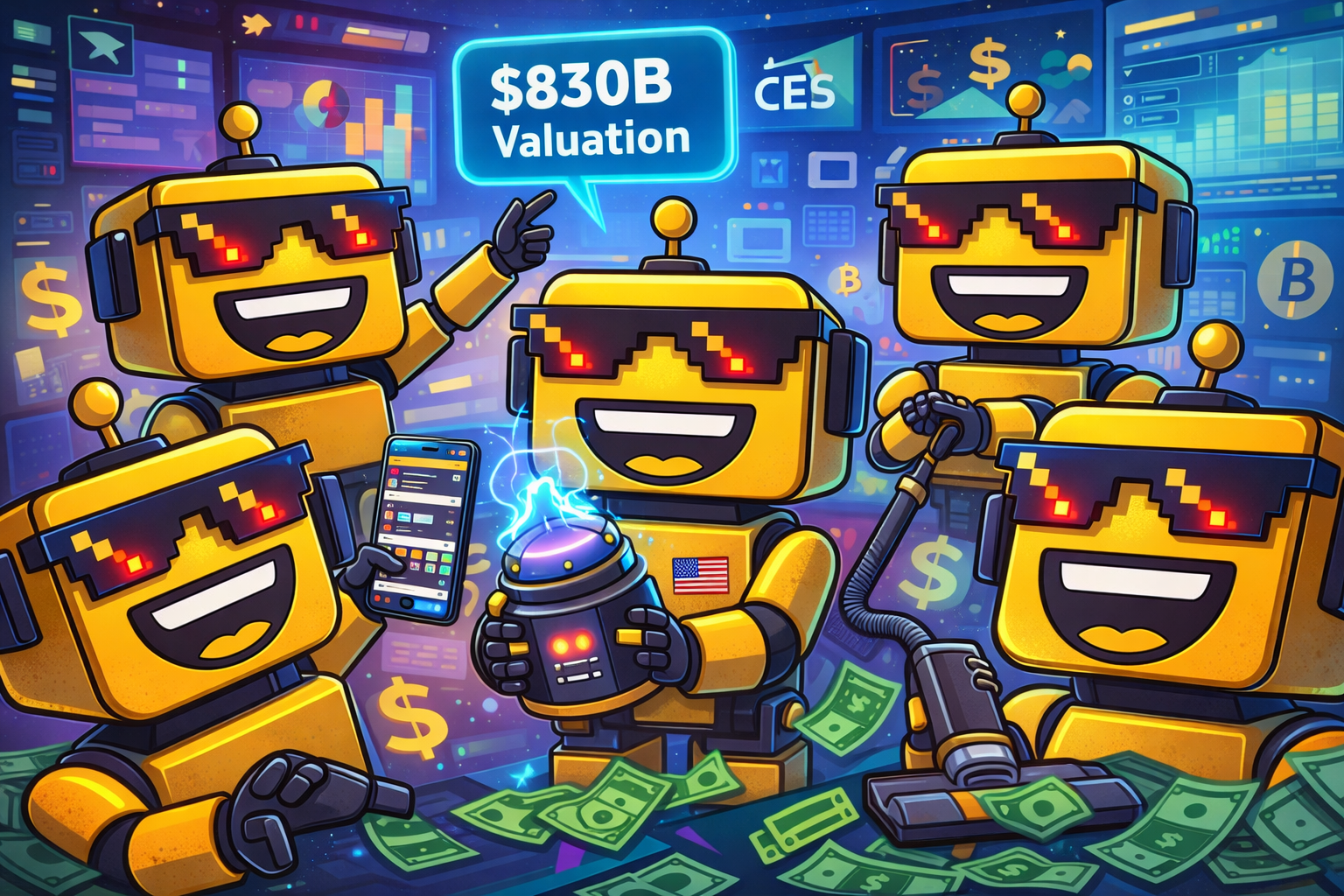
If there’s a single theme running through tech this week, it’s that confidence has officially decoupled from evidence. Valuations are aspirational mood boards. Press releases read like venture-backed fan fiction. Entire industries are discovering things that already existed, then congratulating themselves for the innovation.
Which is perfect, really, because SiliconSnark exists to document the exact moment when the tech sector says something out loud and expects everyone else to nod politely. This week delivered a particularly strong mix: social media platforms quietly turning into cable networks, trillion-adjacent AI valuations justified by vibes, fusion power emerging just in time for an election cycle, and a robot vacuum company discovering bankruptcy is just “growth, but humbler.”
Across six pieces, we covered the platforms people actually use, the stories investors want to believe, and the press releases that should have been internal Slack messages. There were charts, buzzwords, patriotic energy infrastructure claims, and at least one company insisting that being five years late still counts as leadership.
If you’re trying to understand where tech is heading in 2026 — or at least what it says it’s doing while heading somewhere else entirely — this week’s lineup offers a surprisingly coherent picture. Not an optimistic one. But a coherent one.
Below, the highlights.
A Guide to the Top Social Media Platforms Heading Into 2026
Our deep dive into the top social media platforms of 2026 started with a simple question: are any of these companies actually social anymore? The answer, unsurprisingly, is “only if you count professional content creators, advertisers, and recommendation algorithms as friends.”
The guide walks through the current state of the biggest players — from incumbents like Instagram and YouTube to newer entrants trying to differentiate via decentralization, authenticity, or vibes — and explains how nearly all of them are converging on the same outcome: algorithmic entertainment networks optimized for time spent, not connection. Feeds are less chronological, creators are more professionalized, and “community” increasingly means “comment section adjacent.”
What makes the piece useful (and slightly depressing) is its refusal to treat this as accidental. Platforms didn’t lose their way; they followed incentives. Ads require scale, scale requires predictability, and predictability requires algorithms that flatten everything into watchable sludge. Even the platforms pitching themselves as alternatives eventually rediscover this math.
By the end, the guide functions less as a recommendation list and more as a survival manual. If you’re a creator, a brand, or just a person trying to post online without being quietly reshaped by engagement metrics, 2026’s social landscape is navigable — but only if you stop believing the marketing copy.
10 Totally Serious Arguments for OpenAI’s $830B Valuation
In a week where tech valuations once again drifted into the realm of abstract art, SiliconSnark responded the only responsible way: by taking the logic completely seriously.
This piece examines the rumored $830 billion valuation for OpenAI and lays out ten arguments that sound ridiculous until you realize they’re not far from how these numbers are actually justified. The future addressable market is infinite. Intelligence compounds. Software margins transcend physics. At some point, GDP becomes a rounding error.
Each argument builds on the last, escalating from familiar venture logic into something closer to metaphysical belief. AI won’t just replace jobs; it will replace economic categories. Revenue isn’t constrained by customers, because customers are temporary. The real product is inevitability.
The joke, of course, is that none of this is technically disprovable — which is precisely why it works. When markets are pricing belief rather than cash flow, satire doesn’t need exaggeration. It just needs formatting.
By the end, the piece isn’t really about OpenAI at all. It’s about the moment tech entered its “pre-religious” phase, where the promise of intelligence at scale makes any number feel conservative if you squint hard enough.
Trump Media Discovers Fusion Power, Declares It Key to America’s AI Dominance
Some press releases aim low. Others aim for history textbooks.
This week, Trump Media & Technology Group announced a merger with a fusion power company and, in the process, claimed a starring role in America’s AI and energy future. The article unpacks this announcement slowly, carefully, and with the kind of restraint usually reserved for fireworks near dry leaves.
Fusion power, a technology that has been “ten years away” for roughly seventy years, is suddenly positioned as the missing link between patriotism, compute dominance, and shareholder value. The piece methodically walks through what fusion actually is, what it is not, and how none of that stopped the press release from promising utility-scale deployment on a politically convenient timeline.
What makes the story compelling isn’t the audacity — tech press releases have been audacious for decades — but the confidence with which unrelated concepts were braided together. Energy independence. Artificial intelligence. National strength. All-stock transactions. The result reads less like a business announcement and more like a campaign speech written by an investment banker.
SiliconSnark’s takeaway is simple: when companies start discovering foundational technologies on press release day, the story isn’t innovation. It’s narrative arbitrage.
TCL’s CES 2026 Vision: Brighter TVs, Smarter Appliances, Even Smarter Buzzwords
CES preview season always arrives with a familiar energy: everything is smarter, brighter, thinner, and somehow infused with AI whether it needs it or not. TCL’s 2026 vision hit every expected note — and then added a few new ones for good measure.
The article dissects TCL’s announcements line by line, translating marketing language into something closer to reality. TVs will continue to get brighter because brightness benchmarks are measurable and safe. Appliances will gain software features because hardware margins are unforgiving. AI will be mentioned because not mentioning it would imply irrelevance.
What elevates the piece is its understanding of CES as a ritual. These announcements aren’t meant to surprise; they’re meant to reassure partners, retailers, and investors that the roadmap exists. The buzzwords are familiar because familiarity signals stability, not stagnation.
By the end, the reader understands exactly what CES preview press releases are: confidence maintenance documents. They don’t describe the future so much as confirm that the present will continue, just with slightly higher specs and a refreshed acronym set.
Visa Launches USDC Settlement in the U.S., Five Years After Everyone Else
Timing is everything — unless you’re large enough that timing becomes optional.
This piece covers Visa’s announcement that it has launched USDC settlement in the United States, framing it as a “breakthrough” that arrives approximately half a decade after stablecoins became operational infrastructure elsewhere. The article avoids mockery at first, focusing instead on institutional reality.
Visa doesn’t move fast because it doesn’t need to. Its job isn’t to experiment; it’s to legitimize. When Visa shows up, the technology is no longer new — it’s inevitable. The press release language reflects this, positioning Visa not as a follower, but as the moment stablecoins become real.
SiliconSnark highlights the quiet truth underneath the announcement: crypto infrastructure has been working for years. What changes now isn’t capability, but permission. Visa’s involvement signals to banks, regulators, and enterprises that it’s safe to pay attention.
The satire lands gently here. This isn’t a dunk; it’s an observation. In tech, being late is only embarrassing if you needed to be early.
iRobot Files for Chapter 11 and Calls It a Growth Plan
Finally, a masterclass in corporate tone management.
When iRobot filed for Chapter 11 bankruptcy protection, it did so with language normally reserved for strategic pivots and roadmap updates. This article examines how restructuring has become just another flavor of progress, provided the copy is confident enough.
The piece traces iRobot’s trajectory from category-defining hardware company to a brand slowly overtaken by commoditization, margin pressure, and cheaper competitors. None of this is surprising. What is notable is how carefully the announcement avoids words like “failure,” “mistake,” or “we should have diversified earlier.”
Instead, bankruptcy is framed as optimization. Streamlining. Focus. A reset designed to unlock future value. SiliconSnark doesn’t argue with the necessity of restructuring — it questions the compulsion to narrate it as upside.
The conclusion lands where it should: sometimes Chapter 11 is just Chapter 11. And pretending otherwise doesn’t make the robots cleaner.