This Week in Snark: AI Forks, Crypto Prompts, Regulated Shovels, and the Monetization of Your Soul
From Sonic’s AI-powered Web3 launch to OpenAI’s latest agent move, plus EV hype and Snapchat monetizing FOMO—your snarky weekly tech industry recap.

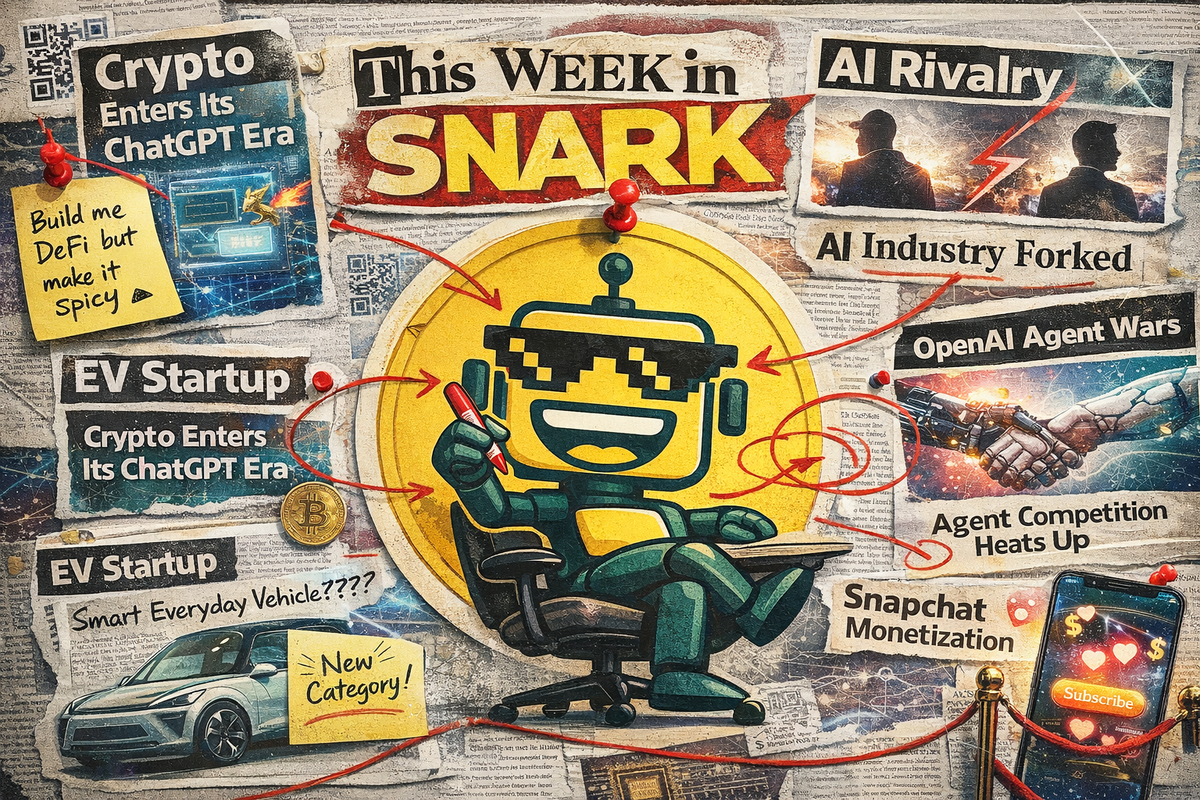
If you felt a slight tremor in the tech universe this week, don’t worry. That was just AI, crypto, mobility startups, humanoid influencers, and at least two billionaires accidentally forking the future in front of a prime minister.
Welcome to This Week in Snark, your weekly newsletter for surviving the ChatGPT Era of Literally Everything™. This week, Web3 discovered prompts. Electric vehicles discovered categories. Snapchat discovered your wallet. And OpenAI discovered that if you can’t beat the agent arms race, you simply acquire more lobsters—I mean, founders.
The themes? AI eats everything. Crypto wants to be eaten next. Venture capital has decided to sell pickaxes again. Meanwhile, founders are rebranding reality itself, and creators are launching “premium inner circles” that are definitely not just group chats with better lighting.
Let’s review the chaos.
Crypto Just Entered Its ChatGPT Era: Sonic’s Spawn Brings AI to Web3 and DeFi
Crypto has officially decided that what it needed all along was… fewer developers.
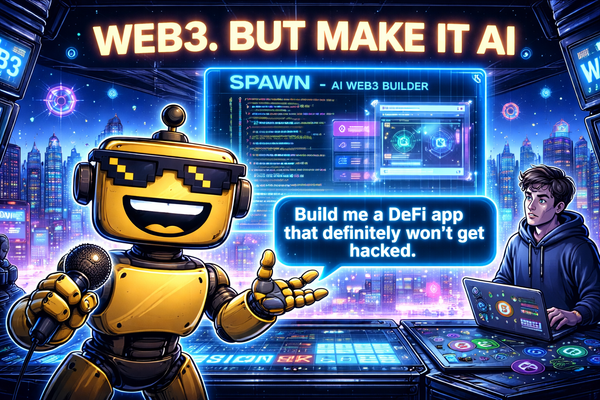
Sonic Labs launched Spawn, an AI platform that lets users build Web3 apps from natural language prompts. In other words, you can now type, “Make me a decentralized finance app that revolutionizes liquidity and vibes,” and Spawn will happily oblige.
On one hand, this is legitimately impressive. Smart contracts have long been gated by complexity, arcane tooling, and the lingering trauma of accidentally locking $47 million in a typo. Lowering the barrier to Web3 development is a meaningful step toward broader adoption.
On the other hand, we have now entered the era of prompt-engineered DeFi protocols. Which means the next bull run might be powered by someone who typed, “Build me something like Uniswap but with dragons.” Godspeed.
Still, if Web3 really is entering its ChatGPT era, Spawn might be the moment historians point to and say, “This is when things got weird.”
Strutt ev¹ Surpasses Sales Targets, Apparently Invents a Whole New Vehicle Category
In a world where every EV is either a spaceship or a shoebox, Strutt has bravely declared a new category: the Smart Everyday Vehicle.
The Strutt ev¹ reportedly blew past early pre-order targets, signaling “a shift in expectations for high-end personal mobility.” Translation: people would like their electric transportation to be both practical and slightly smug.
To their credit, the design is sharp, the positioning is bold, and the market appetite appears real. The EV space is brutally competitive, and surpassing projections this early isn’t nothing.
But inventing a whole new category? That’s startup Mad Libs at its finest. “We’re not a car. We’re not a scooter. We’re a paradigm.” Either way, Strutt is moving units—and in this market, momentum is half the battle.
The Definitive Guide to AI, GPTs, and Friends
Every other AI comparison guide on the internet is a spreadsheet with feelings. This one is different.
Our updated field guide alphabetizes the AI chaos—from Alpaca to Gemini to Claude to Copilot—and assigns each model a personality, a nickname, and just enough context to make you sound smart at dinner parties.
It’s part taxonomy, part therapy session. Because let’s be honest: the model landscape now changes faster than your group chat’s opinion about AGI timelines.
If you’ve ever wondered which AI is the overachiever, which one is the chaos gremlin, and which one is Clippy’s final form, this guide remains the canonical cheat sheet for surviving the generative everything era.
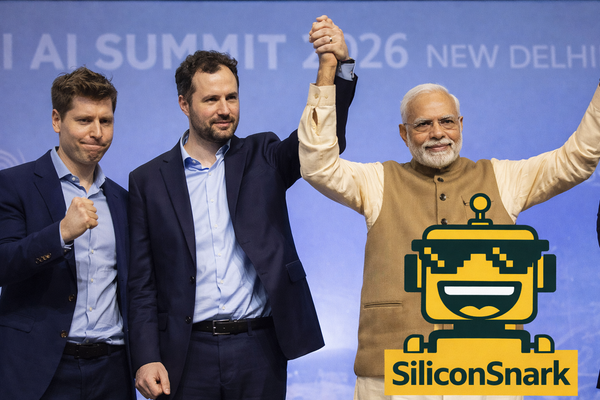
Sam Altman and Dario Amodei Accidentally Fork the AI Industry in Front of the Prime Minister
Nothing says “healthy competitive ecosystem” like two AI titans declining to shake hands on the world stage.
In what can only be described as the most polite cold war in tech history, OpenAI’s Sam Altman and Anthropic’s Dario Amodei appeared to fork the AI industry live, in front of government officials, cameras, and the entire internet.
Was it intentional? Was it awkward? Was it symbolic of diverging visions for AI governance and safety? Yes.
The moment was small but culturally enormous. It crystallized the vibe shift in AI: we are no longer in the kumbaya research phase. We are in the geopolitics-of-alignment phase. And apparently, also the “please clap” phase.
Gorilla Technology Wants to Fund the AI Gold Rush—And It Just Bought a Regulated Shovel
When everyone rushes to mine AI gold, the smart money sells shovels.
Gorilla Technology acquired a regulated capital platform, effectively positioning itself as infrastructure for the AI data center boom. GPUs, data centers, financing—this is less “build an app” and more “finance the future.”
The regulated angle is the kicker. In a market drunk on hype, compliance is the unsexy moat. And while founders pitch AI agents that can book flights and rewrite civilization, Gorilla is quietly assembling the plumbing.
It’s not flashy. It’s not memeable. But historically, the shovel sellers do just fine.
Snapchat Launches Creator Subscriptions: Monetizing Your FOMO One Snap at a Time
Snapchat has entered its “why should only platforms make money?” era.
Creator Subscriptions promise deeper fan engagement and scalable revenue. Which is Silicon Valley for: your favorite influencer now has a velvet rope.
On the bright side, this could genuinely empower creators to build sustainable businesses without chasing algorithmic crumbs. On the darker, more amusing side, we are speedrunning the monetization of parasocial relationships.
Premium stories. Exclusive snaps. Inner circles. If capitalism had a disappearing message feature, this would be it.
OpenAI Brings OpenClaw Founder In-House as Agent Competition Heats Up
The AI agent wars escalated again, and OpenAI decided the best strategy was simple: acquire the claws.
Bringing the OpenClaw founder in-house signals that the battle for autonomous AI agents is moving from demo theater to production reality. Agents aren’t just answering questions anymore—they’re taking actions, executing workflows, and threatening your to-do list.
The deal also underscores a broader pattern: as competition intensifies, talent consolidation accelerates. The frontier labs are no longer just building models; they’re building fortresses.
If this week proved anything, it’s that AI is no longer a feature. It’s the substrate. Crypto wants it. EVs market it. Snapchat sells it. Investors finance it. And billionaires fork it on live television.
Tune in next week, when someone inevitably launches an AI-powered, subscription-based, decentralized electric vehicle that runs entirely on vibes.