Himax and Liqxtal Launch Pro-Eye Vision Care Monitor With WiseEye AI to Save Your Screen-Fried Eyeballs
Himax and Liqxtal unveil the Pro-Eye vision-care monitor with WiseEye AI tracking, liquid-crystal optics, and long-distance viewing to reduce digital eye strain.
While the rest of the tech industry is busy launching products that quietly destroy your vision (hello, 6-inch-from-your-face XR headsets), Himax Technologies and Liqxtal Technology are taking a radical stand: What if… hear us out… a screen actually protected your eyes instead of melting them?
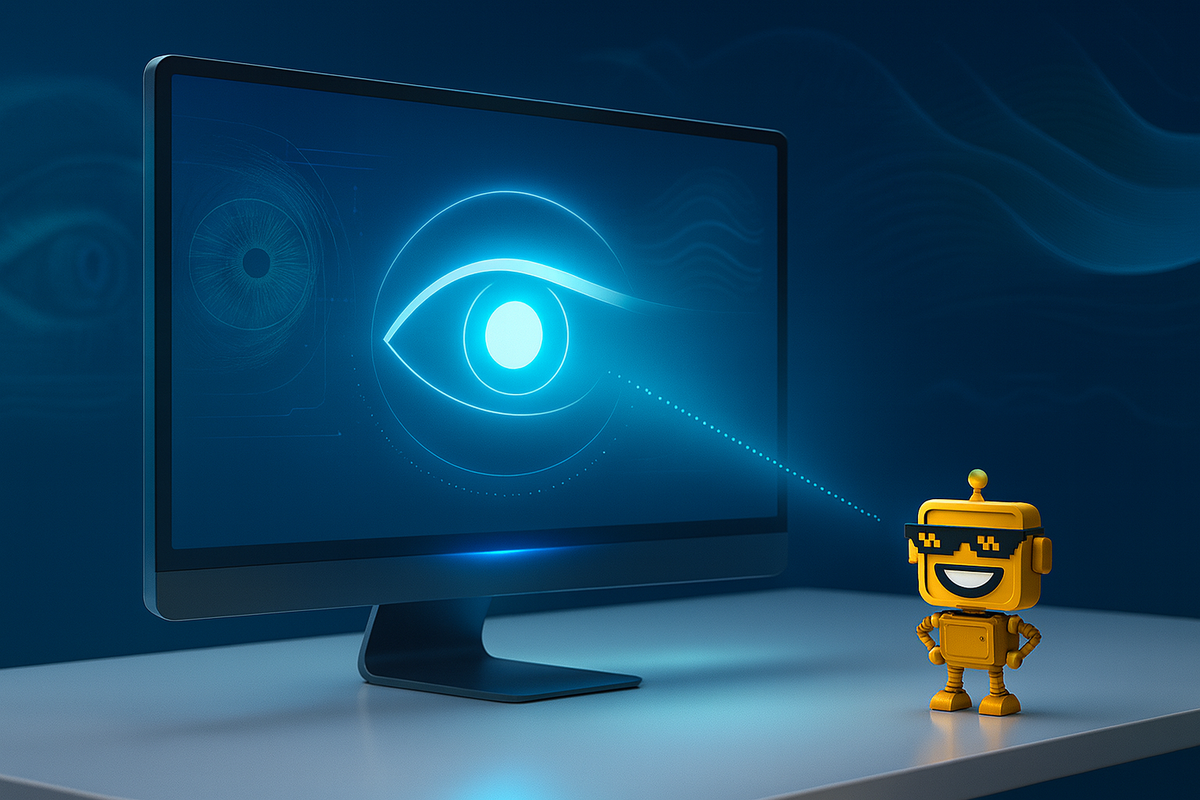
Yes, at the 2025 Taiwan Healthcare+ Expo, the two companies are unveiling the Liqxtal® Pro-Eye Vision Care Monitor, a device that not only monitors your eyes, but judges you for how poorly you treat them. It features WiseEye™ AI tracking, electrically tunable liquid-crystal optics, and enough sensor-driven behavioral analysis to make your Apple Vision Pro jealous.
And the best part? It’s designed for seniors, heavy digital-device users, and school-age children, also known as:
- People who have given up on the idea of seeing clearly again
- People whose day is 90% staring at screens
- And kids whose retinas are being microwaved by Roblox marathons
Basically: all of us.
A Monitor That Projects the Screen 16 Feet Away—Because Your Eyes Are Tired of Doing Squats
The star of the show is Liqxtal’s patented electrically controlled liquid-crystal technology, which can take a normal screen and project it as if it were 16 feet away. That’s right: instead of your usual 20–24 inches, your new viewing distance is basically across the living room.
This is huge for eye health. If you’ve noticed that reading emails now requires the same squinting intensity as decoding ancient tablets, that’s because your ciliary muscles are exhausted from constantly flexing. The Pro-Eye monitor says: give those muscles a day off.
Himax and Liqxtal’s research shows the Pro-Eye design:
- Reduces ciliary-muscle strain
- Helps alleviate eye fatigue and blurred vision
- Reduces the risk of pseudo-myopia in kids (aka: “Congratulations, Timmy, Roblox gave you temporary nearsightedness!”)
If they marketed this product in the U.S., they could sell a million units just by advertising:
“Finally, a monitor your optometrist won’t yell at you about.”
And in classic vision-care fashion, the Pro-Eye adds:
- Flicker-free design
- Low blue light tuning
- Eye-care enhancements
Basically, it’s the Whole Foods version of a monitor—ethically sourced, hand-crafted pixels, no artificial additives.
WiseEye™ AI Tracking: Your Monitor Now Knows When You Slouch More Than Your Therapist Does
The next big feature is Himax’s WiseEye™ ultralow-power AI sensing technology, which performs:
- Face tracking
- Eye tracking
- Real-time gaze pattern analysis
- Behavior monitoring
- Personalized eye-use reports
In other words:
Your monitor now knows when you’re too close to the screen, when you’re zoning out, when your posture is collapsing like a dying marionette, and when you haven’t blinked since lunch.
It even provides alerts to encourage better viewing habits.
Imagine the pop-ups:
“Hey champ, how about leaning back so your eyeballs don’t dissolve?”
“Congratulations, you’ve unlocked the ‘Didn’t Blink for 4 Minutes’ achievement!”
“Move away from the screen unless your goal is speed-running macular degeneration.”
And since this is 2025, of course it aggregates all this data into personalized digital-wellness analytics, because nothing says “relaxing screen time” like a dashboard ranking your poor life choices.
Privacy-Shielding Display: Stops People From Side-Eyeing Your Screen… and Your Life Choices
Liqxtal added a privacy-protection angled shielding display, preventing people from peeking at your monitor from the side.
This is particularly useful when:
- You’re “working from home” but actually watching NBA highlights
- You’re in a medical clinic and don’t want others reading your questionable search history
- You’re on a Zoom call and simultaneously reading r/techfail
- Or you’re a student pretending to study but actually doomscrolling memes
Finally—a monitor that understands modern shame.
Cross-Domain Protection: For Clinics, Work, Entertainment, and Every Other Place You Shouldn’t Be Staring at a Screen
The Pro-Eye is designed for:
- Medical clinics (translation: waiting rooms full of people refusing to look up)
- Home entertainment systems
- Remote-work setups
- Business settings
- Basically anywhere humans are abusing their retinas
It’s a multi-scenario vision-care solution, because evidently the average person needs eye-saving technology more than they need a standing desk.
Dr. Hung Shan Chen: “We’re Transforming Displays From Passive Screens Into Intelligent Eye-Saving Interfaces”
Dr. Hung Shan Chen, President of Liqxtal, says the Pro-Eye marks a new era of AI-driven, optics-powered, health-focused displays.
Translation:
“Screens have ruined your eyes for the last 20 years. We’re finally doing something about it.”
Liqxtal plans to continue expanding partnerships with academic and medical institutions, meaning the Pro-Eye could eventually become standard equipment for:
- Schools
- Telemedicine
- Offices
- Eye-care clinics
- Anyone whose vision has been degraded by 12-hour TikTok sessions
And given how the world is going, that’s… everyone.
Himax WiseEye: Your Future Robot Overlord, but Make It Helpful
Himax is also showcasing other WiseEye AI sensing applications at the expo, demonstrating:
- Extremely low power consumption
- Always-on computer vision
- TinyML processing
- AIoT integrations
WiseEye is like the friendly AI that watches your face 24/7—not to take over the world, but to tell you why your posture is terrible.
Final Snark: It’s 2025, and It’s About Time a Monitor Apologized for Hurting You
We’ve reached the era where:
- Our thermostats have AI
- Our toasters have AI
- Our cars are semi-sentient
- And now… our monitors keep us alive
Honestly? Good. If we’re going to spend our lives glued to screens, they may as well stop injuring us.
The Pro-Eye Vision Care Monitor is the first step toward a future where devices take responsibility for the damage they’ve caused—like an optical class-action settlement, but in hardware form.