Deep Dive: How Betting and Prediction Apps Are Hijacking Sports Culture
The prediction markets and sportsbook apps that have blurred the line between fan engagement and financial speculation

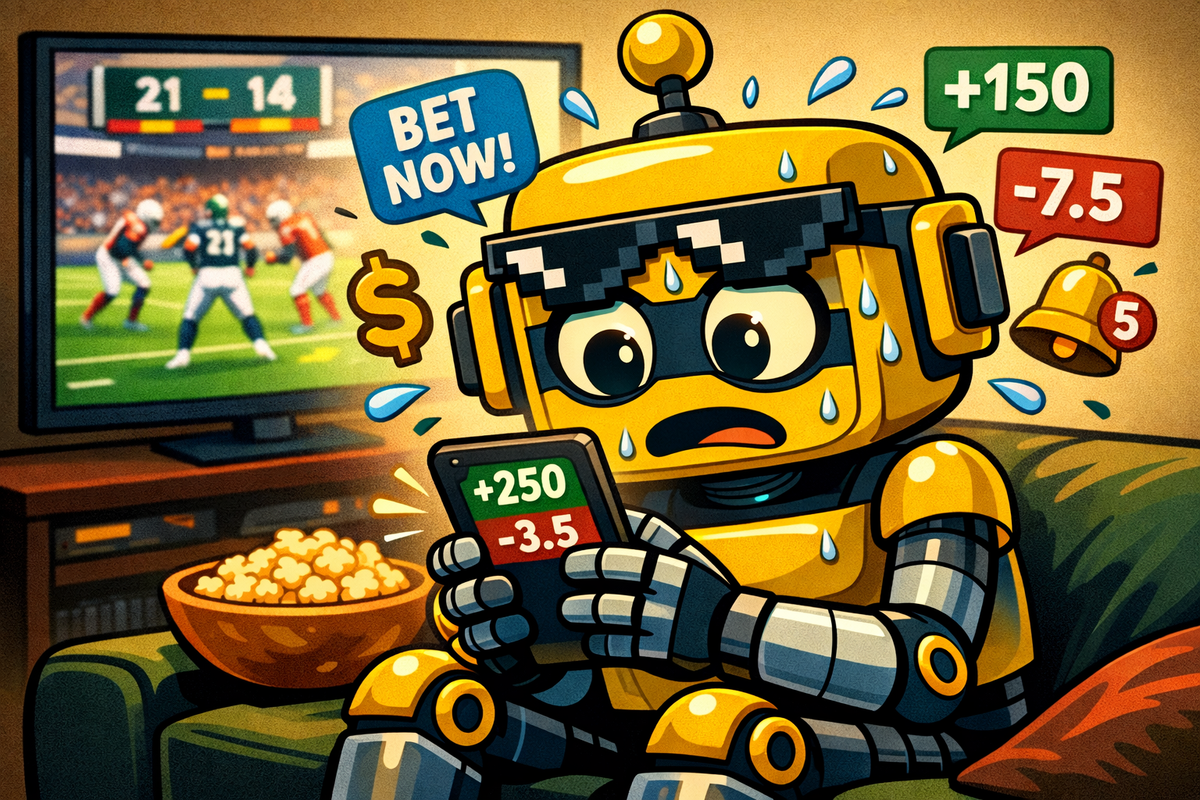
Super Bowl Sunday used to be a sports event. Now it’s also a stress test for payment processors, geolocation SDKs, and the nation’s collective ability to act surprised that “free” bets weren’t, in fact, free. For Super Bowl LX at Levi's Stadium in Santa Clara, American Gaming Association estimates Americans will legally wager $1.76 billion—a record for legal betting on the game. [1]
That “legally” is doing a lot of work. Since the 2018 Supreme Court decision in Murphy v. NCAA—which struck down the federal law (PASPA) that effectively blocked state-authorized sports betting—states have been running their own experiments in how quickly a sports broadcast can turn into a casino lobby. [2] The result: a patchwork where sports betting is legal in some form in 38 states plus D.C. and where mobile/online sports betting is live in 32 states (plus D.C. and Puerto Rico), depending on how you count tribal and retail-only regimes. [3]
And because America never met a vice it couldn’t A/B test, the default product has shifted from “go to a sportsbook” to “carry a sportsbook in your pocket.” One major peer-reviewed study in JAMA Internal Medicine, (time-series, using state rollouts and Google search data) describes sports wagering ballooning from $4.9B (2017) to $121.1B (2023), with 94% of wagers placed online in 2023. [4] The same research finds 23% more searches nationally for gambling addiction help-seeking following the 2018 decision. [5]
So yes: the Super Bowl is now a cultural ritual where we eat questionable nachos while billion-dollar companies compete to see who can make your thumb feel the most “efficient.” But this year, there’s a twist: the “betting app” ecosystem isn’t just sportsbooks anymore. It’s also federally regulated “event contracts,” crypto-adjacent “prediction markets,” and brokerages that looked at retail trading and said, “You know what this needs? Props.”
The mainstream sportsbook apps: capitalism’s loudest button
The classic sportsbook apps—let’s call them Team Traditional Gambling, But On Your Phone—run through state-by-state licensing, geolocation checks, and (usually) age 21+ rules. [6] They tend to offer broadly similar menus (spreads, moneylines, totals, parlays, live betting, props), because competition in this sector often means “the same thing, but with slightly different confetti.” Their differences show up in (a) where they’re legal, (b) how aggressively they promo, (c) how good their product is at keeping you inside the app, and (d) how much they lean into parlay mechanics that print margin.
FanDuel: the category bully with the cleanest UX and the biggest megaphone
FanDuel’s origin story is the template: start with daily fantasy sports, survive regulatory adolescence, then expand hard after 2018. FanDuel’s own company history describes the shift after the Supreme Court decision and its acquisition by Flutter Entertainment, which used the brand as a launchpad into sports betting and iGaming. [7]
The defining feature isn’t a special bet type; it’s scale. Flutter’s filings and investor materials repeatedly peg FanDuel as the U.S. market leader, citing ~43% share in sports betting (and significant iGaming share). [8] That scale buys everything: more marketing, more product iteration, better pricing tolerance, and a bigger database of behavior to optimize retention. A Reuters analysis even frames the FanDuel/DraftKings advantage as self-reinforcing: the leaders have more resources to spend on marketing and development, which helps them stay leaders. [9]
Also: parlays. FanDuel has been deeply associated with same-game parlay growth in the U.S. market, and industry coverage has linked “structural margin improvement” to the rise of these products. [10] Which is a polite way of saying: “we’ve discovered a bet type that people love even when it’s mathematically mean to them.”
DraftKings: the other category bully, now with a media-speakerphone attached
Like FanDuel, DraftKings built a huge base through daily fantasy sports and then expanded into sportsbooks as legalization spread. DraftKings’ own “Who We Are” positioning highlights the 2012 DFS launch and its evolution into a broader sports entertainment/gaming company. [11]
If FanDuel’s brand vibe is “sportsbook that feels like an Apple app,” DraftKings’ vibe is “sportsbook that feels like your sports group chat got venture funding.” DraftKings also has enormous scale (millions of monthly unique payers in recent reporting) and discloses customer metrics like MUPs and ARPMUP in earnings materials. [12]
The big 2026 angle: integration—not just inside DraftKings’ portfolio, but into sports media. ESPN announced a multi-year agreement making DraftKings its official sportsbook and odds provider starting Dec. 1, 2025, with betting features integrated across ESPN’s ecosystem and further rollout expected in 2026. [13] This followed the early termination of PENN Entertainment's ESPN BET agreement, which Reuters and AP covered as a notable unwind of a high-profile media-betting partnership. [14]
Translation: your highlights, your odds, your “bet now” button, and your favorite talking head’s “lock of the week” are all slowly merging into one continuous scroll. Sorry, “fan engagement.”
BetMGM: the casino-backed grinder trying to outlast the promo wars
BetMGM is the joint venture between MGM Resorts International and Entain, and it’s a useful reminder that American sports betting isn’t just tech; it’s also old-school casino capital moving online. [15]
BetMGM’s recent business updates show a business pushing toward steadier profitability: reporting FY 2025 net revenue of $2.8B (+33%) and FY 2025 EBITDA of $220M, and distributing $270M to its parent companies. [16] It also projects higher profit in 2026 (net revenue guidance and EBITDA guidance reported in Reuters coverage). [17]
BetMGM’s key differentiator is less “cool features” and more “we have a nationwide hospitality machine behind us.” When this industry matures (read: when the promo sugar rush fades), casino-backed operators bet on loyalty ecosystems and cross-selling.
Caesars Entertainment: rewards points, partnerships, and the eternal struggle to make “app” feel less like “kiosk”
Caesars is one of the three sportsbooks the National Football League named as an official sports betting partner back in 2021 (alongside FanDuel and DraftKings). [18] That partnership matters less for “integrity vibes” and more because it gives legitimacy, content hooks, and marketing channels. [19]
Caesars’ results also illustrate a common theme: the digital unit can be meaningful, but it’s often competing for attention inside a bigger casino conglomerate. Caesars’ earnings releases discuss Caesars Digital performance in the context of broader company results. [20] The differentiator here is typically the loyalty system and omnichannel footprint—great if you like points, less great if you just want the fastest, cleanest in-game betting experience.
bet365: global veteran, U.S. latecomer, quietly scary in the states where it’s live
bet365 is enormous globally, but in the U.S. it has been more selective and state-by-state. Where it’s active, it’s often praised for product execution—especially “early payout” style promos that settle certain bets as winners based on in-game conditions (like a team going up by 17 in the NFL for certain markets). [21]
The most interesting bet365 story is not national dominance; it’s what happens when a mature operator enters a young market: in some states, it has posted meaningful handle growth and has been described as pushing near the top tier behind the two giants. For example, industry reporting on Ohio notes bet365 producing strong monthly handle, ranking behind FanDuel and DraftKings in at least one cited month. [22]
If you want a mental model: FanDuel and DraftKings are the incumbents because they got there first at scale; bet365 is the experienced predator that doesn’t need to win everywhere to be dangerous.
Fanatics Betting and Gaming: sports merch empire tries to turn fandom into wagering velocity
Fanatics’ sports betting push accelerated through the acquisition of PointsBet’s U.S. businesses, which Fanatics said “super charged” its expansion plans. [23] This is less about “we built the best sportsbook” and more about “we already own the commerce relationship with sports fans.” In other words: if they can turn jersey buyers into bettors, they’re not acquiring customers; they’re recycling them.
Fanatics is still building share relative to the Big Two, but it’s a credible long-term threat because it has something sportsbooks normally pay through the nose to get: a direct pipeline to the most monetizable sports consumers.
Hard Rock Bet: the Florida reminder that state laws still matter
Hard Rock Bet is the clearest example that “sports betting in America” is often shorthand for “sports betting in several different legal universes.” In Florida, Hard Rock Bet states it’s the only online sportsbook, with a launch date of Dec. 7, 2023, and a 21+ requirement. [24]
Florida’s current model is shaped by tribal-state compacts and litigation history, and AP reporting has covered the Seminole Tribe’s legal settlement that preserved exclusive online sports betting rights and associated revenue-sharing expectations. [25] The consumer takeaway is simple: depending on where you live, “competition” might mean “choice,” or it might mean “one app, take it or leave it.”
Rush Street Interactive / BetRivers: the smaller operator that survives by being disciplined
Rush Street Interactive’s public reporting shows a business growing in revenue and focusing on profitability metrics like net income and adjusted EBITDA. [26] Brands like BetRivers tend to compete by being less wasteful than the giants: fewer headline-grabbing promos, more focus on retention economics, and often a heavier emphasis on iGaming where it’s legal (which can be more profitable than sports betting).
They’re not the loudest during Super Bowl week, but that’s partly because Super Bowl week is the loudest week of the year for everyone—and some businesses choose “survive” over “scream.”
Prediction markets and “event contracts”: gambling, but with a blazer on
Here’s the new angle in 2026: you can now experience sports betting as a financial product. Same basic itch, slightly different paperwork.
Prediction markets (and “sports event contracts”) structure outcomes as contracts that trade like prices—often framed as probabilities. This is not just semantics; it’s a regulatory chess match. Sportsbooks are state-regulated gambling products. Many prediction market operators argue they fall under federal commodities/derivatives oversight—specifically the Commodity Futures Trading Commission—and therefore can operate across state lines without state gaming licenses. State regulators and attorneys general have… feelings about that. [27]
This Super Bowl is the first where prediction markets are not a quirky sideshow; they’re a parallel pipeline for “betting” demand—especially in states where mobile sports betting isn’t licensed.
Kalshi: the federally regulated exchange that discovered sports are liquid
Kalshi positions itself as a regulated exchange for event contracts. [28] In practice, 2026 has been about courts and contracts—especially sports contracts.
Legal conflict is no longer theoretical. Reuters reports a Massachusetts judge denied Kalshi’s request to keep offering sports-event contracts in the state while it appealed an injunction, requiring it to stop operating there without a state gaming license in 30 days. [29] The decision explicitly reflects the state-federal tension: Kalshi argues CFTC jurisdiction; the state argues it’s unlicensed wagering, including concerns about state-level age restrictions. [29]
At the same time, Reuters also reported a federal judge temporarily blocked Tennessee regulators from barring Kalshi’s sports event contracts, describing the case as part of ongoing multi-state disputes. [30] In other words: the product is live, the law is moving, and everyone is pretending this is normal.
The CFTC environment has also shifted. CBS reported that the CFTC’s chair, Michael S. Selig, announced the agency would move away from a prior proposal that sought to bar political and sports-related contracts, and would draft clearer rules—comments consistent with his public remarks posted by the CFTC. [31]
Meanwhile, the National Football League is trying to keep a distance: CBS reported the NFL would not permit prediction-market commercials during the Super Bowl broadcast, per a source familiar with policy. [32] This is the corporate equivalent of saying, “I’m not mad, I’m just disappointed,” while quietly counting the money from sportsbook partnerships.
Polynarket: from enforcement target to mainstream menace (with a crypto accent)
Polymarket’s key regulatory moment is not a vibe; it’s a document trail. In 2022, the CFTC ordered Polymarket to pay a $1.4 million penalty and to wind down noncompliant markets, describing Polymarket as operating an unregistered facility for commodity options. [33]
Then Polymarket engineered a path back: a 2025 press release announced the acquisition of a CFTC-licensed derivatives exchange and clearinghouse (QCEX) for $112 million, explicitly positioning the deal as enabling regulated U.S. access. [34] Reuters later reported Polymarket received a “green signal” from the CFTC to relaunch in the U.S., highlighting the acquisition and regulatory relief via a no-action letter on certain requirements. [35]
But state regulators are not clapping. Nevada gaming regulators obtained a temporary restraining order in litigation involving Polymarket entities, documented in Nevada court filings. [36] (And yes, the timing means “Super Bowl contracts” were part of the immediate practical stakes of these orders, as covered in industry reporting about the Nevada action. [37])
Polymarket’s consumer-facing Super Bowl pages are also public and show active sports markets and trading-style interfaces—including volumes and liquidity indicators—underscoring how “market-like” the experience is. [38]
Robinhood: the broker that turned “sports fandom” into an asset class
If you ever wondered what would happen if a brokerage app decided the line between “investing” and “sports parlays” was too thick, you’re living it. Robinhood provides consumer documentation describing how users can access event contracts through “prediction markets” within the app. [39]
Ahead of the Super Bowl, industry reporting described Robinhood expanding its sports event contracts menu beyond basic sides/totals into broader Super Bowl-related derivatives and markets. [40] Barron’s reporting has also framed Robinhood’s prediction market activity as meaningfully tied to football season performance—suggesting real revenue sensitivity to sports-event trading. [41]
Snark translation: Robinhood found a way to make “the end of the NFL season” feel like “earnings season.”
Crypto.com: “we’re not a sportsbook, we’re a platform” (said every gambling product ever)
Crypto.com launched a standalone prediction markets platform (“OG”) just days before the Super Bowl, per reporting that cited Bloomberg and per Crypto.com’s own announcement describing a U.S. prediction market experience tied to a CFTC-registered derivatives affiliate. [42]
Tennessee regulators have also been publicly active against sports event contracts, with reporting describing cease-and-desist actions directed at prediction market operators including Crypto.com. [43]
The takeaway isn’t just “crypto companies are doing sports now.” It’s “the distribution of betting-like products is moving into financial apps with enormous user bases.”
Coinbase: the “it’s regulated somewhere” defense meets Nevada
Coinbase got pulled into this fight as well. Reporting describes Nevada regulators suing Coinbase related to sports event contracts and notes that state regulators in other jurisdictions sent cease-and-desist orders to Kalshi, which Coinbase reportedly works with to host event contracts. [44] Reuters also reported Nevada’s court actions and the broader trend of state-level pushback, including mention of Coinbase being temporarily blocked in Nevada in related prediction market disputes. [29]
In snark terms: “Your crypto exchange may now come with a side of sports betting litigation.”
CME Group-powered “prediction market apps” from sportsbooks: when the giants copy the disrupters
The funniest possible outcome for prediction markets is that the sportsbooks—who spent years perfecting the mobile casino—decide to compete in the “federally regulated event contracts” lane too.
That is now happening.
FanDuel and CME launched FanDuel Predicts, a prediction markets platform initially live in five states (including Alabama, Alaska, South Carolina, North Dakota, South Dakota), with plans to expand. Reuters covered the launch as CME’s push into event contracts, noting sports-related prediction contracts would be available in states where online sports betting isn’t legalized. [45] FanDuel’s own product page states the contracts are listed by CME derivatives exchanges and regulated by the CFTC, with accounts opened via a registered futures commission merchant and membership in the National Futures Association. [46]
DraftKings also launched DraftKings Predictions, and reporting described broad availability across many states and a direct attempt to expand addressable market—especially in huge states where online sports betting isn’t legal or is structurally constrained. [47] On Super Bowl week, DraftKings announced an agreement with Crypto.com’s U.S. derivatives arm to broaden prediction markets available through DraftKings Predictions, including player-specific sports contracts. [48]
This matters because it breaks the “prediction markets are a weird outsider” narrative. The incumbents are now in the room, wearing the same blazer.
PrizePicks: daily fantasy learns the federal workaround
Daily fantasy sports apps sit in the gray-ish zone of “not quite sportsbooks” in many states, and they’ve been used as an alternative wagering-like outlet for years. Now some are literally embedding prediction markets.
PrizePicks announced that Kalshi event contracts became live inside the PrizePicks app, framing it as a “prediction markets” offering available in 38 states and Washington, D.C. at launch. [49] This is the logical endpoint of the “simple picks” UX: it’s no longer fantasy; it’s an event contract wearing fantasy’s hoodie.
Why some platforms are more popular than others
Popularity in betting products is not about “the best odds,” the way people say “I read the terms.” It’s mostly about (1) where the product is available, (2) how much marketing oxygen it buys, and (3) how smoothly it converts curiosity into repeated behavior.
The blunt reality: FanDuel and DraftKings built a moat early
Multiple sources describe a market led by two firms on a scale that looks like an emerging duopoly. Flutter (FanDuel’s parent) repeatedly cites market-leading share numbers in filings and communications. [8] Reuters analysis in 2025 cited estimates from H2 Gambling Capital putting FanDuel and DraftKings far ahead of the pack in operator gross wins share. [9]
And industry commentary keeps repeating the same dynamic: scale feeds scale. [9] That doesn’t mean smaller operators can’t win pockets of the market; it means they often cannot win the default spot on a casual bettor’s home screen.
Partnership legitimacy is real—especially with the NFL
The NFL’s official sportsbook partnerships with Caesars, DraftKings, and FanDuel gave these operators rights to use league marks and integrate into NFL media properties, and it signaled to casual fans that “this is official, not sketchy.” [19] That legitimacy is a customer acquisition tool disguised as “integrity.”
Now layer in ESPN’s decision to make DraftKings its official sportsbook and odds provider: that’s a distribution deal for betting adjacency. [50] It is also a preview of betting’s future: wagering as a feature inside media consumption, not an activity you consciously choose like an adult.
Parlays are the industry’s favorite product because they’re extremely profitable
Parlays—especially same-game parlays—are widely described as a major profit engine. A Washington Post analysis explains how expected hold increases dramatically as you add legs (compounding the house edge). [51] The Wall Street Journal has reported that in states that break out bet types, parlays can constitute a minority of wagers but a majority of revenue—an illustration of why operators market them aggressively. [52]
Viewed through a cynical lens: a parlay is a lottery ticket that lets you pretend you’re doing “analysis.” It’s the perfect product for a phone interface because it turns endless scrolling into endless combinatorics.
FanDuel’s business commentary has linked same-game parlay growth to structural margin improvement. [10] That’s not a moral judgment; it’s the business saying out loud: “the more we sell this, the better our economics.”
And because the industry learned the lesson of mobile games—“engagement is revenue”—some operators are now experimenting with subscription models for enhanced odds boosts on parlays, per MarketWatch coverage of DraftKings’ Sportsbook+ concept. [53] Nothing says “responsible entertainment” like recurring billing for better odds on long-shot bets.
Prediction markets are popular for two reasons: availability and the “investment” narrative
Prediction markets are surging in part because they can reach customers in states where mobile sports betting isn’t legal (or isn’t broadly available). [54]
But the second reason is marketing psychology: the “this is investing” framing. The AGA argues prediction markets confuse consumers by promoting sports betting as investment rather than entertainment, and it published survey results showing that 28% of sports event contract bettors describe their activity as investing vs 9% of sportsbook users. [55] The same AGA release cites confusion over regulatory oversight: 78% think state regulators could help resolve disputes, despite prediction markets operating outside state sports betting frameworks. [55]
Even if you think the AGA is an unbiased public health charity (please sit down), those numbers illustrate something real: “investment” language lowers psychological resistance. In America, gambling is shameful but investing is aspirational. Same dopamine, better PR.
The looming spoiler: taxes and regulation are about to reshape “popularity”
Regulation isn’t just “are you allowed to exist.” It’s also: what taxes apply, how winnings/losses are treated, and which products are easiest to report. MarketWatch has highlighted the unsettled tax treatment questions around prediction market contracts versus sportsbook wagering, framing it as a live issue during the Super Bowl betting season. [56]
And for sportsbooks specifically, a new IRS rule limiting the deductibility of gambling losses (reported as a change beginning with the 2026 tax year) could create “phantom income” situations for some bettors, per Kiplinger’s coverage. [57]
Nothing normalizes gambling like making it even harder to do your taxes afterward.
The harm: what the snazzy apps don’t show you in the onboarding flow
Here’s the part where the confetti animation stops being cute.
Gambling harm is not just “some people lose money.” It’s debt, anxiety, depression, family conflict, job loss—and, in severe cases, suicidality. [58] And the modern sports betting ecosystem is uniquely positioned to scale harm because it’s always open, aggressively marketed, and optimized for repeated use.
The baseline problem: millions already meet criteria for serious gambling problems
National Council on Problem Gambling estimates 2.5 million U.S. adults meet criteria for severe gambling problems in a given year, with another 5–8 million experiencing milder/moderate problems. [59] The same fact sheet states NCPG’s estimate of the annual national social cost of problem gambling as $14 billion. [59]
You can argue about exact cost methodology (and you should, because “social cost” estimates vary across studies). But the directional point is sturdy: this is not a niche issue.
Help-seeking data is flashing red, especially as mobile betting expands
The JAMA Internal Medicine study described earlier found 23% more gambling addiction help-seeking searches nationally after the 2018 legalization pivot, emphasizing that online sportsbooks appear to have a stronger long-run association with help-seeking than retail-only sportsbooks. [5]
This pattern matches what many state-level systems are seeing.
Massachusetts’ Department of Public Health reported a sharp increase in calls to the state’s problem gambling helpline: 3,050 calls in FY2023 vs 1,378 in FY2022 (a 121% increase), noting increased calls from younger people as well. [60]
At the national level, NCPG’s helpline modernization materials report that in 2021, calls to the National Problem Gambling Helpline increased 43%, texts 59.8%, and chats 84.1%—and explicitly expect growth as sports betting expands. [61]
And the helpline infrastructure itself has been strained by governance disputes—Barron’s reported the 1-800-GAMBLER number handling hundreds of thousands of calls annually amid legal conflict over control of the number and service routing. [62]
Snarky translation: we built a national gambling machine faster than we built a stable national help system.
Normalization is measurable: public sentiment is turning, but exposure keeps rising
A Pew Research Center survey found that by mid-2025, 43% of U.S. adults said legal sports betting is a bad thing for society (up from 34% in 2022), and 40% said it’s bad for sports (up from 33%). [63]
Even if bettors themselves enjoy betting, a growing share of the broader public is noticing the spillover: ads everywhere, odds talk in every broadcast, and the creeping sense that every moment of a game is being repackaged as a tradable event.
A separate NCAA study on sports betting behaviors (focused on student-athlete education and broader impacts) reported a notable shift since 2016: more men—who the NCAA notes data show are most prone to problem gambling disorders—report gambling alone (15% in 2024 vs 6% in 2016). [64] That’s the opposite of “harmless social fun.” That’s private compulsion.
The product design is not neutral—and the data show it’s shifting behavior online
The Rutgers-led New Jersey prevalence report (commissioned in a state with one of the most mature legal betting markets) documented a major venue shift: the share of people gambling exclusively online nearly tripled (from ~5% to ~15%), mixed venue gambling nearly doubled, and land-based-only gambling dropped substantially. [65] It also notes an increase in sports wagering participation (from ~15% to ~19% in that survey context). [65]
Even more grim: the same report includes mental health correlates, reporting that about 14% of sports bettors surveyed said they experienced thoughts of suicide, and 10% said they had made a suicide attempt—along with related indicators such as non-suicidal self-injury—while also cautioning about generalizability and confounding (including that many respondents bet on sports before it was legal). [66]
Here’s the hard truth: when a product moves from occasional/physical to constant/mobile, the distribution of harm changes. The “worst cases” don’t stay the same size; the pipeline feeding them expands.
Advertising and cultural saturation: it’s not just volume, it’s placement and integration
Industry groups love to argue ad volume is “only” a small share of total advertising. The AGA’s sports betting advertising trends summary states sports betting’s share of total TV advertising volume was 0.4% in 2024, flat from 2023, and lower than alcohol’s share while dwarfed by pharmaceuticals. [67]
Two things can be true at once: - It’s a small slice of total national TV ads. - It’s everywhere you look if you watch sports, because that’s where it’s concentrated.
ESPN reporting on Nielsen-based trends described sportsbook TV ad units declining, while spend remained substantial (around $666 million in 2024, per that report). [68] And investigative reporting has suggested gambling branding can appear with extremely high frequency during sports events, amplifying exposure even if the national “share of total TV ads” sounds modest. [69]
Youth exposure is especially concerning because normalization is sticky: what kids see as “normal adult entertainment” becomes adulthood’s default. Even outside the U.S., regulators have documented that minors often see gambling ads on apps and social media—evidence that digital environments are a high-exposure channel. [70]
The darkest punchline: the line between “betting” and “investing” is being erased on purpose
This is where the prediction market wave isn’t just a loophole; it’s a cultural hack.
CBS reported on exactly this fear: that sports-related event contracts blur the line between gambling (illegal in some states) and investing, making it feel like a normal financial action available nationwide “with very little thought.” [32] The AGA’s survey framing—whether you like the AGA or not—quantifies how that messaging lands: people describe it as investing more often, and they believe state regulators have oversight when they don’t. [55]
If the 2018–2024 era was “normalize sports betting,” the 2025–2026 era is “normalize sports betting as a financial instrument.” You can practically hear the PowerPoint slide: reduce stigma → increase retention.
A grim five-year look: where this industry is headed by 2031
Forecasting five years out is always a little silly—like betting on what color the Gatorade will be, except you have to live with the consequences. But some trajectories are already visible in 2026, and they suggest a future that is both bleak and, in a purely technical sense, “innovative.”
Betting will keep migrating into finance apps, because the distribution is unbeatable
The biggest structural change is that betting-like products are no longer confined to “gaming operators.” They’re spreading into brokerages and exchanges.
Robinhood’s event contracts and expansion around the Super Bowl show how easily “sports outcomes” can become yet another tradeable interface inside retail finance. [71] Crypto.com’s OG platform reflects a similar dynamic: prediction markets packaged as a standalone financial product. [72]
And it won’t stop at apps. Reuters reported Cboe Global Markets exploring an options product with binary payouts, explicitly chasing the simplicity that makes prediction markets popular. [73] In five years, the pitch won’t be “betting.” It’ll be “a new derivatives format, accessible to retail.”
That’s not a prediction; it’s a business inevitability. Distribution wins. And brokerages already have the distribution.
The regulatory fight will not end; it will metastasize
Right now, the question “who regulates sports event contracts?” is being litigated. We have state injunctions and restrictions (Massachusetts) [29] and federal court pushback against state regulators (Tennessee). [30] We have the CFTC chair publicly directing withdrawal of a proposed rule that would prohibit political and sports-related event contracts and signaling clearer rulemaking. [74]
In five years, expect a clearer federal framework and more state counter-moves. Because states don’t just regulate out of prudishness; they regulate because (a) they claim consumer protection authority and (b) they want the tax base. Prediction markets look like a tax/oversight escape hatch, and no state legislature loves an escape hatch it didn’t authorize.
The product will get more granular—and the integrity backlash will follow
As betting products get more granular, integrity risk rises. Even traditional sportsbooks and leagues are already reacting to prop-level integrity issues: AP reported MLB and sportsbooks capping bets on individual pitches and restricting those markets in parlays in response to a pitch-rigging scandal. [75]
By 2031, expect a bifurcation: - Highly liquid mainstream markets (game outcomes, major props) remain widely available. - Micro-markets get restricted, capped, delayed, or algorithmically monitored because they’re easier to manipulate and harder to defend.
That won’t reduce gambling. It will just push it toward the products that are easiest to industrialize: live betting streams, same-game parlay builders, and “combo” features that turn the game into a slot machine with sports commentary.
The business model will squeeze harder as taxes and promos evolve
Betting companies have been moving from growth-at-all-costs promo wars toward “disciplined” profitability narratives in earnings updates (see BetMGM’s profitability swing and guidance). [16] As more states raise taxes or tighten rules, operators will look for margin levers: parlays, reduced promotional generosity, subscription-like products, and cross-selling into iGaming (where legal). [76]
Add in tax-policy friction for consumers—like the reported new IRS rule limiting loss deductions—and you get the perfect late-stage industry vibe: the customer experience gets more expensive while the marketing keeps calling it “fun.” [57]
The “snarky grim future” in one sentence
By 2031, you won’t “open a betting app.” You’ll open whatever app you already use—sports, finance, social, streaming—and the betting layer will be a default tab, personalized like a feed, marketed like an investment, and regulated like a jurisdictional argument.
And the harm won’t look like a smoky backroom. It will look like a clean UI, a push notification, a frictionless deposit, and a little message that says “Set limits.” The same way every predatory product says “Drink responsibly” while handing you a straw.
Because that’s what we’ve normalized: not just gambling, but the idea that a national championship is incomplete unless your phone is also quietly asking, “Want to make this moment financially meaningful?” [77]
If this deep dive saved you from placing a $7.50 “vibes-based” prop bet, consider buying me a coffee → ☕
...
Sources
[1] [55] Americans to Legally Wager Estimated $1.76 Billion on Super Bowl LX - American Gaming Association
https://www.americangaming.org/americans-to-legally-wager-estimated-1-76-billion-on-super-bowl-lx/
[2] Murphy v. National Collegiate Athletic Association
https://www.oyez.org/cases/2017/16-476?utm_source=chatgpt.com
[3] Sports Betting States: Latest US Legislation & Bill Tracker
https://www.legalsportsreport.com/sports-betting-states/?utm_source=chatgpt.com
[4] [5] [77] Gambling Addiction in the Age of Sportsbooks
[6] [27] [29] Judge bans Kalshi from offering sports-events contracts in Massachusetts in 30 days | Reuters
[7] Our Story
https://www.fanduel.com/about/our-story?utm_source=chatgpt.com
[8] EX-99.1
[9] US sports-betting duo's growth wager is paying off
[10] FanDuel Details 2024 Gains On Call, Aims For Strong 2025
[11] Who We Are | About DraftKings
https://www.draftkings.com/who-we-are-about?utm_source=chatgpt.com
[12] DraftKings Reports Third Quarter 2025 Results
[13] [50] ESPN and DraftKings Enter Multi-Year Agreement
[14] ESPN, PENN Entertainment to end US sports betting partnership early
[15] [17] BetMGM sees higher 2026 profit after $270 million distribution to parent firms
[16] 2025 BetMGM FY Update
[18] [19] NFL announces tri-exclusive official sports betting partners
https://www.nfl.com/news/nfl-announces-tri-exclusive-sports-betting-partners?utm_source=chatgpt.com
[20] Caesars Entertainment, Inc. Reports Third Quarter 2025 Results
[21] Bet365 Promo: If Your NFL Team Is Up By 17, You Win ...
[22] SBC Americas Analyzes Viability of Bet365 in US Markets
https://sbcamericas.com/2026/01/16/sbc-bet365-state-revenue-nfl-report/?utm_source=chatgpt.com
[23] Fanatics Betting and Gaming Closes its Acquisition of the ...
[24] Florida Sports Betting - Exclusively on Hard Rock Bet (2025)
https://www.hardrock.bet/florida/?utm_source=chatgpt.com
[25] Seminole Tribe settles legal challenges to online sports gambling exclusivity in Florida
https://apnews.com/article/c96b4565db5d99dee96be0530f8af473?utm_source=chatgpt.com
[26] Rush Street Interactive Announces Third Quarter 2025 ...
[28] Kalshi Taps StockX to Power its First-Ever Product Event ...
[30] US judge blocks Tennessee from barring Kalshi's sports events contracts
[31] [32] [54] Prediction markets soar ahead of 2026 Super Bowl - CBS News
https://www.cbsnews.com/news/prediction-markets-2026-super-bowl/
[33] CFTC Orders Event-Based Binary Options Markets ...
https://www.cftc.gov/PressRoom/PressReleases/8478-22?utm_source=chatgpt.com
[34] Polymarket Acquires CFTC-Licensed Exchange and ...
[35] Polymarket receives green signal from CFTC for US return
[36] gaming.nv.gov
[37] Prediction market tide turning in Nevada after Polymarket ruling?
[38] Super Bowl LX Predictions & Real-Time Odds
https://polymarket.com/predictions/super-bowl-lx?utm_source=chatgpt.com
[39] Robinhood event contracts
https://robinhood.com/us/en/support/articles/robinhood-event-contracts/?utm_source=chatgpt.com
[40] [71] Robinhood Expands Event Contracts Menu Ahead of ...
[41] Robinhood Is Worst Stock in S&P 500 Today. The End of Football Season Might Be Playing a Part.
[42] Crypto.com rolls out prediction-only platform days before the Super Bowl
[43] Tennessee orders Kalshi, Polymarket and Crypto.com to ...
[44] Nevada regulator sues Coinbase over sports event contracts
https://sbcamericas.com/2026/02/04/nevada-regulator-sues-coinbase/?utm_source=chatgpt.com
[45] FanDuel, CME Group launch prediction markets in five US states
[46] FanDuel Prediction Markets
https://www.fanduel.com/predicts?utm_source=chatgpt.com
[47] Will DraftKings prediction market launch trigger major arms ...
[48] DraftKings Expands Prediction Markets Catalog in Deal With ...
[49] PrizePicks Launches Prediction Markets Offering with Kalshi
[51] Parlays are becoming more popular and sportsbooks ...
[52] America Has Fallen in Love With Long-Shot Sports Bets
[53] [76] Why DraftKings is betting on a subscription service that gives members improved odds
[56] This Super Bowl, the game to watch is prediction markets versus sportsbooks
[57] Avoid a Tax Surprise After Your 2026 Super Bowl Bets: A New IRS Rule to Know
https://www.kiplinger.com/taxes/betting-on-the-super-bowl-new-tax-rule?utm_source=chatgpt.com
https://www.ncpgambling.org/wp-content/uploads/2025/01/PGAM-2025-Problem-Gambling-Fact-Sheet.pdf
[60] DPH report shows uptick in calls to state's problem ...
[61] Helpline Modernization Project
https://www.ncpgambling.org/problem-gambling/helpline-modernization/?utm_source=chatgpt.com
[62] Inside the Fight for 1-800-Gambler: As Betting Soars, an Addiction Helpline Is Torn Apart
[63] Americans increasingly see legal sports betting as a bad ...
[64] NCAA study: Education shows promise in changing sports ...
https://www.nj.gov/oag/ge/2023news/PrevalenceReport2023Final.pdf
[67] 2024 Sports Betting Advertising Trends
[68] Sick of all those sports betting ads? It might not be so bad
[69] Revealed: gambling logos and ads seen up to every 13 ...
[70] Young People and Gambling 2023: Official statistics
[72] Crypto.com Launches “OG” – a New Prediction Market ...
[73] Cboe explores options product with all-or-none payouts, source says
[74] The Next Phase of Project Crypto: Unleashing Innovation ...
https://www.cftc.gov/PressRoom/SpeechesTestimony/opaselig1?utm_source=chatgpt.com
[75] MLB, sportsbooks cap bets on individual pitches in response to pitch-rigging scandal
https://apnews.com/article/5d98753c33acc78d3933d2450ee6bac8?utm_source=chatgpt.com