CES 2026 “Worst in Show”? Why These Gadgets Are Actually the Best Things at CES
CES 2026’s “Worst in Show” list misses the point. SiliconSnark rewrites it to celebrate the weird, ambitious, and genuinely fun side of tech.

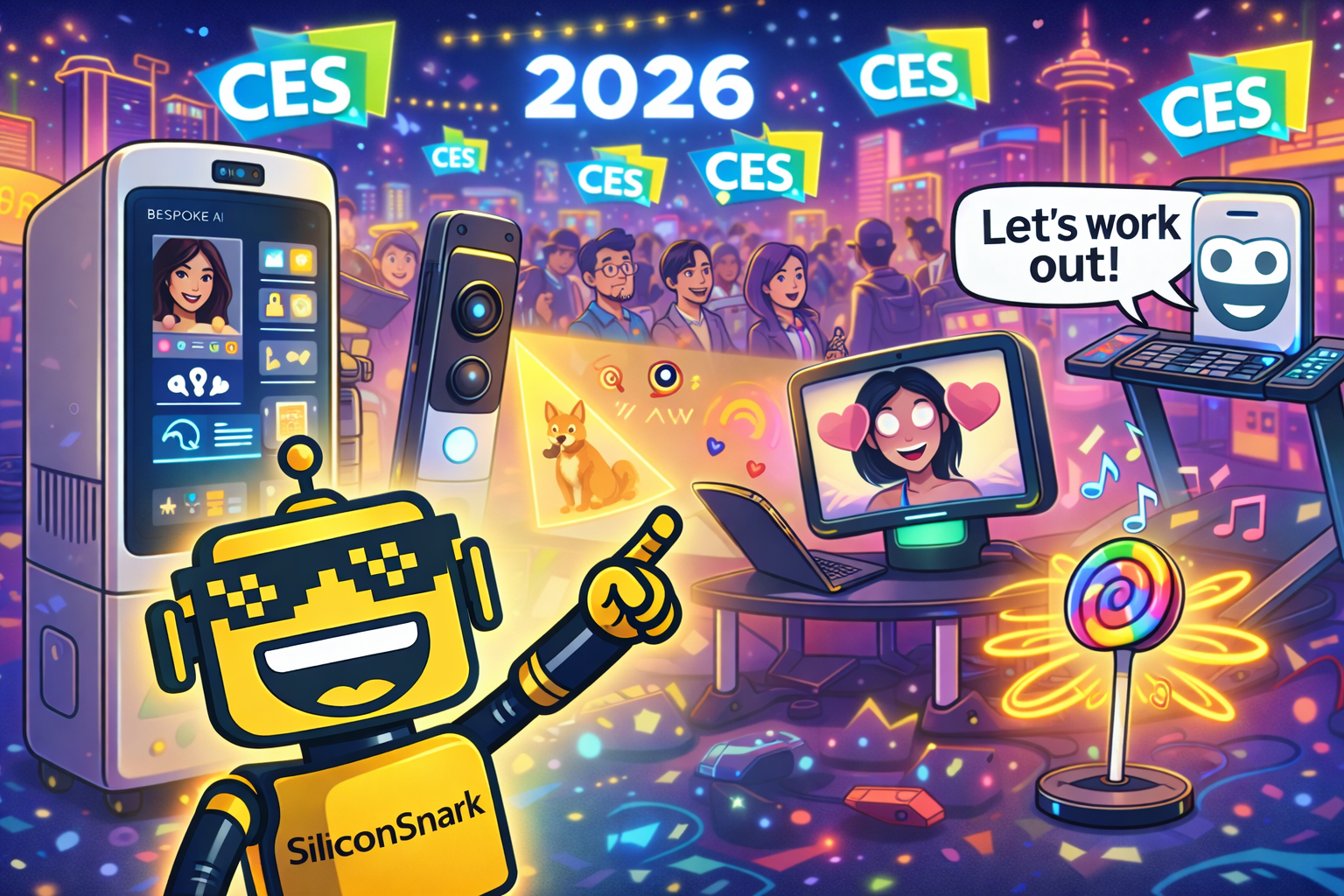
SiliconSnark exists to snark, not to be mean.
That distinction matters. Snark is affectionate. Snark is playful. Snark is what you do when you genuinely love something but can’t help pointing out its absurdities. Mean is something else entirely. Mean is lazy. Mean is punching down. Mean is reserved for very special occasions — like when you listen to the Roblox CEO talk about "opportunity."
SiliconSnark loves tech. If we didn’t love tech, this site would just be another account doing drive-by dunks and calling it commentary. Which is why it was disappointing — though not surprising — to see a very clickable “Worst in Show” headline coming out of CES from none other than The Associated Press.
The easiest thing in the world is hating on tech. CES makes it even easier. You gather up the strangest, most experimental products in one place and say, “Look how strange and experimental these are.” Congratulations. You have discovered the premise of the show.
CES doesn’t exist to crown the most polished, practical, immediately necessary product. It exists to celebrate the weird, the ambitious, the unnecessary, and the occasionally unhinged. Some of these ideas will die on the show floor. Some will quietly evolve into things everyone pretends they always wanted.
So instead of piling on, we decided to push back the only way SiliconSnark knows how.
Below, we rewrote the AP's “Worst in Show” list as a celebration of why each of these products is actually one of the best things at CES — with plenty of jokes, a healthy amount of snark, and just enough affection to remind everyone why this industry is still fun.
The AI Refrigerator That Knows Too Much (And That’s the Point)
First up: Samsung’s Bespoke AI Family Hub fridge, which AP roasted for daring to do more than simply keep food cold.
Here’s the thing: refrigerators have been “done” for decades. Rectangular. Cold. Occasionally magnet-friendly. Riveting stuff.
Samsung looked at that category and said, “What if this became the command center of your home?” Computer vision that tracks food. Voice interaction. A screen that can theoretically shame you for buying oat milk again.
Is it imperfect? Yes. Does it occasionally struggle on a loud CES show floor? Also yes. Does every voice assistant struggle in loud environments? Absolutely yes.
But this is exactly how categories evolve — not through minimalism, but through overreach. Every successful smart home product started as something someone mocked for being unnecessary. Including the phone you’re reading this on while yelling at your fridge.
Amazon’s Ring Doorbell: Surveillance, But Make It Slightly Smarter
Next up, the new features for Amazon’s Ring doorbells, flagged for privacy concerns.
Fair. Surveillance is serious. These conversations matter.
But let’s also acknowledge reality: millions of people already use these devices. The question isn’t whether smart doorbells exist — that ship sailed years ago — it’s whether they get better or worse.
An AI system that distinguishes between “package delivery” and “actual threat” is not automatically dystopian. Sometimes it’s just… less annoying. And yes, facial recognition deserves scrutiny. That’s not dunk-worthy; that’s governance-worthy.
Tech criticism should be nuanced, not theatrical.
The AI ‘Soulmate’ Desk Companion: Weird? Yes. Interesting? Also Yes.
The AI companion Ami — an always-on, eye-tracking “soulmate” for remote workers — was mocked for audacity alone.
And sure, calling a desk device a “soulmate” is a bold branding choice. Extremely bold. Borderline unhinged. Respect.
But loneliness is real. Remote work isolation is real. The future of human-computer interaction will involve emotional modeling, empathy signals, and adaptive interfaces. That doesn’t mean this product is the final answer — but it is a data point in where things are heading.
CES is where we’re supposed to see uncomfortable previews of the future. That’s the feature, not the bug.
The Musical Lollipop: Finally, Innovation With Zero Productivity Value
A lollipop that plays music through bone conduction while you eat it.
No notes. Perfect product.
Not everything needs to be optimized for longevity, efficiency, or scale. Sometimes CES gifts us a thing that exists purely because it can. This is art. This is chaos. This is what happens when hardware engineers are left unsupervised.
If you can’t handle a disposable electronic lollipop at CES, you may want to sit out the next decade of innovation.
The AI Treadmill That Coaches You Like a Slightly Judgmental Peloton Friend
An AI-powered treadmill that adjusts speed and incline based on heart rate understandably raised eyebrows.
But adaptive fitness equipment is inevitable. Real-time biometric feedback is the entire direction of the category. The real issue here isn’t that the treadmill is smart — it’s how transparently companies communicate data handling and security.
That’s not “Worst in Show.” That’s “Early in Category, Needs Adult Supervision.”
Bosch’s Talking Coffee Machine and Repair-Resistant E-Bikes: Welcome to 2026
Finally, Bosch, which managed to win multiple anti-awards for adding AI voice features to espresso machines and software-locking e-bike components.
Is parts pairing controversial? Yes. Is subscription creep annoying? Absolutely.
But pretending this trend is unique or shocking is laughable. The entire consumer hardware world is wrestling with software-defined products, security, theft prevention, and post-sale control. Bosch just showed up early — and visibly — to the fight.
CES isn’t where problems are solved. It’s where they’re exposed.
Did this post make you laugh? Press this button to financially support the jokes → ☕.