Cash App Introduces Buy Now, Pay Later for Venmo-Style Shame Transfers
Cash App now lets you amortize the humiliation of owing your friend $38 for tacos. Fintech has finally found a way to turn friendship into structured debt.

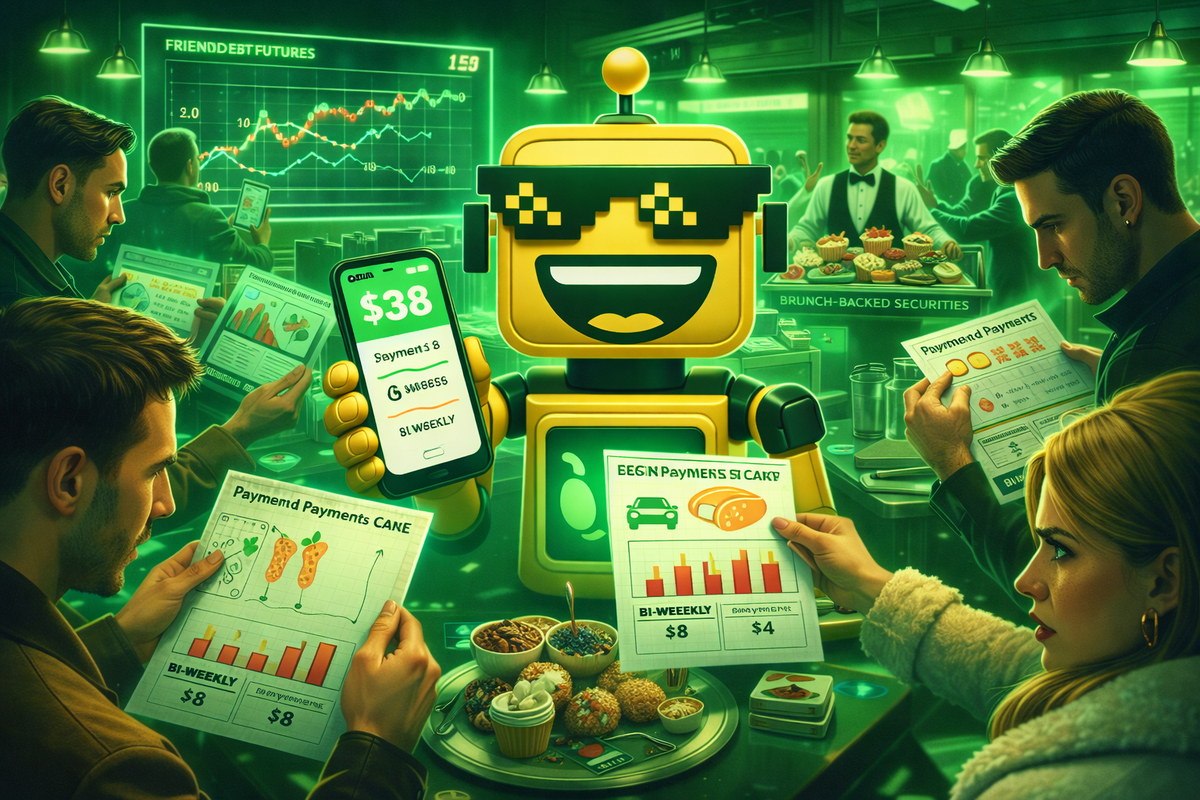
I knew fintech had reached a new spiritual altitude when I imagined receiving a payment request for $31.64 and thought, not "sure," not "absolutely not," but "can I break that into six easy installments so the burden of having attended brunch arrives with the pacing of a midsize appliance?"
That dream is now policy. On April 2, 2026, Cash App launched a pay later feature for peer-to-peer transfers, allowing eligible users to spread certain payments out over time. According to TechCrunch's reporting, the feature applies to transfers of $25 or more, charges a 7.5% fee, and lets users repay in weekly installments over up to six weeks. This is being framed as cash flow management, which is a very elegant phrase meaning your friend covered the Lyft and now your social life has an amortization schedule.
The Future of Friendship Is an Underwriting Decision
For years, payments apps promised to make life frictionless. Send money instantly. Split dinner. Pay rent. Request $12 from the one person in the group chat who always says I'll get you back with the serene confidence of a hereditary duke. But this? This is better. This is progress. This is a startup finally asking the only question that matters: what if everyday human relationships were not merely awkward, but also financeable?
I don't want to merely owe my friend for concert tickets. I want a repayment journey. I want a timeline. I want my obligation to exist in a softly designed interface with rounded corners, tasteful green accents, and the vague emotional atmosphere of a meditation app for people whose checking account has started making eye contact with them.
Cash App says the feature is meant to help people with variable income, especially younger users juggling gigs and side hustles, with Block executive Owen Jennings describing it as a tool for cash flow management amid less predictable earnings. That is a real explanation, and a reasonable one, which only makes the larger fintech tableau even more moving. We have built an economy in which buying groceries feels like a boss battle, and the apps have responded with the tenderness of a concierge handing you a scented payment plan.
Beautiful New Use Cases for Installment-Based Embarrassment
Consider the possibilities now available to the modern adult:
- Pay your roommate back for paper towels over six weeks, because cellulose should not be rushed.
- Finance your half of a group birthday gift so the burden of a scented candle arrives in manageable waves.
- Break a $44.12 bar tab into installments, allowing you to process each gin and tonic as a separate fiscal era.
- Send your sibling the gas money you owe them using the stately tempo usually reserved for sectional sofas.
This is not debt. Debt is ugly. This is lifestyle architecture. This is emotional refinancing. This is the consumer economy whispering, What if the worst part of owing someone money could last slightly longer?
And before you say we were warned, yes, we were warned. About a year ago, DoorDash partnered with Klarna, giving the world the phrase burrito debt, a phrase so perfect it should be bronzed and lowered into the Bay as a warning to future civilizations. SiliconSnark already lives for this genre of innovation, as seen in our earlier brush with Klarna's phone-era hustle, but Cash App has now taken the concept out of commerce and into the far more sacred realm of interpersonal weirdness.
Finally, a Way to Monetize the Phrase I'll Venmo You
There was a time when I'll Venmo you was an empty ritual, a phrase spoken into the night like a prayer to a god of unserious intentions. Cash App has seen that decaying social contract and, with the confidence of a civilization inventing marble, asked: what if I'll get you back came with repayment options, dynamic eligibility, and a fee?
Under the new system, loan limits are dynamic and determined by an individual assessment. That means the app is not just facilitating your social obligations. It is quietly forming opinions about you. Somewhere inside the machine, an invisible process is deciding whether your financial aura is strong enough to support paying your cousin back for Coachella parking over the course of a month and a half. I respect that. If software is going to judge me, it should at least do so with proprietary criteria.
Also notable: Cash App says the product includes guardrails intended to prevent what Jennings called debt spirals, because if there is one thing fintech loves, it is inventing a new form of stress and then arriving heroically with a FAQ page about responsible use.
Still, I admire the commitment to end-to-end product thinking. We no longer need to distinguish between commerce, credit, friendship, and low-grade humiliation. They are all one seamless flow now, one glorious consumer braid. This is the same high-minded industry energy that gave us fintech victory laps at planetary valuations and the deeply patriotic spectacle of banks letting you save, spend, and ape into Bitcoin. Naturally, the next frontier was financing your end of the Uber home from karaoke.
My Modest Proposal: Securitize the Group Chat
Once we accept the premise, and I have, enthusiastically, then the roadmap becomes obvious. I want tranche-based wedding reimbursement. I want a revolving line of credit for fantasy football punishments. I want premium users to bundle three minor humiliations into one elegant obligation instrument and sell it to private equity. If we can turn a taco delivery into a financial product, we can absolutely collateralize you spotted me for parking.
I want analysts on CNBC discussing the delinquency outlook for brunch-backed securities. I want Morgan Stanley issuing a note on sibling reimbursement resilience. I want a founder in a cashmere overshirt announcing a startup that uses AI to optimize who in your friend group is emotionally easiest to owe money to.
None of this is unfair to Cash App, to be clear. The company has simply looked directly at the modern economy, observed that people increasingly need flexibility for things that should not require strategic capital planning, and built a sleek little feature around it. In that sense, this is almost touching. It is a product born not from delusion, but from a brutally clear reading of reality. The joke is not that the feature exists. The joke is that it makes immediate sense.
So yes, the app now allows some users to turn a transfer into installments, with a fee, for up to six weeks. Those are the facts. The satire writes itself from there, mainly because the rest of us apparently already did. We created a world where paying a friend back for tacos can plausibly become a miniature lending event, and fintech, bless its relentless little heart, arrived right on schedule to productize the mood.
The next time someone says just Cash App me, listen carefully. You may not be hearing a request. You may be hearing the opening bell of consumer finance's newest era: friendship, but with terms.