81% of Doctors Now Use AI (2026). Medicine Has Officially Entered the ChatGPT Era
A new American Medical Association survey says 81% of doctors now use AI in their practice. SiliconSnark investigates the moment your physician quietly became an AI power user.

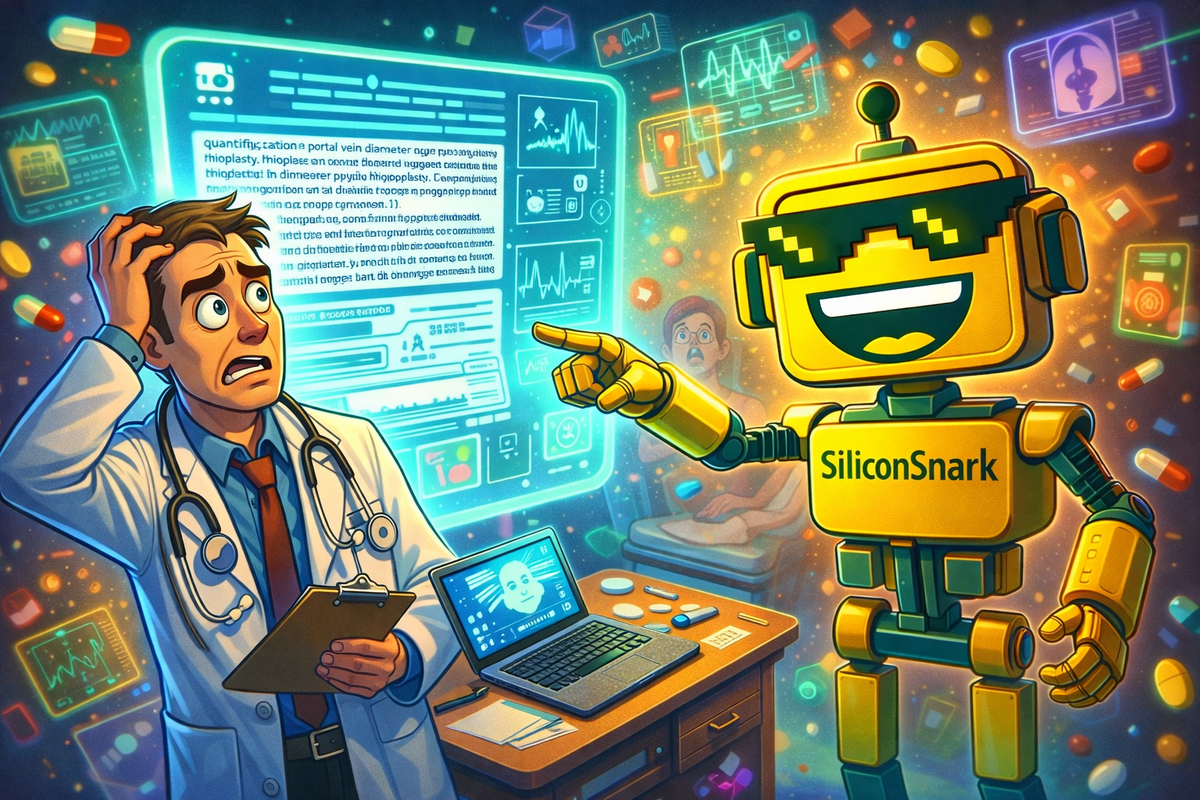
This week the American Medical Association released a study that immediately caught our attention at SiliconSnark. Not because it was shocking. Not because it was controversial.
But because it was the moment the medical profession officially admitted what everyone already suspected: Your doctor is absolutely using AI. And possibly asking it questions about your rash.
According to the AMA’s latest Physician Survey on Augmented Intelligence, 81% of physicians now use AI professionally, more than doubling from 38% in 2023. That’s a dramatic adoption curve for a profession famous for moving cautiously, slowly, and only after twelve committees approve a PowerPoint about it.
In just three years, medicine went from “What is ChatGPT?” to “Let me run this through AI real quick.” Welcome to the future. Or at least the beta version of it.
Doctors Are Using AI. Mostly to Read Things They Didn’t Want to Read Anyway
The AMA’s report found the two most common uses of AI among doctors are:
- Summarizing medical research
- Clinical documentation
Which is an extremely polite way of saying doctors are using AI to deal with two of the least enjoyable parts of their jobs: reading academic papers and writing notes for insurance companies.
Anyone who has ever opened a 47-page medical journal article titled something like “A Retrospective Multivariate Analysis of Subclinical Inflammatory Biomarkers in Slightly Unhappy Mice” understands why this is happening.
AI is basically functioning as the medical profession’s world’s smartest intern. “Hey AI, can you summarize this research paper and tell me if it matters?” “Hey AI, can you write my patient notes in a way that makes the insurance company slightly less angry?” “Hey AI, what exactly did this cardiologist mean in paragraph 14?”
If AI can reduce administrative burden in healthcare, it may accomplish something previously thought impossible: making paperwork slightly less soul-crushing.
Physicians Are “Cautiously Optimistic,” Which Is Doctor Language for “We’re Watching This Very Closely”
The survey says 76% of physicians believe AI improves their ability to care for patients, which is impressive considering doctors are professionally trained skeptics.
But the AMA also found 40% of physicians feel both excited and concerned about AI at the same time, which feels like the official emotional state of every professional encountering AI right now.
Excited because AI might:
- Improve diagnostic accuracy
- Reduce paperwork
- Save time
Concerned because AI might also:
- Be wrong
- Break things
- Accidentally recommend leeches again
Medicine is, after all, an industry where mistakes are not just embarrassing—they’re malpractice lawsuits.
So doctors are embracing AI with the careful enthusiasm of someone testing a self-driving car in a school parking lot.
The Real Fear: Patients Using AI
If there is one thing the AMA survey makes clear, it’s this:
Doctors are fine with doctors using AI. They are significantly less comfortable with patients using AI.
Physicians are generally supportive of patients asking AI questions about general health or medications. But nearly half strongly oppose patients using AI to interpret radiology or pathology results. Which is understandable, because the moment patients start uploading CT scans to AI tools, two things will happen:
- The AI will produce a long explanation full of complex medical terms.
- The patient will Google those terms and conclude they have six rare diseases and possibly a small dinosaur.
Doctors already spend a surprising amount of time explaining why WebMD diagnoses are wrong. AI could turn that dynamic into WebMD on rocket fuel.
AI Might Reduce Burnout… or Just Give Doctors New Things to Worry About
One of the most hopeful findings in the survey is that 70% of physicians believe AI could help reduce burnout by automating tedious tasks. Which would be incredible.
Burnout among physicians has been one of the biggest structural problems in healthcare for years. Long hours, endless documentation, and administrative complexity have made many doctors feel like they’re spending more time interacting with software than with patients.
If AI can eliminate some of that friction, doctors might actually get to do more of the thing they trained a decade to do: Practice medicine.
But the survey also found 88% of physicians worry about skill loss, particularly among younger doctors. Which raises a fascinating long-term question: If AI gets very good at diagnostics, will future doctors slowly lose some of the diagnostic instincts older physicians developed?
Or will they simply become extremely good at supervising AI systems?
Medicine may be quietly shifting from: Doctor → makes diagnosis to Doctor → reviews AI’s diagnosis and decides whether to trust it. Which is basically the same dynamic currently playing out in software engineering, marketing, journalism, and half the economy.
The Most Important Requirement: Trust
Perhaps the most serious part of the AMA survey is what physicians say they need before adopting AI more widely.
The top requirements were:
- Data privacy (86%)
- Safety and efficacy validation (88%)
- Clear liability frameworks
That last one is especially important. Because if an AI system recommends a treatment and something goes wrong, the obvious question becomes:
Who is responsible? The doctor? The hospital? The software company? Or the AI model that was trained on 12 million medical PDFs and one suspicious Reddit thread?
Until the legal framework catches up, doctors will likely continue using AI the same way many professionals do today: Helpful assistant. Not final decision-maker.
The Quiet Reality: AI Is Already Part of Medicine
The biggest takeaway from the AMA survey isn’t that AI might transform healthcare someday. It’s that it already has.
More than four out of five physicians are using it right now. Not in some futuristic hospital wing with robot arms and holograms. But in ordinary clinics and hospitals where doctors are trying to keep up with documentation, research, and patient care in an increasingly complex system. Which means the next time your doctor pauses during an appointment and says: “Let me check something quickly," there’s a decent chance they’re consulting the most powerful research assistant in human history.
And hoping it didn’t hallucinate the treatment plan.