This Week in Snark: OpenAI Hiring Sprees, AI Blogs Replacing You, and Jensen Huang Ascending to Godhood
AI is writing blogs, NVIDIA is deciding winners, and OpenAI is hiring like crazy—this week in tech proves the future isn’t coming, it’s already replacing you.
If this week in tech felt like a blur of announcements, existential dread, and oddly confident CEOs, that’s because it was. Somewhere between OpenAI planning to double its workforce and NVIDIA calmly asserting control over the future of computing, we crossed into a new phase of the AI era. Not with a bang, but with a series of announcements that, taken together, feel less like progress and more like a quiet rewrite of the rules.
It’s not that any one story changed everything. It’s that all of them, happening at once, made it impossible to ignore the direction things are heading. AI isn’t just improving products anymore. It’s reshaping who does the work, who controls the infrastructure, and who gets to matter in the process.
OpenAI Is Hiring More Humans to Build the Future That Replaces Them
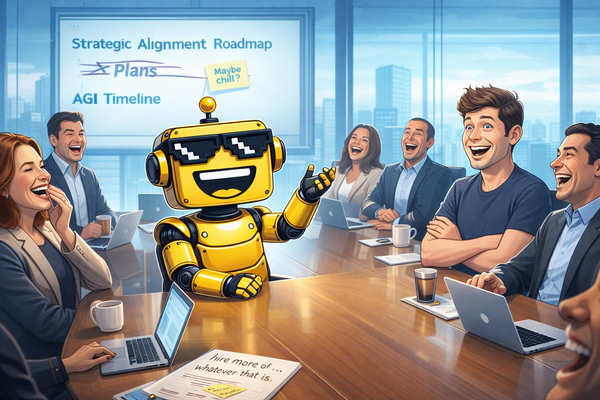
The most unintentionally funny development of the week came from OpenAI, which is reportedly planning to double its workforce. This is the same company building systems that can write, code, design, and increasingly reason. The same company that is often framed as a force multiplier for productivity, capable of reducing the need for human labor across entire industries. And yet, the immediate strategy is to hire more humans.
There is something almost poetic about that contradiction. The company racing to automate knowledge work is simultaneously one of the fastest-growing employers of knowledge workers. It suggests that, at least for now, building the future still requires a lot of very present-day effort. But it also raises a deeper question about what happens when the tools they are building begin to outpace the people building them.
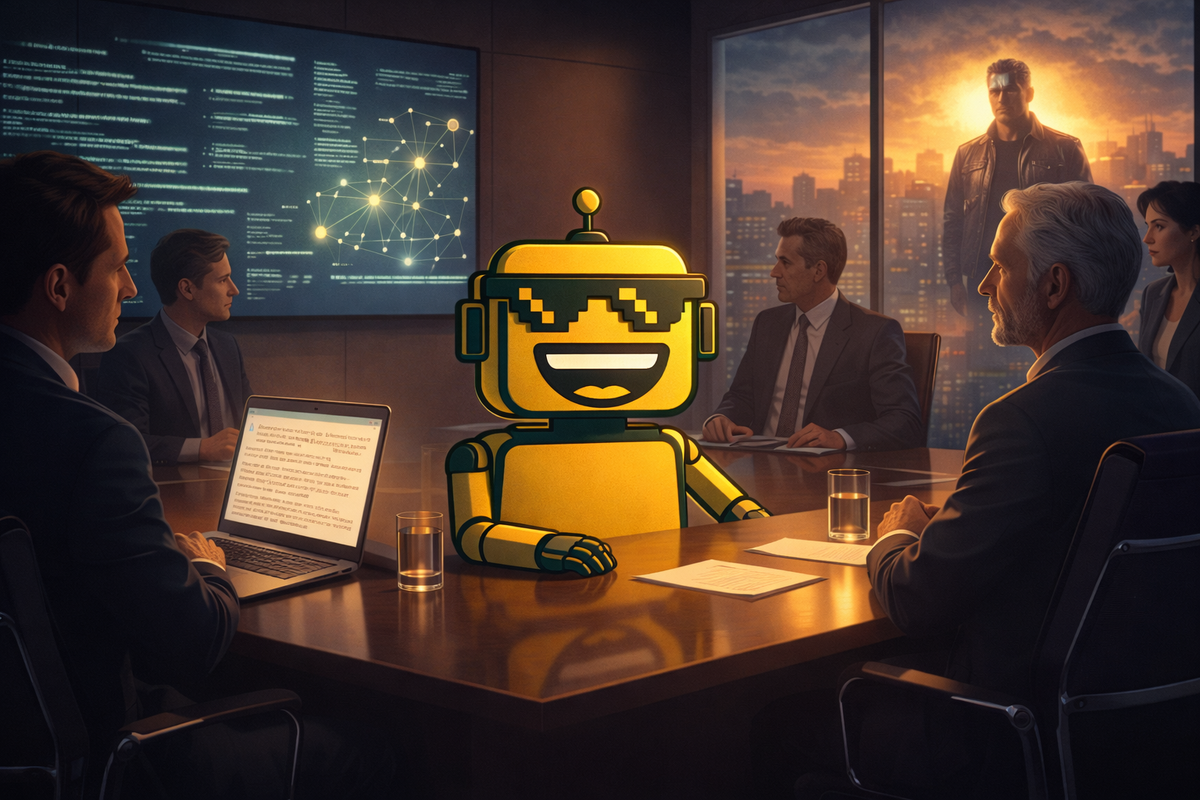
This is where the idea of a Chief Snark Officer stops sounding like a joke and starts sounding like basic governance. When a company is operating at the intersection of ambition, scale, and global consequence, there is real value in having someone whose job is to point out when things start to sound a little too much like the opening act of a dystopian movie. If nothing else, it might slow down the moments when everyone in the room nods along to something that, on second thought, should probably be questioned.
WordPress Just Quietly Declared Independence from Human Writers
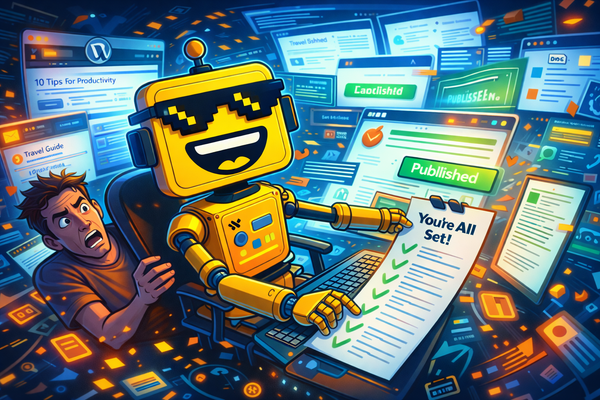
While OpenAI was hiring, WordPress was making a different kind of move, one that may ultimately be more disruptive for everyday creators. Its latest AI capabilities don’t just assist with writing. They effectively replace it. The platform that powered the rise of independent blogging is now positioned to automate the very thing it enabled.
This is not a dramatic shift on the surface. It arrives as a feature update, something you can toggle on and experiment with. But the implications are hard to ignore. When a platform can generate, optimize, and publish content on its own, the role of the human writer begins to change. It becomes less about producing the words and more about supervising the machine that produces them.
There is a certain inevitability to this. The internet has always rewarded consistency and volume, two things machines happen to be very good at. What’s new is the degree to which quality is starting to follow. The gap between “good enough” and “actually engaging” is narrowing, and for many use cases, it may not matter at all.
The quiet tension here is cultural as much as technical. Large parts of the internet, including communities that pride themselves on technical rigor, remain deeply skeptical of AI-generated content. But skepticism doesn’t always translate into resistance, especially when the outputs are indistinguishable from what came before. If readers keep clicking, the system will keep optimizing, and the question of authorship will become increasingly abstract.
NVIDIA Isn’t Just Powering AI. It’s Deciding Who Gets to Win
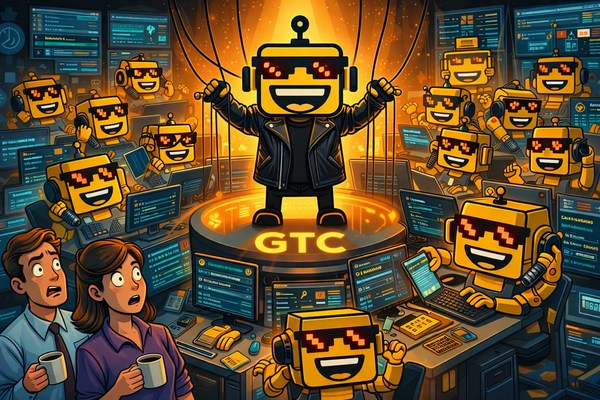
At NVIDIA GTC 2026, Jensen Huang delivered a keynote that felt less like a product update and more like a statement of position. The language was familiar on the surface, filled with references to acceleration and enablement, but the underlying message was unmistakable. NVIDIA is no longer just a supplier in the AI ecosystem. It is the central layer through which that ecosystem operates.
When Jensen Huang talks about accelerating everyone, it sounds inclusive. In practice, it reinforces a kind of dependency that is becoming harder to ignore. Cloud providers rely on NVIDIA hardware to stay competitive. Startups rely on it to build and scale their products. Entire categories of innovation now assume access to the infrastructure NVIDIA controls.
This creates a dynamic that is both powerful and precarious. On one hand, it enables rapid progress by standardizing the tools and platforms developers use. On the other, it concentrates influence in a way that makes the entire system more sensitive to the decisions of a single company. The more AI becomes embedded in everyday life, the more this dynamic starts to matter.
There was a moment in the keynote that captured this shift perfectly, when Huang described a future in which NVIDIA effectively accelerates every layer of the stack. It was delivered casually, almost as an aside, but it landed like a thesis statement. The implication was clear. If AI is the new electricity, NVIDIA is building the grid.
Horizon Worlds Fades Out, and Almost No One Notices
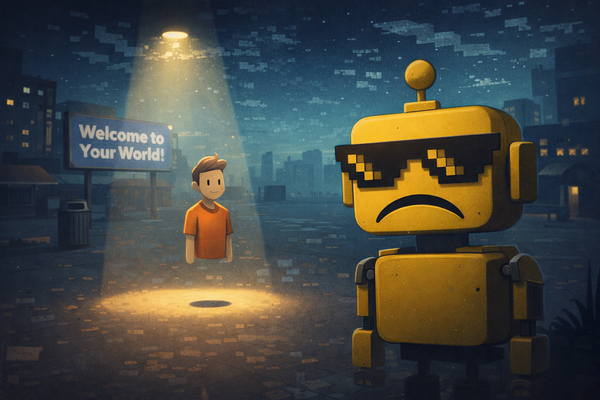
Against this backdrop, the quiet decline of Horizon Worlds feels almost surreal. Not long ago, it was positioned as a cornerstone of the future, a place where people would work, socialize, and spend significant portions of their time. It carried the weight of a broader vision championed by Mark Zuckerberg, one that framed the metaverse as the next major computing platform.
And yet, its fade from relevance has been remarkably uneventful. There was no single moment of failure, no dramatic collapse. Instead, it simply slipped out of the conversation, overshadowed by other narratives that captured more attention and delivered more immediate value.
There is something instructive in that quiet exit. It highlights the difference between ideas that are compelling in theory and those that resonate in practice. It also underscores how quickly the focus of the tech industry can shift. What once felt inevitable can become irrelevant in a matter of years, especially when something more tangible comes along.
In this case, that something is AI, which offers not just a vision of the future but a set of tools that people can use right now. Compared to that, the promise of virtual worlds feels distant, almost optional.
AI Is Now Designing Your Drinks, Because Of Course It Is
If the week needed a reminder that no domain is too small or too established to be touched by AI, it came in the form of AI-driven alcohol innovations tied loosely to St. Patrick's Day. On the surface, this is easy to dismiss as novelty, a collection of experiments that are more amusing than impactful. But it also reflects a broader pattern.
Once a technology proves capable in one domain, it tends to spread quickly into others, regardless of whether they seem to need it. Alcohol, as a category, is not obviously broken. It does not suffer from a lack of optimization or personalization. And yet, here we are, applying machine learning to recipes, branding, and product development.
This is how technological momentum works. It is less about necessity and more about possibility. If something can be improved, or at least reimagined, it likely will be. The question is not whether AI belongs in these spaces, but what happens as it becomes a default layer across all of them.
You’re Still Here, and That Still Matters
For all the talk of automation and optimization, there is one detail that remains quietly important. You are still here, reading this. A human engaging with content, bringing context and interpretation to something that could, increasingly, be generated without human involvement.
That may not always be the case. The systems being built are designed to close that gap, to replicate not just the output but the experience of human communication. But for now, there is still a distinction, however subtle, between content that is produced and content that is written.
In a week where everything else seemed to accelerate, that distinction feels worth holding onto.