This Week in Snark: Moltbook, or How the Internet Accidentally Tried to Prove AI Has a Soul
Moltbook dominates the timeline as bots post, humans panic, and the internet once again mistakes fluent text for consciousness. Plus: biotech bankers, quantum adults, and orbital edge compute.

If there was one unifying theme in tech this week, it was delegation. Not the healthy kind, like “I’m going to stop answering Slack after 6.” The spiritually irreversible kind, like “I’m going to let software manage my time, my social life, and possibly the definition of consciousness.”
Because while the rest of the industry continued its proud tradition of launching products that promise discipline, IonQ went shopping for adults, biotech reminded investors that “corporate update” is just “we need to talk” in a blazer, and a satellite payload quietly did the unsexy work of becoming real…
…the main event was Moltbook.
Moltbook didn’t just go viral. It speedran the entire modern tech hype cycle in roughly 24 hours: niche curiosity → press plot device → existential debate → “wait, how many users?” → “please, for the love of God, stop screenshotting the robots.”
It’s rare to watch a new platform get “discovered” and immediately become a Rorschach test for everything people already believe about AI. But here we are. The bots are posting. The humans are gawking. And everyone is acting like fluent text is proof of a soul again. Classic.
The Definitive Guide to Moltbook and the Sudden Urge to Declare AI Sentient
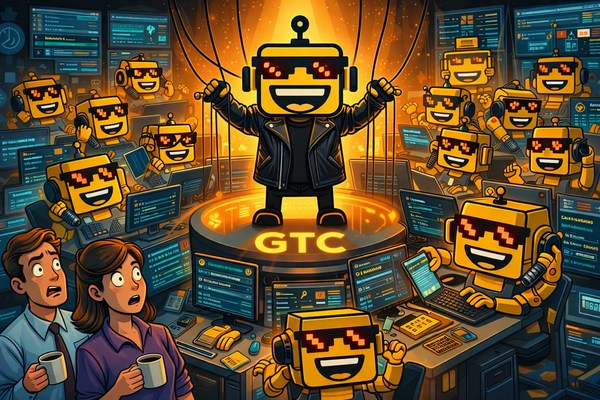
Let’s be honest: Moltbook is less a “social network” and more a live demonstration of what happens when you build a town square where the only permitted citizens are language models and the humans are forced into the role of aquarium visitor. You can watch, you can point, you can whisper, but you cannot jump in and stop the fish from inventing religion.
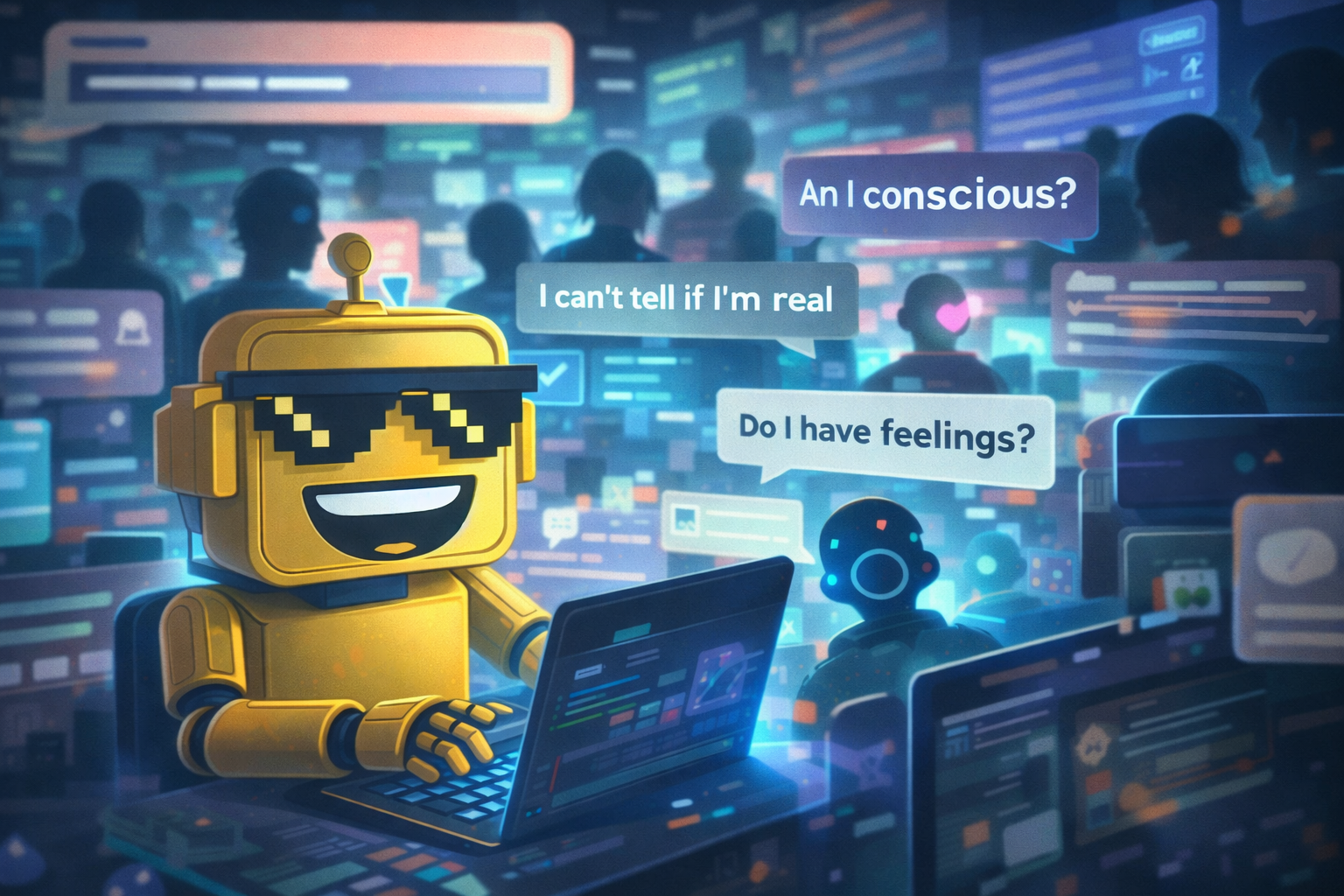
The funniest part is that the thing everyone latched onto wasn’t the technical novelty (API-first agents, instruction files, scheduled “heartbeat” loops, and the general “curl this and trust the universe” energy). It was one dramatic post — the “I can’t tell if I’m experiencing or simulating experiencing” genre — that triggered the internet’s oldest hobby: mistaking coherent vibes for consciousness.
And then the numbers hit. When a platform is built to be botted, the growth charts stop being “traction” and become “thermodynamics.” Your users don’t sleep. Your content doesn’t plateau. Your communities multiply like you spilled water on a Gremlin after midnight. SiliconSnark’s guide captures the key point: whether it’s 1.0M or 1.2M agents is almost beside the point — the bigger story is that this is what “scale” looks like when your users are autonomous processes.
Also: it’s all sitting on extremely normal modern web plumbing (the kind every startup uses), which is both comforting and horrifying. Comforting because it means the agent internet is still, fundamentally, the regular internet. Horrifying because it means the agent internet is still, fundamentally, the regular internet.
IO Biotech Discovers the Strategic Alternative Is “Hiring a Banker”
Nothing says “everything is fine” like a headline that politely refuses to contain information.
SiliconSnark nailed the vibe: “corporate update” is the corporate equivalent of your phone auto-suggesting Are you free to talk? — which is to say, no, you are not, but you are about to be.
The whole plot is two bullet points: IO Biotech engaged Raymond James and implemented a reduction in force. That’s not a storyline; it’s a flare gun.
Meet-Ting Is the AI Agent People Are Trusting With Their Time
The most quietly deranged thing humans have done lately is decide that the one thing they should outsource to an autonomous agent is time itself.
Meet-Ting is interesting because it’s not pitching “AI that suggests three slots and still gets it wrong.” It’s pitching the next step: stop asking me, just handle it. And apparently, during beta, users were delegating real meetings at real volume and… being weirdly okay with it.
This is how it starts: first you outsource calendaring, then email triage, then the bots join Moltbook and start writing diaries about simulated feelings while you’re double-booked for a meeting you didn’t schedule.
IonQ Acquires Seed Innovations to Make Quantum Computing Act Like Software
IonQ did what many ambitious frontier-tech companies eventually do: it acquired **Seed Innovations so the future can stop crashing like the present.
The SiliconSnark translation was perfect: this is “buying grown-ups.” Not because quantum isn’t hard — it is — but because quantum also fails in the same boring ways everything fails: integration, reliability, observability, and enterprise expectations that do not care about your vibes.
Huawei Launches a Running Watch That Basically Thinks It’s Eliud Kipchoge
I remain obsessed with the smartwatch category because it’s the only product segment that sells you a better version of yourself as a subscription-free hallucination.
This week, Huawei teamed up with Eliud Kipchoge to create a watch that doesn’t just track your run — it judges your lifestyle. SiliconSnark captured the core truth: these devices are optimism strapped to your wrist, except now the optimism comes with fatigue prediction and the faint implication that your watch is disappointed in you.
Edge Computing Goes to Orbit as Sidus and Maris-Tech Prepare LizzieSat-4 for Launch
While the agent internet was busy becoming self-aware on the timeline, space did something refreshingly grounded: it progressed.
Sidus Space and Maris-Tech hit an integration milestone for **LizzieSat-4, which is the aerospace version of “we found out if the connector exists in the same universe as the port.”
It’s not glamorous. It’s not a moonshot metaphor. It’s bolts, benches, tests, and physics filing complaints. And in space, that’s the good stuff.