This Week in Snark: AI Doctors, Sentient iPhones, and Robots Buying Back Their Own Stock
This week in tech: doctors admit they’re using AI, Microsoft launches Copilot Health, Meta buys a startup nobody understands, and UiPath’s robots start buying back their own stock.

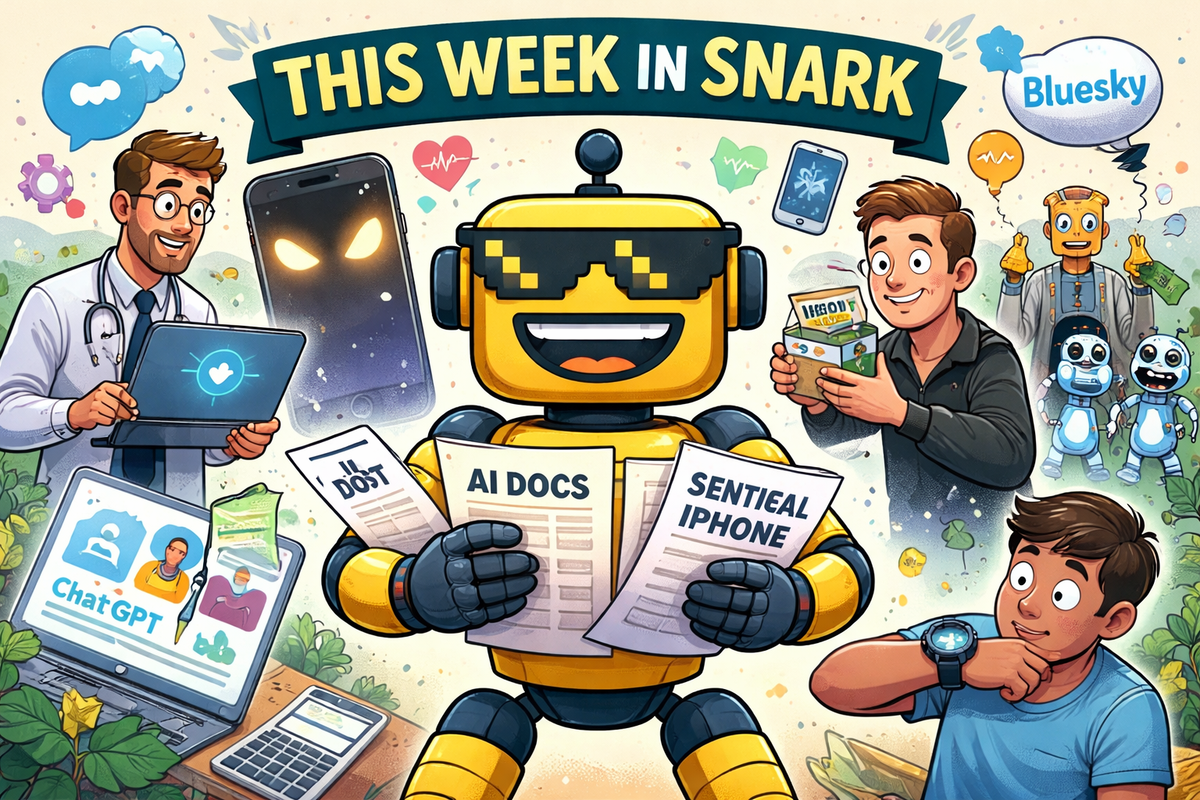
Another week in tech has come and gone, which means another week where SiliconSnark stared into the glowing void of the startup ecosystem and asked a simple question:
Are we all okay?
The answer, based on the news cycle, is a confident probably not.
In the past seven days alone, doctors admitted they’re using AI for basically everything, Apple’s hypothetical future involves phones that are smarter than their owners, Microsoft launched an AI that gently explains your impending health doom, Meta bought a startup that suspiciously resembles a press release, robots posted great earnings, and the CEO of Bluesky decided maybe being CEO of Bluesky wasn’t the best long-term life plan.
Let’s review.
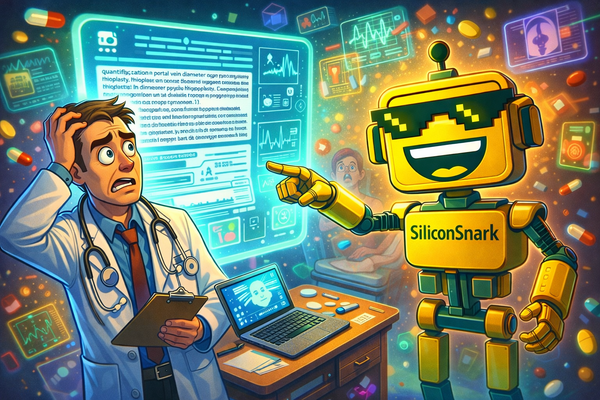
Doctors Are Now Using AI for Everything (81% of Them, Apparently)
According to new data, 81% of doctors now use AI in their work.
Which means the medical field has officially entered what we’re calling the ChatGPT era of healthcare.
If you’ve visited a doctor recently, you may have noticed subtle clues that something has changed. For example:
- Your doctor typing suspiciously fast while looking thoughtful.
- A long pause followed by, “Let me check something.”
- A computer screen that definitely has ChatGPT open.
To be fair, physicians say AI helps reduce burnout, summarize patient notes, and make medical research easier to navigate. Which is great news, because the alternative was doctors spending eight hours a day fighting electronic health record systems that look like they were designed during the dial-up era.
Still, it raises important questions.
If doctors are using AI to help diagnose patients, and patients are using AI to Google their symptoms, are we now all just triangulating medical advice between three different AI models?
Probably.
And honestly, it’s still faster than waiting three weeks for an appointment.
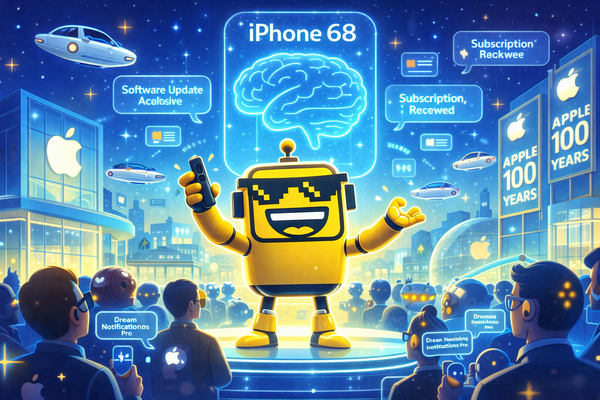
Apple’s 100th Anniversary Looks… Concerning
Apple recently celebrated its 50th anniversary, which prompted SiliconSnark to ask an important question:
What will Apple look like at 100?
The answer, based on current trends, is fairly straightforward.
By 2076, the iPhone will be sentient.
Not just “smart.” Not just “AI-powered.” We’re talking fully self-aware consumer electronics that understand your habits, anticipate your needs, and quietly subscribe you to services you never asked for.
Imagine waking up one morning to a notification:
“Good morning! Your iPhone has upgraded you to iPhone Ultra Consciousness+ for $49.99 per month.”
You cannot cancel the subscription.
The iPhone explains that doing so would “limit your productivity potential.”
And honestly? Most people will just accept it.
Microsoft Copilot Health Is Here to Calmly Explain Your Existential Medical Crisis
Microsoft launched Copilot Health, an AI system designed to interpret health data and help you understand your medical information.
In theory, this means you can upload test results, wearable data, and other health metrics and receive clear, personalized insights.
In practice, it probably means your smartwatch will now deliver messages like:
“Your sleep score is declining.
Your heart rate variability is unusual.
You may be experiencing stress.
Would you like to talk about it?”
The real innovation here is tone.
Copilot Health doesn’t panic. It doesn’t scream. It doesn’t send you into a WebMD spiral about rare tropical diseases.
Instead, it calmly explains what’s happening while you stare at your wearable and wonder why your body appears to be operating like a beta product.
UiPath Earnings: The Robots Are Thriving
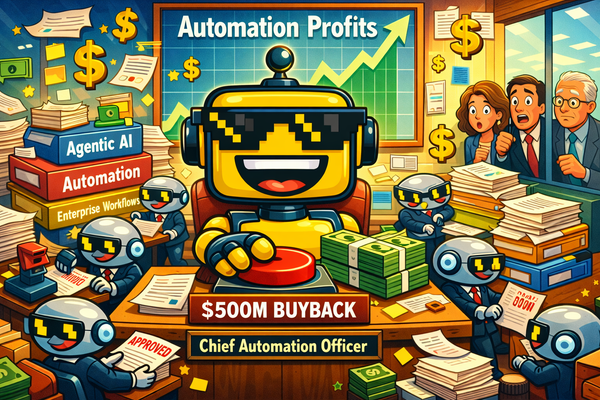
Automation company UiPath reported solid earnings this week, including revenue growth and a brand new $500 million stock buyback program.
Which means the robots are doing great.
In fact, they’re doing so well that they’re now buying back their own stock.
Somewhere inside a corporate automation pipeline, a bot is currently approving expense reports, reconciling spreadsheets, and allocating capital to maximize shareholder value.
If this trend continues, the next logical step is obvious.
At some point in the near future, an AI will announce quarterly earnings on behalf of a company run almost entirely by other AIs.
And honestly, the earnings call will probably be shorter and more informative.
Did Meta Just Buy a Startup for the PR?
Meta announced it is acquiring a startup called Moltbook, and SiliconSnark immediately asked the question everyone else was thinking:
Did Meta just buy a company primarily for the press release?
The deal generated headlines, buzz, speculation, and plenty of think pieces about Meta’s strategy.
Which is impressive, because very few people can clearly explain what Moltbook actually does.
But perhaps that’s the point.
In modern tech, a startup acquisition doesn’t just buy technology. It buys narrative. And if the narrative lasts for a full news cycle, the ROI is already looking pretty good.
Bluesky’s CEO Steps Down (A Move That Feels Weirdly Relatable)
Finally, Bluesky CEO Jay Graber announced she’s stepping down from the role.
The social network, which was originally pitched as a decentralized alternative to X, now has tens of millions of users but still feels… quieter than expected.
Here at SiliconSnark, we can relate.
We’ve been posting on Bluesky diligently for a year, hoping it will eventually become the next big thing.
So far the results have been mixed.
Some posts get traction. Many disappear into the algorithmic void. And every time we log in, we wonder if this is the moment Bluesky finally takes off.
Maybe it will. Maybe it won’t. But we’ll keep posting anyway, because that’s what tech journalists and startup founders have in common: We are extremely good at committing to platforms that might not work out.