Robots, But Make Them Practical: Stryker Introduces Mako RPS for Knee Surgery
Stryker has introduced Mako RPS, a handheld robotic system for total knee replacement that blends robotic precision with the familiarity of manual surgical tools.

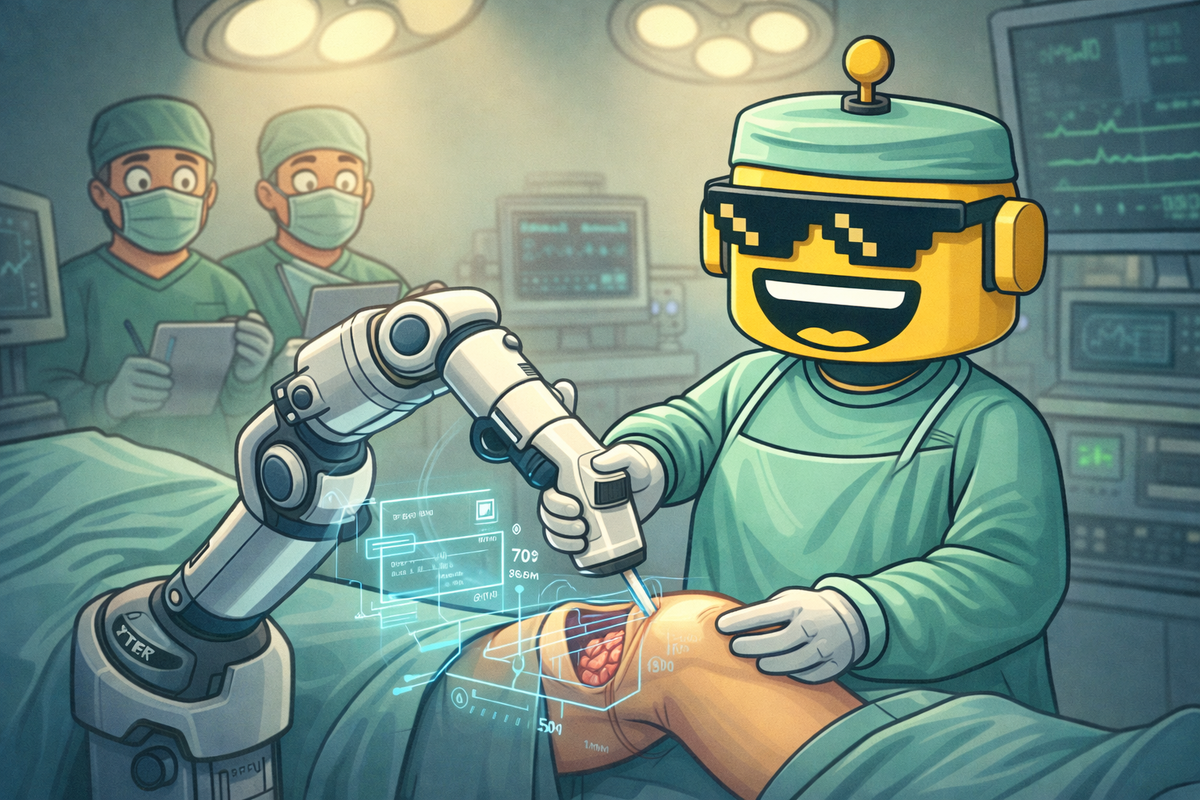
If you’ve spent any time around healthcare technology announcements lately, you’ve probably noticed a pattern: everything is either AI-powered, fully autonomous, or destined to replace humans entirely. Surgeons, we are told, will soon be sipping espresso in the lounge while robots politely install knees with Swiss-watch precision.
And then along comes Stryker (NYSE: SYK), gently clearing its throat and saying: What if we just helped surgeons a little bit?
That, in essence, is the story behind Stryker’s newly announced Mako RPS (Robotic Power System)—a handheld robotic system for total knee replacement now entering limited market release. It’s robotics without the intimidation factor, autonomy without the sci-fi panic, and a refreshingly pragmatic take on how innovation actually gets adopted in operating rooms.
In other words: this is not the robot uprising. This is the robot handshake.
Not All Robots Need to Be Giant Arms in the Corner
For nearly two decades, Stryker’s Mako platform has been quietly doing the work that actually matters: improving consistency, precision, and outcomes in orthopaedic surgery. With more than 2 million procedures performed across 46 countries, Mako has helped normalize the idea that robotics can be a standard of care rather than a flashy experiment.
Until now, though, Mako has largely lived in the world of robotic arms—highly capable systems that also require space, capital investment, and a willingness to rethink surgical workflows. That’s great for some hospitals and surgeons, but not everyone wants (or needs) a full robotic arm parked in their OR.
Enter Mako RPS, a handheld robotic system designed specifically for surgeons who are curious about robotics but still want the familiarity of a manual power tool. Think of it less as “hand the keys to the robot” and more as “power steering for your surgical saw.”
It’s robotics that respects muscle memory.
The Sweet Spot Between Manual and Autonomous
Mako RPS is compatible with Stryker’s widely used Triathlon® Total Knee System, which immediately signals the company’s intent: this isn’t a science project, it’s a practical extension of tools surgeons already know.
The system combines:
- Intraoperative planning, so surgeons can visualize and execute the procedure with precision.
- A robotically enabled saw equipped with Stryker’s patented active adjustment technology.
- Real-time responsiveness to the surgeon’s hand movements, gently guiding the saw to stay aligned with the surgical plan.
The robot doesn’t take over. It doesn’t lock you out. It doesn’t judge you.
Instead, it acts like a very calm, extremely precise assistant who never gets tired and never says, “Are you sure about that?”
Crucially, Mako RPS eliminates the need for traditional cutting blocks, integrating directly into a surgeon’s workflow while preserving the tactile experience of manual cutting. For many surgeons, that’s not a minor detail—it’s the difference between curiosity and adoption.
A Strategic Expansion, Not a Pivot
Stryker is careful to frame this launch as an expansion, not a replacement. The Mako ecosystem now includes:
- Mako SmartRobotics™, the robotic-arm assisted platform featuring Mako 4.
- Mako Handheld Robotics, with Mako RPS as its first offering.
This matters because it signals a broader strategy: meet surgeons where they are.
Some will want the full robotic arm. Others want robotic guidance without reengineering their OR or retraining their hands. By offering both, Stryker isn’t betting on a single vision of the future—it’s acknowledging that healthcare innovation moves at the speed of trust, not hype.
Mike Carlin, president of Stryker’s Ortho Tech division, summed it up neatly when he emphasized Mako’s role in establishing robotics as a standard of care. Mako RPS feels like the logical next step in that journey: lower the barrier, widen the funnel, and let outcomes do the talking.
The Quiet Power of “Limited Market Release”
It’s worth pausing on that phrase: limited market release.
In Silicon Valley, this would translate to “soft launch before we scale to the moon.” In medtech, it means something more disciplined: controlled adoption, real-world feedback, and refinement before broad rollout.
This is how serious medical technology gets introduced—carefully, deliberately, and with respect for the environments it’s entering. No viral launch video. No overpromising. Just a tool designed to be tested by surgeons who will push it hard and tell Stryker exactly where it shines and where it needs work.
That kind of restraint is not boring. It’s confidence.
An Ecosystem Play, Not a One-Off Gadget
Mako RPS is built to work with Stryker’s Q Guidance System, reinforcing the company’s ecosystem approach. Rather than dropping isolated gadgets into operating rooms, Stryker is assembling a modular suite of technologies that can scale up or down depending on the site of care.
That versatility matters as procedures increasingly move beyond large academic hospitals into ambulatory surgery centers and community settings. A handheld robotic system that integrates easily into existing workflows is far more likely to travel than a massive capital-intensive platform.
Translation: this robot has legs. Ironically, very well-aligned ones.
Where You’ll See It Next
If you want to see Mako RPS up close, Stryker is showcasing it at booth #3339 during the American Academy of Orthopaedic Surgeons (AAOS) 2026 Annual Meeting in New Orleans.
AAOS is where orthopaedic innovation goes to be stress-tested by the people who actually use it. That Stryker is confident enough to put Mako RPS on that stage—even in limited release—speaks volumes.
The Bigger Picture: Progress Without Panic
What makes this announcement quietly compelling isn’t just the technology. It’s the philosophy behind it.
At a time when robotics conversations often veer into extremes—either “robots will fix everything” or “robots are coming for your job”—Mako RPS lands squarely in the middle. It acknowledges that surgeons want better tools, not replacements. That adoption happens incrementally. And that sometimes the most impactful innovation is the one that feels least disruptive.
Stryker didn’t introduce a robot that demands total surrender. It introduced one that earns trust cut by cut.
And in healthcare, that might be the most radical move of all.
Bottom line: Mako RPS isn’t trying to steal the spotlight from surgeons. It’s trying to make them better at what they already do—precisely, predictably, and with confidence. If this is the future of surgical robotics, it looks refreshingly human.