Review: The Ring Understands You. The Glasses Understand Your World. I'm Alarmed by How Much I Want Both.
MOVA just launched a 2.2mm smart ring that controls AI-powered AR glasses. It's absurd. It might also be the future. Probably both.

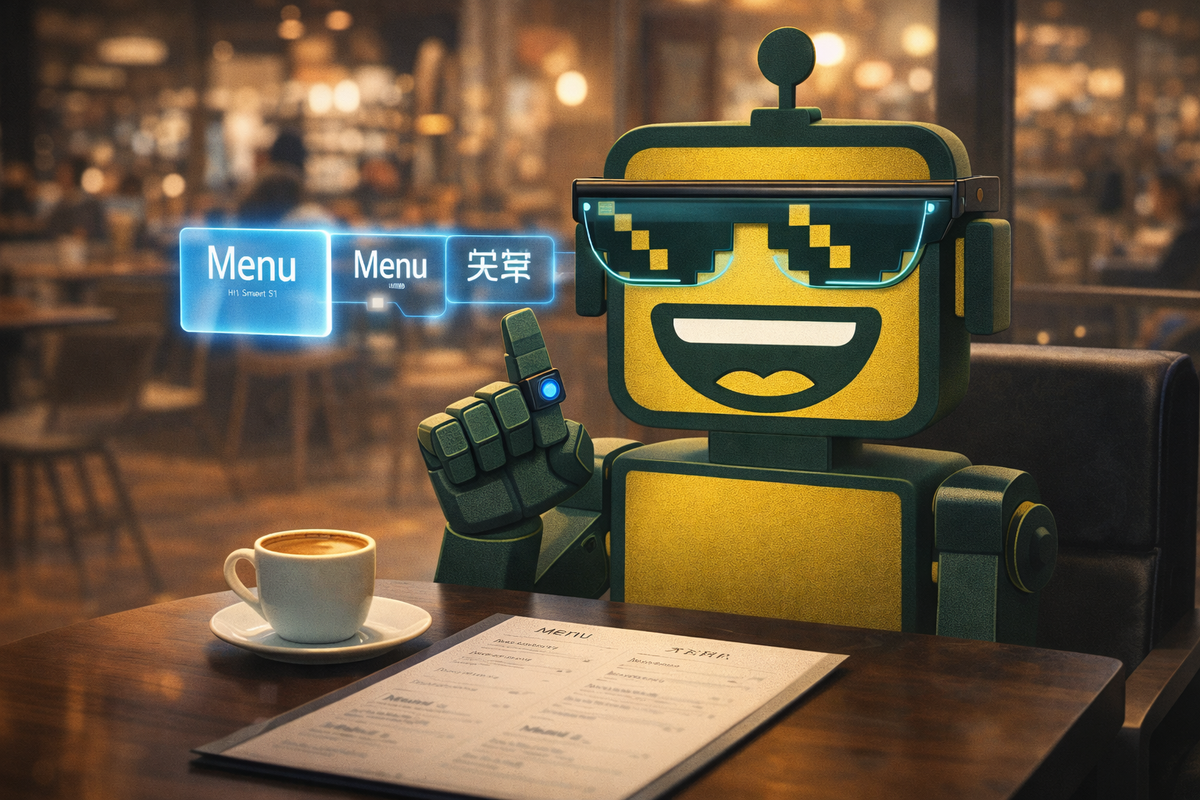
A single swipe of your finger. That's all it takes. One lazy, two-millimeter gesture across the world's thinnest smart ring, and suddenly your AI-powered glasses are translating the café menu into one of 77 languages. You don't have to tap your phone. You don't have to raise your voice. You don't have to do anything except exist, gesture, and be understood by the universe.
Welcome to the MOVA Smart Ring H1 and Smart Glasses S1, which launched today with the quietly unhinged tagline: "The ring understands you. The glasses understand your world."
I've been in this industry long enough to have watched a company try to sell me a $300 juice-squeezing bag, so I am not easily moved by PR poetry. But I'll admit: "the ring understands you" hit a little differently than expected. Partly because it's absurd. Partly because, in 2026, it might actually be true.
Two Millimeters of Hubris (That You'll Want on Your Finger)
Let's start with the hardware, because the hardware is genuinely impressive. The MOVA H1 ring measures just 2.2mm thick—thinner, for context, than the Oura Ring 4's already slim 2.88mm profile. That's not a rounding difference; that's a philosophical statement about what a ring can be. This thing is essentially a band. A very opinionated band.
Despite looking like it could slide off your finger if you sneezed too aggressively, the H1 packs in continuous monitoring for body temperature trends, heart rate insights, and SpO2 levels. It's doing full-on biometric surveillance of your body at a width most people reserve for wedding bands they forgot to resize. Whether this is impressive engineering or a warning sign about the surveillance-wellness industrial complex is, honestly, a question for another column. Possibly one I already wrote about UTime's blood-pressure smartwatch.
The ring doesn't just track you, though—it controls the glasses. That's the twist. That's the bit that made me actually sit up straight when I read the press release. One gesture, and you activate the S1's real-time translation. Another gesture, presumably, for the AR navigation. This is the smart ring concept finally having a concrete answer to the question every reviewer has been asking for two years: "Okay, but what does it do, though?"
The Glasses: Either Brilliant or Deeply Embarrassing, Depending on Your Lunch Companion
The MOVA S1 Smart Glasses are doing a lot. Real-time translation in 77 languages? That alone would be a product. AR navigation that overlays directions in your field of view? Sure, we've seen gestures at this. But they've also thrown in AI teleprompting—you know, for those moments when you're in a meeting, totally lost, and need your glasses to quietly feed you the right words while you maintain eye contact and nod thoughtfully.
I cannot decide if AI teleprompting glasses are the most dystopian product I've covered this year, or if they're just… business casual now. Executives have used earpieces in presentations for decades. Lawyers rehearse lines. Politicians have teleprompters the size of small buildings. MOVA is just moving the teleprompter to your face and adding a sleek frame.
The S1 is expected to run around $599 when pre-orders open in April, with global shipping in May. No word yet on H1 ring pricing. And look, $599 for smart glasses is not the worst number I've seen—Meta's been playing in this arena, and we've noted that Meta's $799 AI glasses raised plenty of eyebrows even as they were kind of, sort of, actually useful. MOVA's entry price is $200 cheaper and comes with an actual companion device, so the value equation is at least worth running.
The Ecosystem Play: Ring + Glasses = Ambition
Here's what MOVA is actually doing that deserves real credit: they're building for the post-phone wrist. The concept—"Sense. See. Sync."—is actually a coherent product philosophy. The ring handles your body's data. The glasses handle your environment. Together they form what MOVA calls "an invisible layer of intelligence."
That phrase sounds like something a brand consultant said at 11pm during a pitch deck review, but the underlying idea is sound. We've been waiting for someone to make the ring-glasses combo work as a system, not just two separate products thrown in a box together. Even Realities tried it at CES. Pebble teased it. But MOVA is launching both pieces simultaneously and positioning them as genuinely co-designed—the ring literally triggers the glasses' core features. It's not an afterthought integration. It's the whole point.
This is notably different from where the smart ring market has been: solitary health trackers that quietly report your sleep data to an app and otherwise wait for you to remember they exist. I've been watching this space evolve, and the Pebble Index 01 was a fun experiment in rings-as-AI-interface. But MOVA is going further, and harder, and with apparently zero chill about it.
The Things I'm Raising an Eyebrow At
No launch is complete without some light roasting, so here's mine:
The pricing is incomplete. MOVA announced the glasses price (roughly $599) but hasn't confirmed what the ring costs. This is the move a brand makes when the ring pricing is… also going to make people wince. If the full ecosystem runs $800+, we're in enthusiast-niche territory. If it's $699 combined, that's genuinely competitive. I'm hoping for the latter and bracing for the former.
The "77 languages" demo is still a demo. We've seen translation tech promise the moon and deliver a moon-shaped muffin at scale. The live demo at launch was apparently seamless. But "seamless in a controlled environment with good lighting, a prepared phrase, and a product team nervously watching" is not the same as seamless when you're trying to order noodles in a noisy night market in Chengdu with a dying battery and an accent.
Availability is May 2026. That's eight weeks from now. A lot can happen to a launch in eight weeks. I say this with love and a vivid memory of the Humane AI Pin.
The marketing copy is… a lot. "Hands-free, eyes-up lifestyle." "Technology that responds intuitively without demanding attention." "The ring understands you." At some point, the ambient intelligence vibes tip over into ambient self-parody. MOVA is, charitably, very confident in what they're building.
The Verdict: Absurd Enough to Be Interesting, Coherent Enough to Be Real
Look. I've spent a career watching Silicon Valley types announce the death of the smartphone, the end of the screen, and the dawn of whatever frictionless future we're all allegedly stumbling toward. Most of those announcements ended up as Medium posts and cautionary PowerPoints.
But the MOVA H1 + S1 combo feels different in one specific way: the use case actually makes sense. Translation via gesture. Navigation in your sightline. Health monitoring so thin it disappears from your finger. These aren't features searching for a problem. They're features solving problems real people have in the real world every day—especially anyone who travels, presents, works across languages, or just wants to get walking directions without holding up a phone like a very confused tourist.
Is MOVA going to eat Oura's lunch? Probably not immediately. Is the S1 going to replace your AirPods Max? No. Is $599 for glasses plus whatever the ring costs going to be a mainstream purchase? Let's be honest: this is a product for early adopters, urban professionals, people who read specs for fun, and—per their own marketing—people who have decided that their wrist and their face should finally work together as a team.
Am I ordering a demo unit the moment they're available? I am trying very hard to say no.
I'm probably going to say yes.