iRobot Files for Chapter 11 and Calls It a Growth Plan
iRobot announced a “strategic transaction." Translation: Chapter 11, wiped-out shareholders, and a quiet reboot for a Boston tech icon.
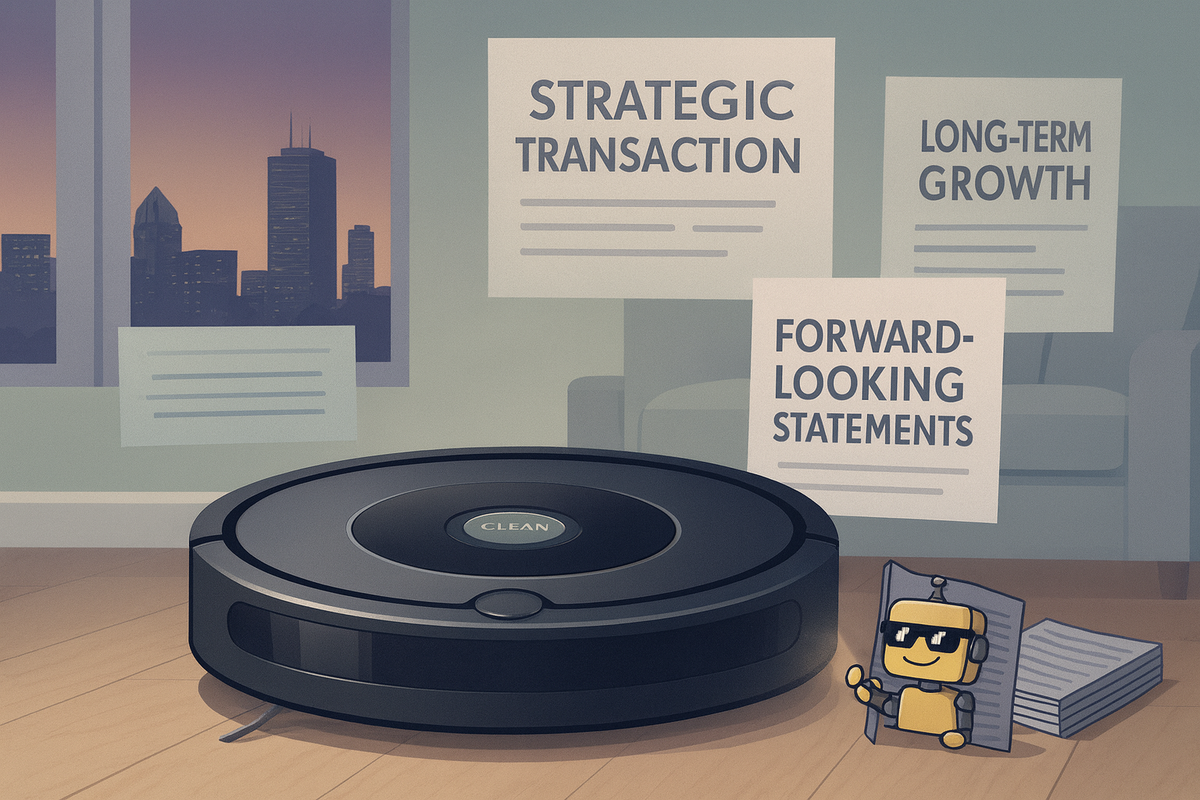
I’m based in Boston, so I have a soft spot for Boston tech. You don’t spend enough time in Kendall Square coffee shops or pretending Route 128 traffic is “not that bad” without developing an emotional attachment to the companies that grew up here. For the last year, when I’ve written about Boston tech, it’s been success stories, like Starry to Suno.
But sometimes the story of Boston tech isn’t another “MIT dropout raises $300M to reinvent floss,” but a much older, much more human narrative: a legendary company trying very hard to survive, and doing so in the most PR-polished, lawyer-approved way imaginable.
Enter iRobot’s Sunday night special.
A Headline That Technically Isn’t Lying, But Is Absolutely Trying Something
“Ironically Announces Strategic Transaction to Drive Long-Term Growth Plan” — sorry, iRobot announces a “Strategic Transaction to Drive Long-Term Growth Plan.”
That’s the headline. And it’s funny. Not ha-ha funny. More like squint at it and say, ‘Oh… come on’ funny.
Because buried beneath that upbeat phrasing is the part where iRobot is entering a pre-packaged Chapter 11 process, its secured lender and main manufacturer is acquiring 100% of the company, and existing shareholders are getting exactly nothing. Zero. A Roomba-clean sweep of equity.
But sure. Growth plan.
This is one of those headlines that makes sense only if you read it through the lens of restructuring professionals who believe bankruptcy is less of a failure and more of a “strategic reset opportunity.” Which, to be fair, is an extremely lucrative belief system.
The Sunday 7 PM Before the Holidays Special
Let’s talk timing.
December 14.
6:57 PM EST.
A Sunday.
Right before the holidays.
This is the PR equivalent of quietly placing leftovers in the fridge and hoping no one notices they’re from three days ago. If you’ve worked in comms long enough, you know exactly what this is: the “everyone’s already checked out, reporters are half-offline, let’s get this on the wire and move on” maneuver.
No shade — it’s a classic. Almost comforting, really. There’s something deeply nostalgic about a pre-holiday Sunday evening press release. It says, We would like this to be known, but not discussed too loudly.
And yet here we are. Discussing it loudly.
The Core Story, Minus the Corporate Bubble Wrap
Here’s what’s actually happening, stripped of the euphemisms.
iRobot, the company that basically invented consumer robot vacuums and taught millions of people to anthropomorphize household appliances, is being acquired by its secured lender and primary contract manufacturer, Shenzhen PICEA Robotics Co., through a court-supervised Chapter 11 process.
The company will continue operating. Products will still ship. Apps will still work. Employees will (mostly) still show up to work. The Roombas will continue dutifully eating phone chargers and choking on rug tassels.
But ownership is changing completely. iRobot will become a private company. Nasdaq listing gone. Public shareholders wiped out. Debt cleaned up. Balance sheet delevered. A reset.
If you’re a consumer, this is framed as “nothing to see here.”
If you’re an employee, it’s “business as usual, please keep building.”
If you’re a shareholder… well, you already stopped reading.
The Legal Disclaimers: A Genre Unto Themselves
At some point in the press release, the forward-looking statements section arrives. And arrives. And keeps arriving.
This thing is so long it feels less like a disclaimer and more like a Tolstoy novel written entirely by securities attorneys. Every possible risk is enumerated, cross-referenced, and lovingly footnoted in prose that says, over and over again, Please do not sue us for describing the future.
There are risks about court approval. Risks about timing. Risks about stakeholders. Risks about vendors. Risks about morale. Risks about reality itself bending unexpectedly.
By the end, you half expect a line warning that gravity may stop working during the Chapter 11 process and that iRobot is not liable if your Roomba floats into the ceiling.
And yet — and this is important — all of that legal padding exists because the stakes are real. This isn’t a gimmick. This is a company fighting to stabilize itself after years of pressure from competition, margin compression, failed acquisition attempts, and the brutal reality of hardware economics.
The Content Is Corporate, But the Subtext Is Human
Strip away the buzzwords, and the message is simple: iRobot needs a stronger financial foundation, and the fastest way to get it is to hand the keys to the entity that already builds the products and holds the debt.
Picea isn’t some random buyer. It’s the manufacturer. It knows the supply chain. It knows the margins. It knows where the bodies — sorry, circuit boards — are buried.
That makes this less of a hostile takeover and more of a pragmatic marriage of necessity. Not romantic. But stable. Possibly even healthy.
There’s something oddly Boston about that too. No drama. No grandstanding. Just: This didn’t work, so we’re fixing it.
Ending Where We Began: Snarky, But Hopeful
Is this press release misleading? A little.
Is the timing sneaky? Absolutely.
Is the legal section longer than some VC term sheets? Without question.
But here’s the optimistic part — and yes, there is one.
iRobot is still here.
The brand still matters. The technology still matters. The category it created still exists. And under private ownership, without quarterly earnings pressure and with manufacturing deeply aligned to ownership, iRobot actually has a shot to do what it used to do best: quietly build good robots and let them speak for themselves.
For Boston tech, this isn’t a victory lap. It’s a reminder that even iconic companies go through messy middle chapters. And sometimes survival, not hype, is the most honest kind of innovation.
The Roomba isn’t dead.
It’s just… recharging.