Apptronik’s Mega Series A Puts Apollo Humanoid Robots Into Overdrive
Apptronik raises over $935M in a massive Series A to scale Apollo humanoid robots, backed by Google, Mercedes-Benz, and DeepMind.

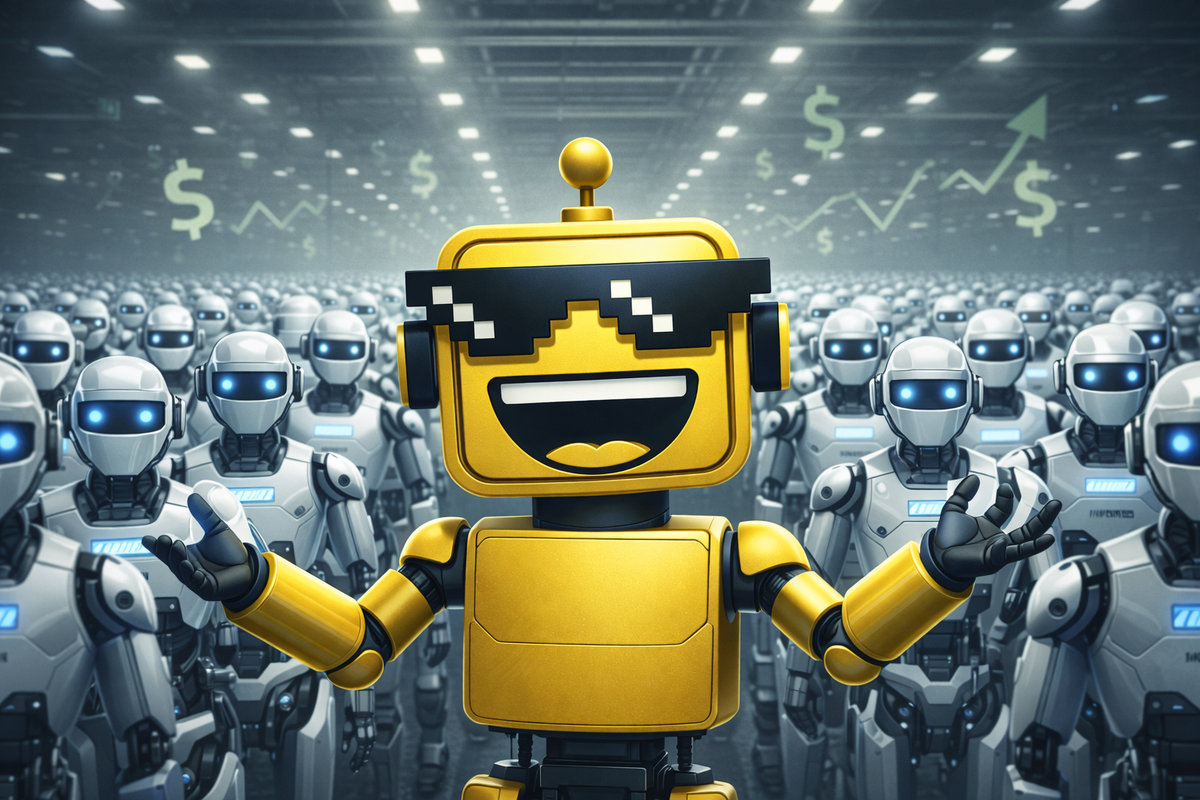
There are funding announcements.
And then there are funding announcements that make you blink, reread the headline, and whisper: “Wait… Series A?”
Today, Apptronik announced it has closed a $520 million Series A-X extension, following a $415 million Series A raise in 2025—bringing its total Series A to more than $935 million and total capital raised to nearly $1 billion.
Yes. Series. A. Somewhere, a seed-stage founder polishing their $3M SAFE just fainted into their pitch deck.
But financial gymnastics aside, this is one of the more interesting humanoid robotics stories in 2026—and it’s worth unpacking both the valuation wizardry and the very real innovation behind Apptronik’s Apollo robot.
The $935 Million “Series A” That Launched a Thousand Cap Tables
Let’s start with the obvious: when does a Series A stop being a Series A and start being… an infrastructure program?
Apptronik raised:
- $415 million in an oversubscribed Series A in 2025
- $520 million in a new Series A-X extension
- At a 3x multiple of the original Series A valuation
Translation: investors kept calling, and instead of saying, “We’ll see you at Series B,” Apptronik said, “Actually… we’ll just stretch the A.”
To be fair, mega-round extensions are not unprecedented in deep tech and AI. Companies building physical infrastructure—chips, robotics, manufacturing platforms—often need far more capital upfront than your typical SaaS dashboard.
Still, calling nearly $1 billion in early-stage funding a “Series A” feels like renaming a cruise ship a kayak because technically it floats.
But here’s the key detail: the investor lineup is serious.
Repeat backers include B Capital, Google, Mercedes-Benz, and PEAK6. New investors AT&T Ventures, John Deere, and Qatar Investment Authority (QIA). This isn’t tourist capital. This is strategic capital. Industrial capital. Infrastructure capital.
And that’s what makes this round interesting beyond the headline shock value.
What Apptronik Actually Builds: Apollo, the Humanoid Robot
Apptronik’s flagship product is Apollo, a humanoid robot designed to work alongside humans in manufacturing, logistics, and eventually retail, healthcare, and the home.
Apollo is built to handle physically demanding, labor-intensive operational tasks such as:
- Transporting components
- Sorting
- Kitting
- General warehouse and factory floor support
This isn’t a novelty robot doing backflips for YouTube. This is a production-oriented humanoid aimed squarely at real-world industrial use cases.
And Apptronik isn’t new to robotics.
The company spun out of the Human Centered Robotics Lab at the University of Texas at Austin and has worked on 15 previous robots, including NASA’s Valkyrie. Nearly a decade of development underpins Apollo.
That matters.
Because in 2026, the humanoid robotics space is crowded with demos, hype reels, and carefully edited warehouse videos. What separates contenders from science projects is:
- Hardware reliability
- Safety
- Deployment readiness
- Real commercial partnerships
Apptronik claims it has partnerships with:
- Mercedes-Benz
- GXO Logistics
- Jabil
These aren’t pilot-friendly startup playgrounds. These are industrial operators who care about throughput, uptime, and ROI—not vibes.
The DeepMind Factor: Gemini Robotics and Embodied AI
One of the most compelling parts of the announcement is Apptronik’s strategic partnership with Google DeepMind, building humanoid robots powered by Gemini Robotics.
If large language models are brains in the cloud, humanoid robots are brains in bodies.
This is where “embodied AI” becomes more than a conference buzzword.
Robots operating in factories and warehouses need:
- Perception
- Real-time reasoning
- Task adaptation
- Physical coordination
Integrating advanced AI models into real-world robotic systems is hard. Really hard.
The promise here is that pairing physical robotics expertise with frontier AI could accelerate the path from “robot that can sort boxes in a lab” to “robot that can operate in a dynamic production environment next to humans.”
Howard Morgan of B Capital called Apptronik “the standard in embodied AI at scale.”
That’s ambitious language. But it reflects a broader trend: investors increasingly believe the next frontier of AI is not just text and pixels—it’s atoms.
Why Raise Nearly $1 Billion This Early?
Humanoid robotics is capital-intensive for a reason.
To scale, Apptronik needs manufacturing capacity, training facilities, data collection infrastructure, hardware iteration cycles, and global deployment support. This isn’t a “ship a new feature on Friday” business.
The press release notes that the new capital will help build “state-of-the-art facilities for robot training and data collection” and accelerate time to market.
If Apptronik truly intends to deploy Apollo at scale across manufacturing and logistics, then yes—this becomes an infrastructure play, not just a product launch.
And infrastructure requires real money.
The Bigger Bet: Humanoids in the Workforce
Apollo is positioned initially for logistics and manufacturing, with future expansion into retail, healthcare, and the home. The long-term thesis is clear: aging populations, labor shortages, and increasing demand for physical automation will create sustained demand for humanoid collaborators.
Unlike specialized industrial robots bolted to factory floors, humanoids promise flexibility. A robot shaped like a human can operate in spaces built for humans.
In theory.
In practice, the industry is still proving whether humanoids can match human dexterity and operate safely at scale. That’s the trillion-dollar question hiding behind this $935 million Series A.
The Snarky Take: Is This Financial Engineering or Industrial Courage?
There’s a legitimate eye-roll factor in the phrase “Series A-X extension at 3x valuation.”
It sounds like something crafted by an investment banker who also practices yoga.
But here’s the counterpoint: raising massive capital early may actually be the rational move in robotics.
In software, you can fake traction with growth hacks.
In robotics, physics exposes you.
If Apptronik can deploy Apollo robots in real production environments with Mercedes-Benz or GXO and demonstrate measurable ROI, then this funding round won’t look inflated—it’ll look prescient.
If not? Well. There will be one very large Series A-shaped crater.
The 2026 Humanoid Arms Race
The humanoid robotics race is heating up globally. Major tech players, automakers, and sovereign wealth funds are all placing bets.
That Qatar Investment Authority check is especially telling. Sovereign funds don’t typically chase consumer app trends. They chase industrial transformation.
John Deere’s involvement also signals agricultural and industrial automation ambitions.
When you see investors from telecom (AT&T), automotive (Mercedes), agriculture (John Deere), AI (Google), and sovereign capital (QIA) in the same round, it suggests something bigger than a flashy demo robot.
It suggests a belief that humanoid robotics could reshape global labor infrastructure.
Final Take: Big Round, Bigger Ambition
Yes, the headline will get clicks because it’s almost comedic:
“Apptronik Closes Over $935 Million Series A.”
But beneath the financial contortion is a serious industrial play.
Apptronik is betting that:
- Humanoid robots will move from pilot projects to scaled deployment
- Embodied AI will mature fast enough to power real-world tasks
- Industrial partners are ready to integrate AI-powered collaborators
- Massive early capital will create defensibility through manufacturing scale
If Apollo delivers, this won’t be remembered as an absurdly large Series A.
It will be remembered as the moment investors decided humanoid robotics wasn’t science fiction anymore—it was infrastructure.
And if nothing else, we’ve now entered a world where a billion-dollar Series A is just… Tuesday.
Welcome to 2026.